Displenishing sales in the late 1960s

Displenishing sales provide an insight into the implements and machines that were being used on a farm when the tenant was leaving a particular farm. They can show the type of agriculture practiced as well as the range of implements and machines used. They can also show whether the Farm was using new and innovative ones or were relying on older ones.

By the second half of the 1960s farms were using a wide range of machines from makers in Scotland, across Britain, and Europe. Machines from the latter location were becoming were being used in increasing numbers. They included makers such as Claas and Vicon.

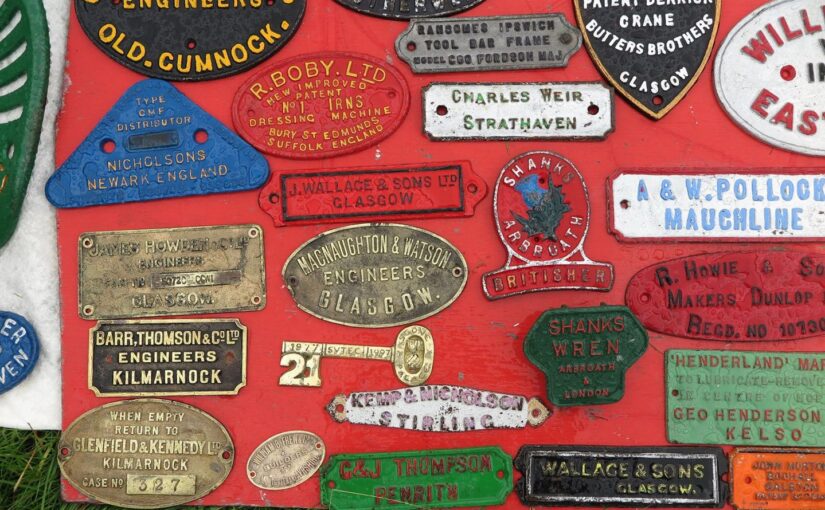
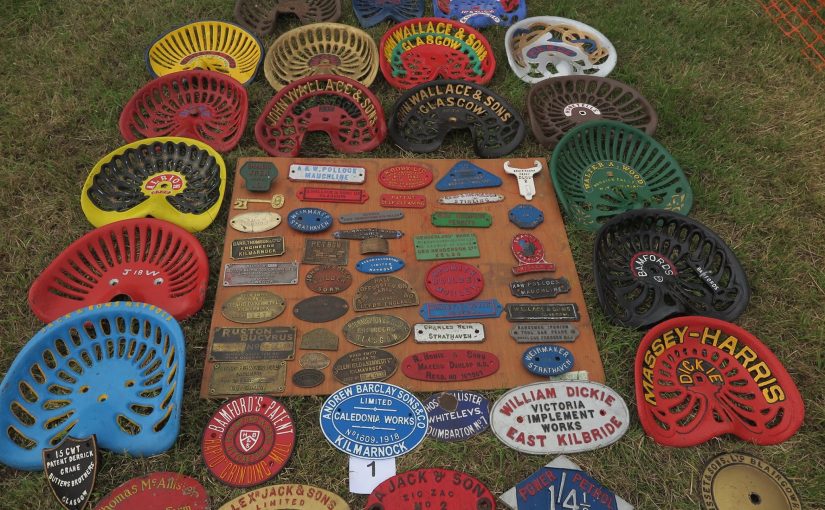
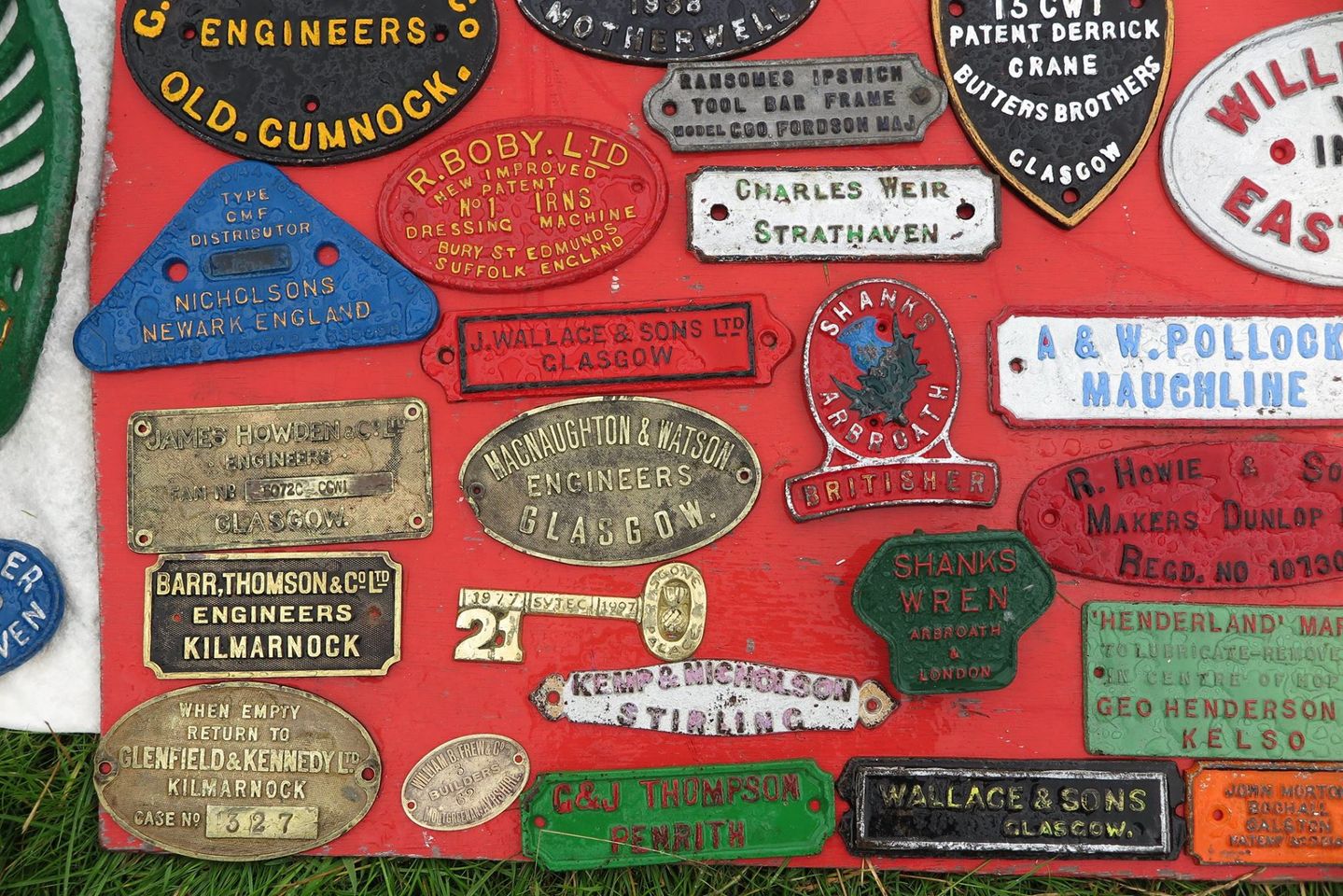
The implements and machines from some of the Scottish makers were well known and established for many decades: Alexander Jack & Sons, Maybole, Alexander Newlands & Sons, George Sellar & Son, Alex Ballach & Son and Boswells of Blairgowrie. There were others that were less well-known such as James F. Ogg. Bridge of Muchalls, Stonehaven.

The following are extracts from displenishing sale notices in central Scotland. They note the wide range of implements and machines used and some of their makers. They provide an interesting insight into what was being used on some farms:

“Wester Dechmont Farm, Uphall (from West Lothian courier, 27 October 1967)

Saturday, 4th November, 10:30am

J. & J. Marshall Ltd are favoured with instructions from Wm Russell Esq, whose farm has been acquired for the Livingston New Town to sell:-

Claas matador tanker 10ft combine (1965), New Holland “68” super baler, 1960 diesel land-rover, 2 M.F. tractors (1961-63), 1962 Fordson major super tractor, 4 trailers-2 hyd, 1 with silage capes, Ferguson, Newlands and Sellars D.F. ploughs, Ransome 3F plough, Nicholson & Bentall discs, D.B. S.T. cultivator, Ferguson weeders, 2 sets 4-L harrows, 5-L harrow tree, Ogg spring loaded ridger, M.F. “732” – 15 row combine seeder, Vicon manure spinner, Jack triplex manure sower, Ferguson sprayer, Wallace dung spreader, Mil-Loader with dung graip and scoop, Elder G.S. barrow, Stanhay precision seeder, turnip barrow, 3 gang rollers, transport box, hurricane forage harvester, Int P. D. mower, Bamford mower, Lister Blackstone tractor hay rake, swath turner, New Holland crimper, Bamford wuffler, Perry bale loader, bale sledge, bale/sack elevator, Wallace potato planter (Kramer patent), Tamkin potato digger, Balloch scarifier, Boswell turnip shawer, Henderson EL turnip slicer, turnip slicer, Bentall bruiser, fanners, grain hygrometer, 5 h.p. El, motor, Woolley in bin grain dryer with 4 x 35 ton Crittal storage bins, 3 conveyors and 2 elevators, Boby unicleener, tub steel cattle crush, 13 galv cattle feeding troughs, 2 field sheep hay hecks, 8 sheep bakies, 20 F.C. troughs, 5 hay hecks, 3 galv bins, 2 meet coolers (R.T.), Geest barrow, 3 wheelbarrows, sack barrow, saw bench, Black & Decker El. Drill and stand, compressor, Wolseley El clipper, Alum ext. ladder, weighs and weights, 400 sacks, 350 and 250 gal diesel tanks, par. Tank, 6 fire extinguishers, usual farm hand tools etc.

Alfa Laval M.M. piping, El motor and pump, 3 units, 12 iron and wooden field gates, 10 rolls sheep netting, barbed and plain wire, 100 stobs, 100 sleepers off wood, scrap metal.

The plant and implements offered include many practically new items and worthy buyers’ attention.

The Farm lies on the main Glasgow/Edinburgh A8 road near Bangour Hospital.”

“Gateside, Linlithgow (for Mr A. C. Kerr) on Friday, 22nd December at 1:00pm.

2 Fordson super major tractors, Fordson dexta tractor, Case tractor, 1 hyd and 2 rigid trailers, 1-, 2-, and 3-furrow ploughs, rotovator, set discs, 2 sets harrows, grass seed harrows, steerage hoe, scarifier, dung spreader, 2 Ransome tool bars, M.H. combine drill, 4-drill Cambridge roller, single roller, weeder, Shanks precision seeder, 2 manure distributors, Ransome cropmaster sprayer, 2 reapers, Vicon Lely tedder, McCormick Internat. Baler, binder, threshing mill, Viking sugar beet harvester, potato pit coverer, Cooch potato sorter, sack elevator, bruiser, cattle crush, 3 fuel tanks, sack barrows, ladders, 2 poultry houses, 2000 bales hay, quantity straw, 30 cwts S.A.I. p[lant food.

From a neighbour- 3 M.F. “35” and Dexta tractors, 4 tractor trailers, 3 Ferguson 2- and 3-furrow ploughs, Ferguson cultivator, Ferguson ridgers, harrows, 2 sets gang rollers, discs, M.H. 15-row seeder, dung spreader, potato digger, buck rake, Lister elevator.

Lawrie & Symington Ltd, Auctioneers, Lanark. (West Lothian courier, 15 November 1968)”

“Over Quarter Farm, Yieldshields, Carluke (from West Lothian courier, 20 June 1969)

Saturday, 28th June 11am

J. and J. Marshall Ltd are favoured with instructions from Messrs T. and R. Moffat to sell: D.B. 880 Implematic tractor 91964), pulley, D.B. Albion dung spreader, Cruikshanks S.F. plough, D.B. D.F. plough, 3 gang rollers, 4-1 harrows, Bamlett Mk 2 P.D. mower, Lister wuffler, buck rake, rick lifter, box cart, meat cooler, 3 raw barrow, wheel barrow, sack barrow, weighs and weights, sack cover, 2 vices, fire ext and refills, 4 ladders (1 aluminium), stone water horse trough, 5 P.C. troughs, Lister motor, 200 gal diesel tank, M.M. unit, carrying pail, wash-up bin, draining tiles, 50 stobs, poles, props, odd wood etc, usual hand tools.

Hot Point washing machine, Creda Super 4 electric cooker, surplus furniture etc.

The farm lies at Yieldshields village.”

Share

A new implement works in Blairgowrie for J. Bisset & Sons

One of the well known implement and machine makers in Perthshire was J. Bisset & Sons, Marlee, then Greenback, Blairgowrie.

The company traded from at least 1867 until the mid 1960s. On 16 June 1966 the Directors passed a resolution to voluntarily wind up the company; it was dissolved on 20 November 1970. The company was noted for its potato diggers as well as its reaping machines and binders.

In 1877 the company opened a new implement works. The building of these was reported in the local newspapers at that time. Another one was recorded published in the Dundee courier of 26 August 1892. It is one of the few accounts of the implement works, and of an implement maker. It reads:

“Local implement makers

As makers of agricultural implements of all kinds of the firm of Messrs J. Bisset & Sons, Blairgowrie, has attained a reputation amongst farmers in Scotland and in many parts of England that few firms can excel. It is now almost half a century since the works at Blairgowrie were inaugurated. Started on a comparatively small scale, they have now assumed such great proportions as to cover a great extent of ground. Yesterday one of our representatives called upon Mr T. Bisset, the principal partner of the firm, and stated his desire to have a look through the works. He was courteously received by that gentleman, who willingly agreed to his request. Visiting first of all the moulding department, which is situated in the north wing, our reporter was favoured with an explanation of the process if casting. Several men were hard at work preparing moulds of various kinds for the numerous machines for the manufacture of which the Messrs Bisset are so famed, and the great care and neatness that was manifested in the preparation of these was of a most interesting description. In reply to a question as to the nature of the metal used in making the casting, Mr Bisset informed the reporter that the kind used by his firm was that which combined lightness with strength, and that only the best brands of cast-iron were used for the ordinary castings and ironwork of the machines produced from the works. Our representative here ventured to remark that there were so many small wheels and other things connected with reaping, mowing, and binding machines that an infinite amount of work was involved in the moulding of these. He was informed, however, that the great bulk of the smaller castings prepared from superior malleable iron were made in Derby. Proceeding to the larger and more important part of the premises, which is situated in the very heart of the works, Mr Bisset explained the various machines in operation. Most of these were of the newest design, and were driven by a large and powerful horizontal steam engine. It is in this department that the finest and most exacting work is done, for in the grinding of the many intricate parts of reaping and other agricultural machines the greatest care must be taken, as the difference of the minutest nature in the construction of a machine may interfere with its working. One machine in particular is especially worthy of mention. It consists of two small wheels, driven by means of a pulley and belts, and was designed by Mr Bisset. On this the teeth of reaping machines are ground to a nicety. Another of Mr Bisset’s inventions is a simple-looking but ingenious multiple drilling machine, the effect of which is not only labour saving, but entails greater accuracy. It is upon this that the knife-boards are drilled. Two of these being placed upon the table are bored with twenty-three holes and afterwards moved along a short distance and drilled again in a similar manner, the work of boring ninety-two holes occupying only three minutes. Other drilling machines for similar plates are also kept constantly in operation by a number of men. The steam hammers and other machines are of the newest design, and are most effective in their working.
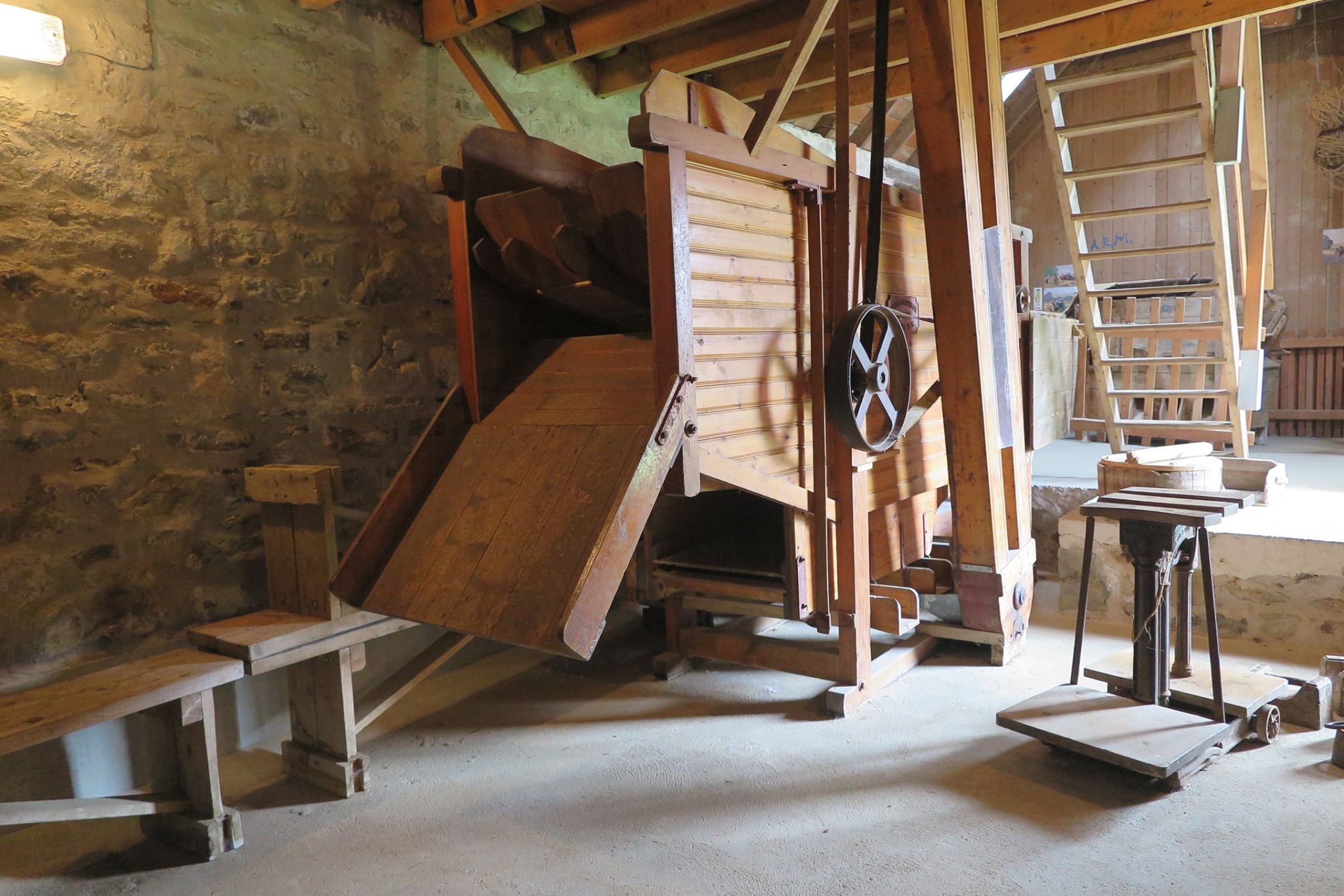
The portion of the works in which the wooden parts of the machines are made is also very interesting. Numerous planing, moulding, and other machines are here in operation, and reduce the work of the joiners to a minimum. Quite close to this part is situated a shed in which the machines are fitted up. We recently published a description of the newest invention of the firm-viz, the Bisset chain binder-and the ingenuity which has been displayed by its inventors certainly commends it to agriculturists. In concluding a necessarily brief description of the works, we may simply remark that some idea may be formed of the great demand there is on the reaping and binding machines produced by Messrs J. Bisset & Sons from the fact that firm supply to their customers innumerable tons of manilla twine annually.”

Share

The opening of Mr Garvie’s Hardgate Agricultural Implement Works, Aberdeen, December 1894

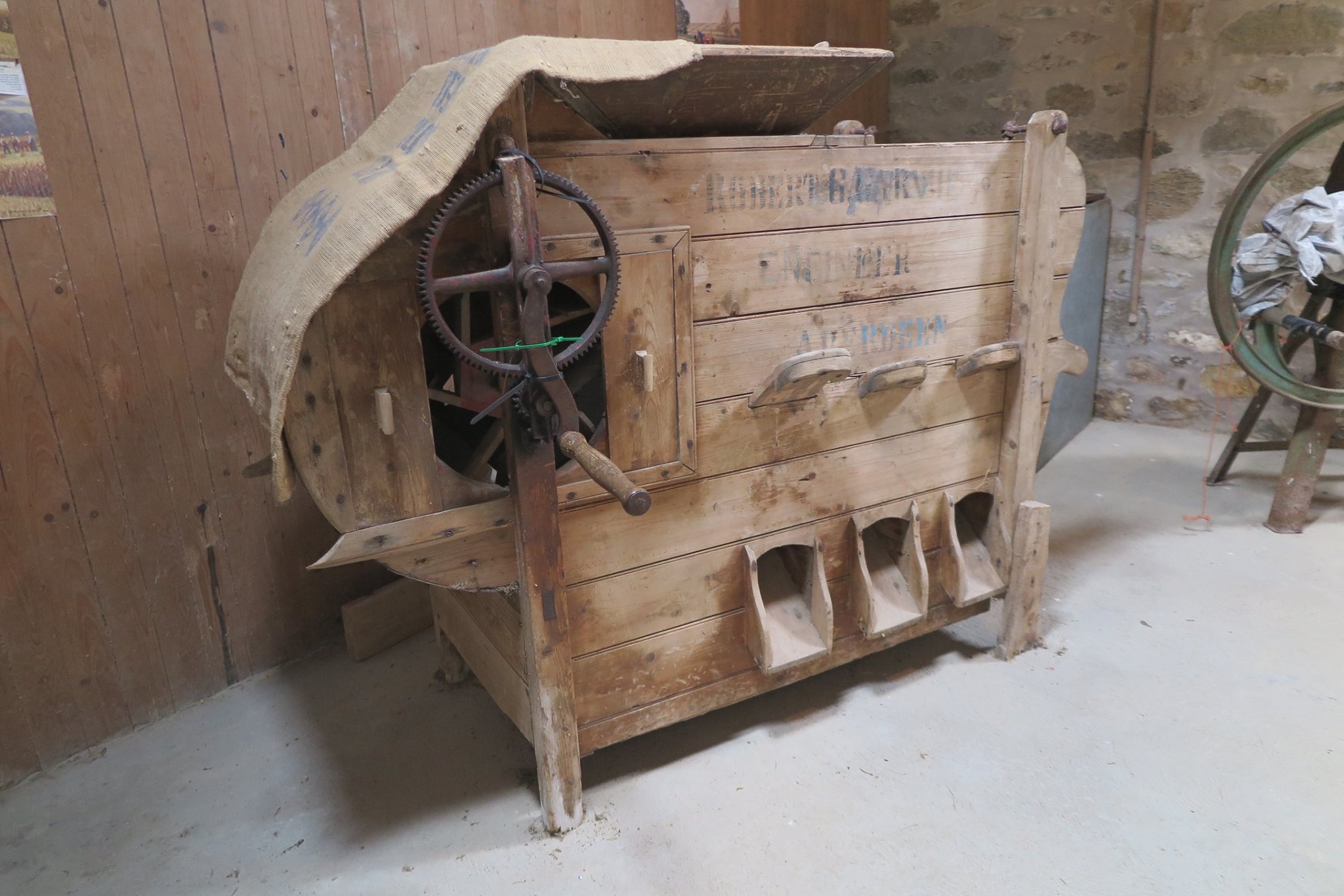
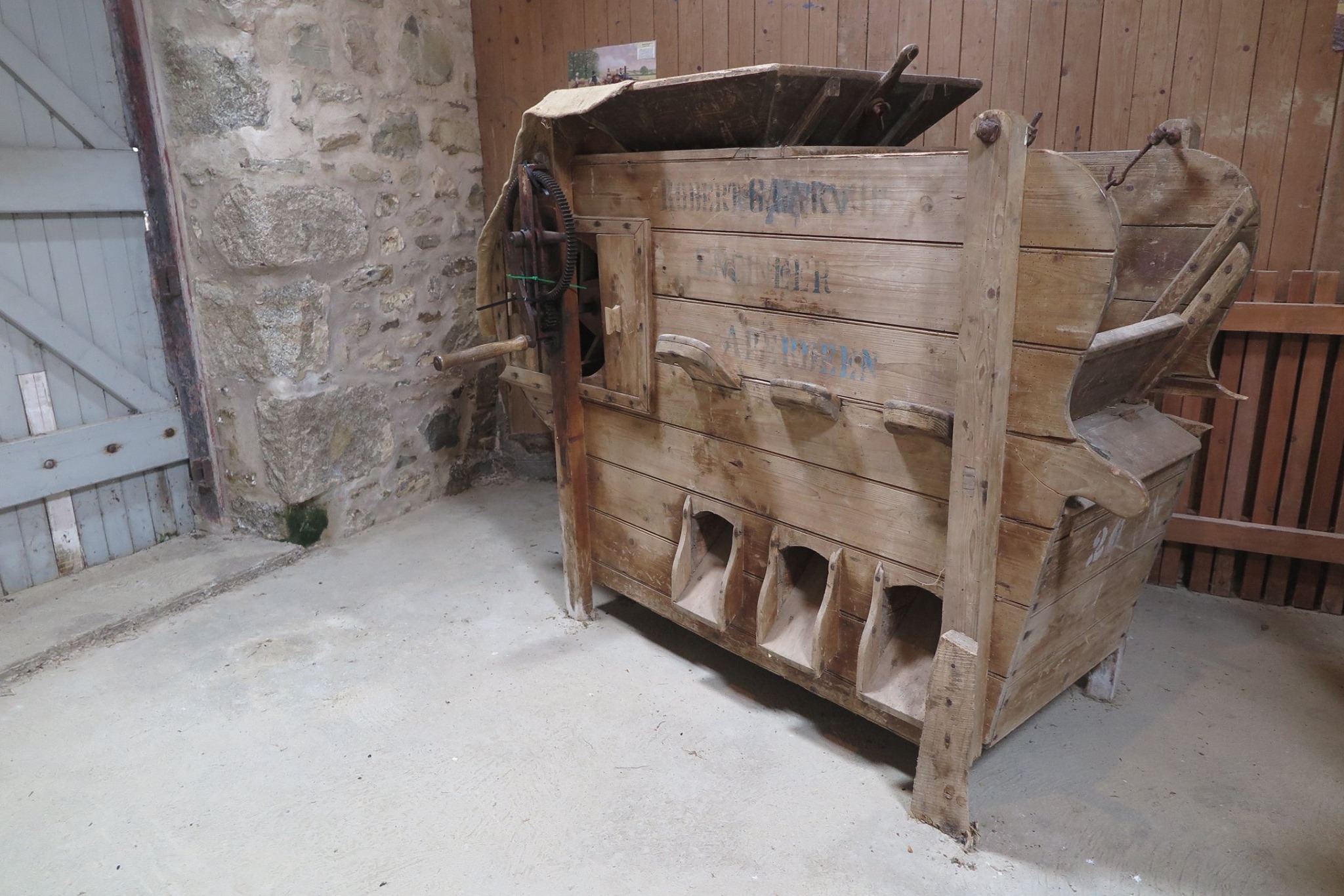
One of the most important makers in Aberdeen and the north-east was Robert Garvie of Hardgate Works, Aberdeen. He opened a new premises in December 1894. The Aberdeen press and journal was pleased to record the opening of the new ironworks. On 1 December it reported:

“It is always a pleasure to note the progress and development of local industry, and it affords us much satisfaction to congratulate Mr Robert G. Garvie on the opening of his new and extensive agricultural implement works in Hardgate. Mr Garvie is a member of a family that has shown a great deal of enterprise in industrial affairs in Aberdeen, and in his new undertaking he will have the heartiest good wishes for success, because success for him means the benefit of his employees and the advantage of the community as a whole. There is no reason why the agricultural implements used by our farmers should not be largely produced at home, where there are the skill, the capital, and the material necessary, and the starting of Mr Garvie’s new works may be accepted as an indication that fewer orders for farm machinery will find their way to Canada and the States. There is nothing narrow or unduly selfish in this view. We are all for home manufacture when it can be had as cheaply, and of as good quality as outside products, and a community that does not act on that principle certainly neglected one of the first considerations of self-preservation. The patriotic desire to promote local interests as a primary duty does not necessarily imply a blind and unreasoning exclusiveness. What we contend for is that where we find local enterprise carrying on a branch of industry giving large employment to labour, and thus contributing to the general prosperity, it has an undoubted claim to the support and encouragement of the locality. This we have no doubt will be the case with Mr Garvie’s new undertaking; but he will also have a wider sphere of operations than the immediate district of Aberdeen. The new works were agreeably inaugurated last night by a pleasant social gathering of the workers and their friends, and Mr Garvie, who presided, referred with justifiable gratification to the fact that within the space of about nine months the fine block of industrial buildings had risen up in the place that had been occupied by a number of old tumble-down dwellings. Thus Aberdeen advances in commerce and industry, and thus may it ever continue to flourish-by the enterprise and skill of its sons.”

So what were the Hardgate Agricultural Implement Works like?

“The spacious new works in Hardgate, the property of Mr Robert G. Garvie, agricultural implement manufacturer, have now been completed, and all the departments are in operation, between 80 and 90 men employed. The fact that it has been found necessary to provide an establishment on so large a scale would seem to point to the growing importance of the manufacture of agricultural implements as an industry in the north-east of Scotland. Fully an acre and a half of ground has been taken off in a very convenient site on the south part of Hardgate, and the buildings that have been erected are admirably adapted for their purpose. The frontage to the street is constructed of granite, and has a substantial though plain appearance. The offices &c, are situated here, while the various departments of the manufactory stretch back to the west. The principal entrance is from Hardgate, at the north-east end of the feu.

There is a wide covered-in gateway, and the passage leads along the northern boundary to a large yard on the extreme west. At the entrance a six-ton steelyard is laid down, the register being taken in a comfortably-appointed forwarding office. A stair leads from this apartment to the suite of offices on the floor above, but before describing these, it is to be noted that, adjoining the forwarding office, and running for 70 feet parallel with the street are a number of stores, from which doors open into the sections of the works occupied by the various classes of employees. From this section access is also found to a large store-room for binders, reapers, and traction engines. The faces are very convenient and well lighted, the windows facing Hardgate. They are four in number. One is occupied by draughtsmen, another by clerks, another is a private room for the use of Mr Garvie, and the remaining room will also be utilised in connection with the commercial department. These rooms are about 21 feet by 15 feet by 10 feet, and are lined with varnished pitchmen. Drawings of various implements relieve the walls; office furniture of a substantial make is provided; an arrangement of speaking tubes is in use; and the gas fittings throughout are of the most modern description. The lobby which connects the rooms is pierced with windows in such a way as to allow an unobstructed view of the whole of the interior of the works. At the south end the carrier opens into the pattern shop, which measures 40 feet by 27 feet by 10 feet and above there is a lumber loft of considerable dimensions. This exhausts the accommodation on the east side. Passing down a stair from the pattern department the visitor finds himself in the section occupied by the staff of joiners. This section is one of three, all of which lie east and west, and each of which measures 140 feet by 45 feet-the ridge springing some 30 feet from the level of the ground, and the eaves 15 feet. The structure is of corrugated iron and glass, and the couples are made of malleable iron, painted in a light blue colour, the framework has a pleasing appearance, and the effect is equally attractive when the place is illuminated by the large number of sun gaslights which have been erected. The joiners’ department is different from the other two in respect that it has a wooden flooring, and in it the machinery is driven from below. This last arrangement is a feature. Roof shafting, when in constant use, causes a vibration which, in course of time, proves very damaging to a building, and to obviate this an ingenious arrangement has been introduced by which the walls and roof are left untouched, the motive power being conveyed from a sunk floor.

The middle section is where the fitters are employed. An extensive plant has been laid down for the manufacture of specialities in agricultural implements, and to facilitate the work there is a five-ton travelling came, which can be brought into requisition in any part of the shop. It is at the east end of this section that the engine room is situated. The room is neatly built of wood and glass, the engine itself being of about 20 horse power, and constructed on the compound principle. Below the engine room there is a concrete cistern of 24 feet by 12 feet for collecting the rain water from the roof, and this water, augmented when occasion demands from the Corporation mains, supplies the boiler and the cooling tanks. A stone wall separates the fitting department from that used by the smiths, where there are no fewer than nine furnaces. Specially worthy of notice among the machinery in use here is a self-acting five cwt steam hammer. A portion of the accommodation is partitioned off, and utilised for the storage of iron. The foreman of the works has had fitted up for his use an office, from which all parts of the establishment are equally accessible. To minimise the risk of fire as much as possible, a site for the boiler-house has been found at a considerable distance from any of the other buildings. The boiler is 12 feet by 6; works at 100lbs pressure; and is provided with an apparatus for economising fuel. Pipes covered with asbestos and waterproof carry the steam to the engine room, and the smoke passes off the furnace by a stalk about 100 feet in height The other outdoor premises comprise two sheds, one 90 feet by 30 feet, for seasoning wood, and the other 60 feet by 20 feet, for the storage of wood that has been prepared. In the yard there is also a three-ton crane. What strikes the visitor as he walks through the extensive premises is the completeness with which every detail has been carried out. Nothing has been left undone that is likely to facilitate the work undertaken, and the hope may be expressed that before long it will be found necessary to occupy the remaining portion of the feu with extended buildings.”

Share

The cost of steam mill threshing – in 1913

How much did it cost to thresh grain with the steam mill? An article in the Aberdeen press and journal of 28 March 1913 set out how much it cost to thresh grain with the steam mill. It sets this out as an average or “as a rule”. The calculation was made for “manpower”, coals and hire of the threshing plant. The article states:

“Steam mill threshing

Cost per hour to farmers

Travelling steam-mills are yet largely used in many parts of the country, particularly among the smaller farms where oil engines are less common than on the well-equipped big farms. There are various points to attend to on threshing day, and the farmer is himself often the busiest man “aboot the toon” in seeing that all goes well. The number of men employed in threshing varies with the machines, and the nature of the stackyard arrangements, etc. Taking an ordinary traction-engine and portable mill, we may expect from 80 to 100 or even 120 quarters of oats a day, in an average season. Unfortunately the pour of grain falls very far short of these figures most ways this season. The work will be accomplished by a varying force according to the position of the machine, and the arrangement of the stacks, distance from granary, etc. As a rule, for a day’s threshing the following number of men are required:-Three men pitching sheaves, two lads cutting bands, one man feeding, two men attending to sacks, weighing etc. one man at engine, one boy carrying water, two boys at chaff and covings, six men at straw stack (an elevator being used). In addition to these there will be needed a man at odd jobs, and a variable force of horses and carts to take the corn to the barn, or mayhap, when within easy reach, to the railway station.

If we restrict ourselves to the actual work of threshing, the cost may be approximately arrived at from the above statement. For the feeder and engine attendant, however, no charge need be entered, their wages being inclusive with hire of threshing plant.

11 men at 3s £1 13 0

5 boys at 2s £0 10 0

Coals, 6 to 10 cwt (say) £0 12 0

Hire of plant, 10 hours at 4d £2 0 0. Total – £4 15 0.

Other items, including refreshment, etc, would cost about £1 more. Thus we see that a day’s thresh (with steam-mill) costs practically about 11s 6d every hour the mill is running. The cost per quarter, etc, may be easily ascertained by a little calculation based on these figures.”

Share

A glimpse at what was available for the Perthshire farmer in 1929

Agricultural shows, including the county agricultural shows, are an important forum for showing what implements and machines were available to the agriculturists in a district – and beyond. County and regional newspapers often listed in their columns the main exhibitors and the key implements and machines that were exhibited. This can sometimes be one of the main sources of evidence for understanding what makers were making and selling and what businesses were operating in an area.

The Perthshire advertiser was a local newspaper that provided extensive reports of what was going on at the Perth Show. On 31 July 1929 it provided an extensive account of what was to be found. This is worth quoting for the detail that it provides on the activities of the business at that Show:

“Stands at Perth Show

Barclay, Ross & Hutchison, Aberdeen

Messrs Barclay, Ross & Hutchinson, Ltd, 67-71 Green, Aberdeen, who have an important branch at Station Buildings, Perth, are exhibiting an interesting collection. For over half a century this firm has been noted for the excellence of its threshing and barn machinery, and the variety of its products will be a source of fascination. The firm is agent for Austin tractors of the latest 3-speed design, and also for Rushton tractors, having a large selection of Lister and Ruston Hornsby engines. They will show power turnip-cutters of their own manufacture.

Cadogan (Perth) Ltd, Perth

This firm of motor-body builders has required a fine reputation for workmanship of a high standard in their productions. Bodies of all kinds and sizes are constructed.

Frew & Co. Ltd, Perth

Among the Scottish Ford Dealers, represented are Messrs Frew & Co., Ltd, 14-18 Princes Street, Perth; Harper & Sons, Blairgowrie, and McKercher, Aberfeldy, who have on view one of the excellent Fordson tractors produced by the firm. There is a complete range of Ford motor vehicles and tractors, with implements to work along with the tractor.

Garvie & Syme, Perth

For variety and completeness of wares, few ironmonger forms can compare with Messrs Garvie & Syme. The stock ranges, tools, oils, paints, cutlery, explosives, and in fact everything imaginable. They are agents for “Good Housekeeping” approved appliances, and are at all times glad to give demonstrations of the working of refrigerators by gas or electricity.

Wm Hume & Co., Perth

Another firm of ironmongers with an ever-increasing trade, Messrs Wm Hume & Co. Ltd, stock every kind of farm implement and machinery.

Charles Brand, Dundee

Wood, iron and machinery, slater, builder and contractor, Mr Charles Brand has branches in Dundee, Glasgow, and Aberdeen. Every species of building material is stocked and a speciality is made of sectional huts, suitable for halls, garages, &c. The firm does a large business in demolitions of buildings of any size, and machinery, and plant and buys quantities of scrap metal.

Alexander Lindsay, Perth

Mr Alexander Lindsay, wholesale ironmonger, farm and estate furnisher, 71-73 South Street, Perth, will have on Stand no. 21 a fine display of farm requisites. During its comparatively short existence the business has established a very wide connection among the Perthshire farming community, a connection that is daily increasing. The exhibits will include binder twine and sculls, all brands of oil for different engines and cars, wire fencing, dairy requisites, poultry appliances, etc.

James Scott & Co., Perth

On this stand will be shown a selection of electric appliances. The firm deals very extensively in electric lighting plants for farms and country houses and are experts in electric refrigerators. “Allscott” radio sets and combined radio and gramophone cabinets are a speciality in which Messrs James Scott & Co., have built up an enviable and widely-known reputation.

George Sellar & Son, Ltd, Huntly and Alloa

This well-known Scottish firm of agricultural engineers has a reputation second to none in the country. Their Sellar ploughs and farm implements generally have maintained a high standard for many years. This, too, with an economy of cost, which, in these hard times, is a consideration to everyone. At their stand Messrs Sellar will have on view a wide range of their products which will no doubt be closely scanned during the show.

Harvie & McKenzie, Perth

At stand no. 17 will be shown various domestic and farm implements. Lister separators, churns and other dairy appliances are a prominent feature with Messrs Harvey & McKenzie, while they also deal extensively in domestic stoves and heaters, Lip-Vac Vacuum flask and all other kinds of hardware. For the farm they carry a stock of stack covers, sheep dips, steel-ribbed potato sculls, and wire netting, and corrugated iron of various sizes and makes.

A. Johnstone & Sons, Perth

Cartwrights, motor body builders and general blacksmiths, Messrs A. Johnstone & Sons are qualified to give expert advice on all problems dealing with transport and transporting machinery. They have long and intimate experience and are at all times willing to put this at the disposal of agriculturists and others.”

Share

Displenishing sales in north and north-east Scotland in 1965

Adverts for displenishing sales are a useful source of evidence to see what implements and machines were used on particular farms at a specific point in time. They may include implements and machines that had been used for decades as well as newer ones and the latest technologies. They can show the preference of particular farmers for certain makers and makes of machinery as well. They can also be used to show how widespread some implements and machines were, especially if they were more specialised.

The following selection of adverts from a number of newspapers across Scotland shows the implements and machines on a small number of farms in 1965. They show widespread mechanisation with up-to-date implements and machines to undertake a wide variety of tasks from ploughing, sowing, cultivation, management, harvesting and processing of crops.

Troves, Elgin (Aberdeen press and journal, 13 April 1965)

Implements

“2 Fordson super major tractors, set of tractor rollers, Nuway grain drier with diesel burner, milk cooler and steamer chest, potato planter, potato harrows, Whitstead potato harvester, Wallace elevator digger, potato dresser, Denning 12-row combine drill machine, turnip sower, turnip hasher, 2 Lundell 60 forage harvester, tractor bodies with silage sides, Samford semi-lift mower, buck rake, green crop loader, hay turner, carrot sprayer, Ransome drill plough, 2 2F Ransome plough, 2F Ransome plough, D.F. trailer plough, 2 Sellar grubbers, 2 cultivators, drill harrows, Massey-Harris disc harrows, set rollers, broadcast, spinner manure spreader, chain harrows, post droppers, motor mower, hammers, chisels, spades, rakes, hoes, binder covers, fencing tools and all usual hand tools. Also-large sheet metal water tank.”

Mill of Lerarney, Torphins (Aberdeen press and journal, 6 November 1965)

“Implements etc

1962 Ferguson T.V.O. tractor, Ferguson pulley, Ferguson cab, Sellar plough, set five harrows and yoke, spring tines on lift, T.S. machine, stook loaders, buck rake, tractor bogey, box cart, snow plough, “Smallholder” hammer mill, 250-gallon paraffin tank, saw bench, belting, broom cutter, wire, scythe, mall and pinch, R.T. barrow, measuring chain, ladders, sacks, rick centres, axle and wheels, five poultry houses, garage 16ft x 9ft approx., keys, hose pipe, scrap, hand tools.”

Pilmuir, Strachan Banchory (Aberdeen press and journal, 6 November 1965)

Implements etc

“1963 Massey-Ferguson 35X tractor, Ferguson T.V.O. tractor, Massey-Ferguson 736 bagger combine (T.V.O. in first-class condition), Sellar B.D.F. double furrow plough, dykeside plough, Ferguson mounted discs, two sets of four iron keyed harrows, S.T. harrows, link harrows, potato harrows, Murray broadcast, Webb manure spreader, set of three stone rollers, Ferguson S.L. cultivator, Symon ridgers, Sellar T.S. machine, Ferguson mower (like new), Newlands buck rake, hay turner, rake, portable trusser, Deering 7ft P. D. binder on rubbers, Ferguson hydraulic tipping cart, coup cart, transport box, Ferguson-Bell potato planter, Ransomes potato digger, hand potato riddle, Ferguson muck loader with scoop, Linton turnip puller, sheep turnip hasher with 11hp engine, cattle crush, cattle and sheep feed troughs, steelyard and weights, two R.T. box barrows, sack barrow, wooden ladders, rick and fencing posts, sleepers, sheep netting, plain, barbed and netting wire, two electric fencers, and the usual selection of minor implements and hand tools, sectional shed 36ftx12ft.”

Contin Mains, Strathpeffer (D. Ross, esq) (North star and farmers’ chronicle, 13 November 1965)

“Implements

Ferguson tractor (diesel), International combine harvester (tanker model), David Brown baler, bale sledge, 2 tractor trailers, 2 double furrow ploughs, single furrow plough, drill plough, cultivator, combine drill seeder, Massey Harris hay turner, hay sweep, dung loader, dung spreader, Ransome cultivator, tractor rollers, potato planter, potato digger, Cooch potato riddle, Webb precision turnip sower, turnip sower, scarifier, manure sower, broadcast sower, tractor rake, set iron harrows, set chain harrows, turnip cutting cart, cattle crush (Bisset), pig weighing machine, barn fan, weighing machine and weights, sheep netting and wire, sheep feed boxes, 2 pig feeders, cattle troughs, sheep net stakes, stack props etc, and the usual barn and stable requisites.

Note-the implements are mostly in new condition, having only been used two or three seasons, and worthy of special attention.”

Share

An account of the threshing mill for the general reader in 1946

Agricultural and rural columns in newspapers sometimes include descriptions of agricultural tasks and machinery. These help the general readers understand what they were seeing as they were going out and about these areas.

These accounts includes ones relating to threshing mills, including the travelling mill, and threshing. One account from 8 October 1946 was published in the Dundee evening telegraph. It is a general account which also includes some general historical information. It is worth quoting at length:

“Things a threshing mill does

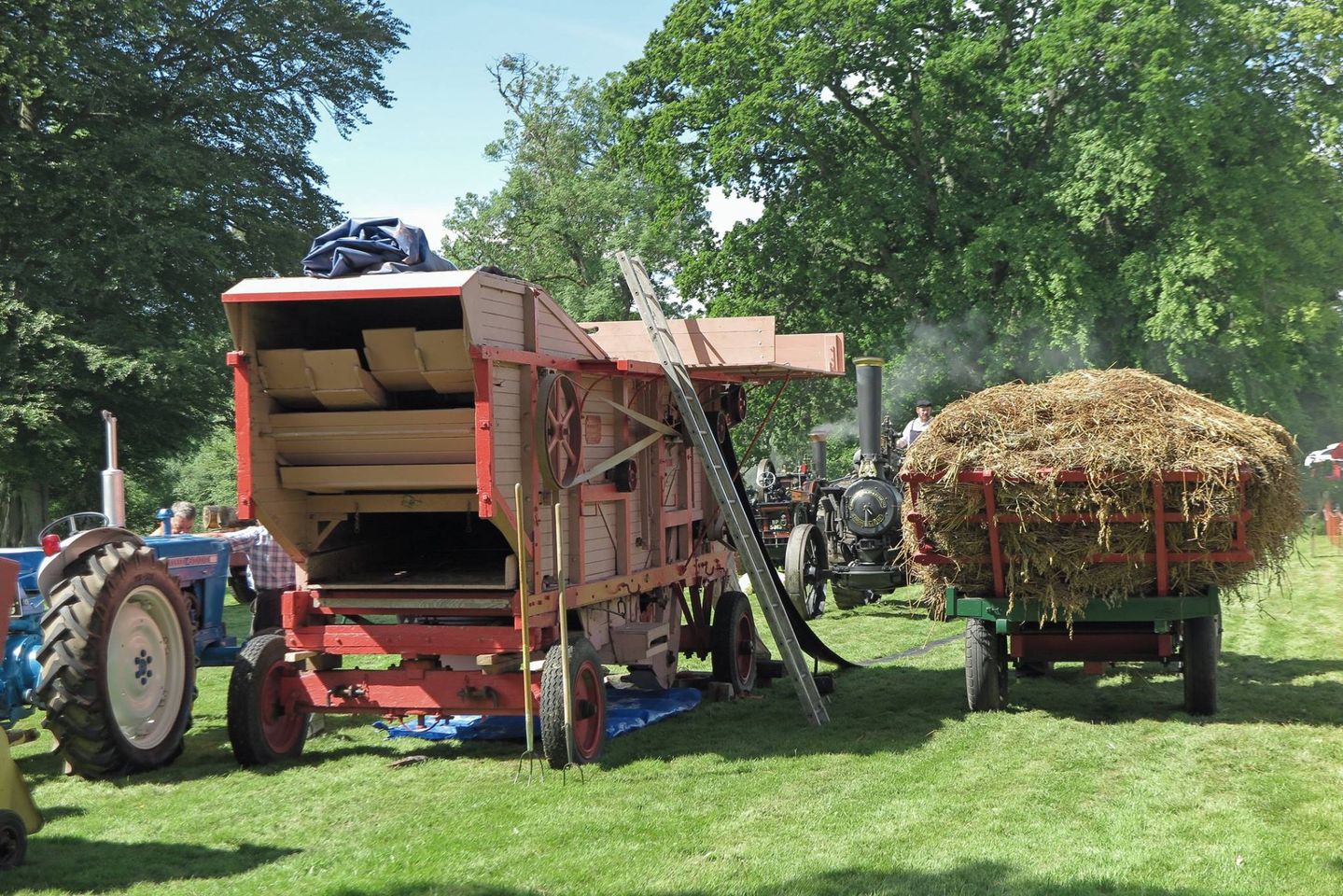
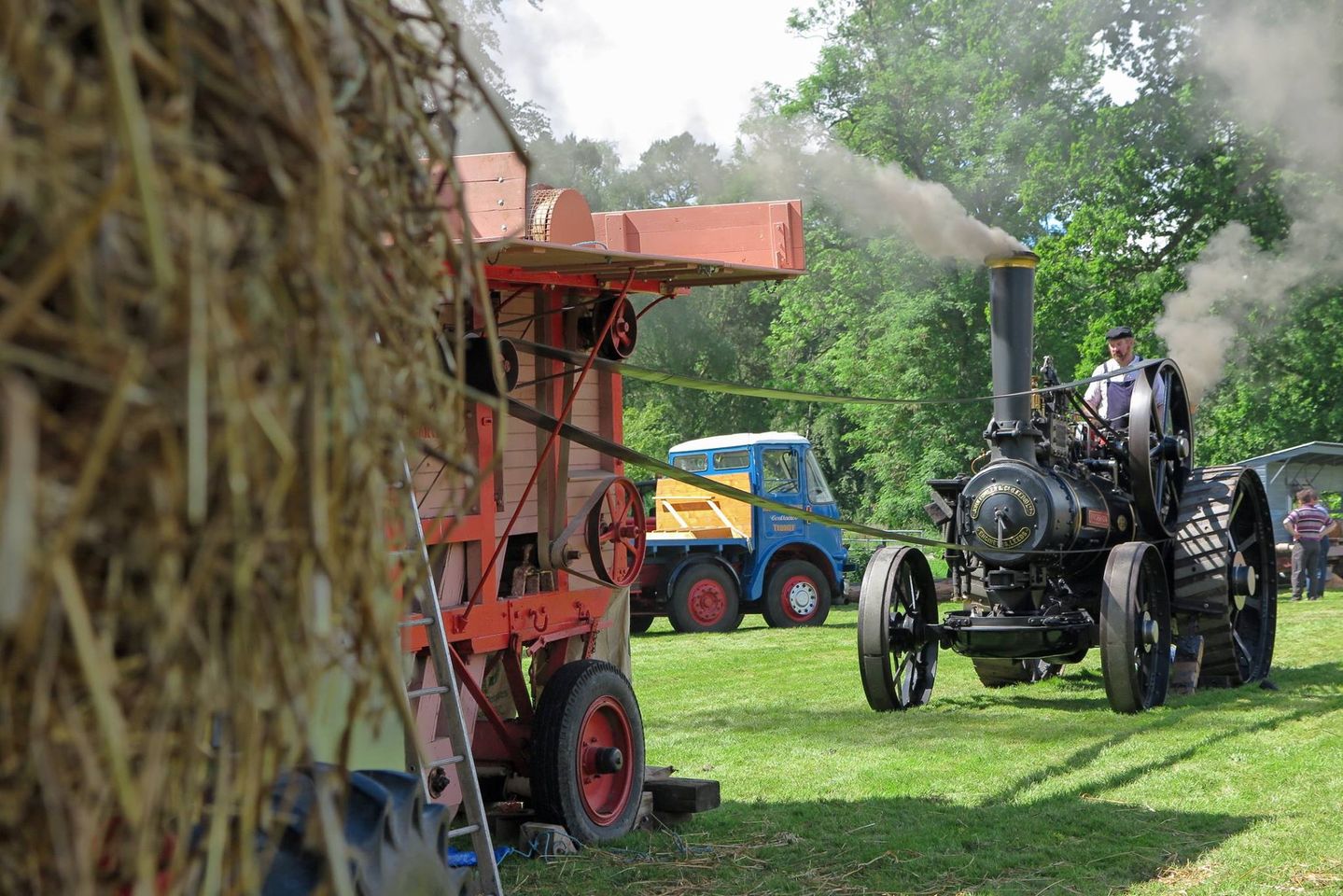
You’ll see it lumbering along the country roads in the late afternoon – a large and cumbersome box-like affair pulled by a traction engine.
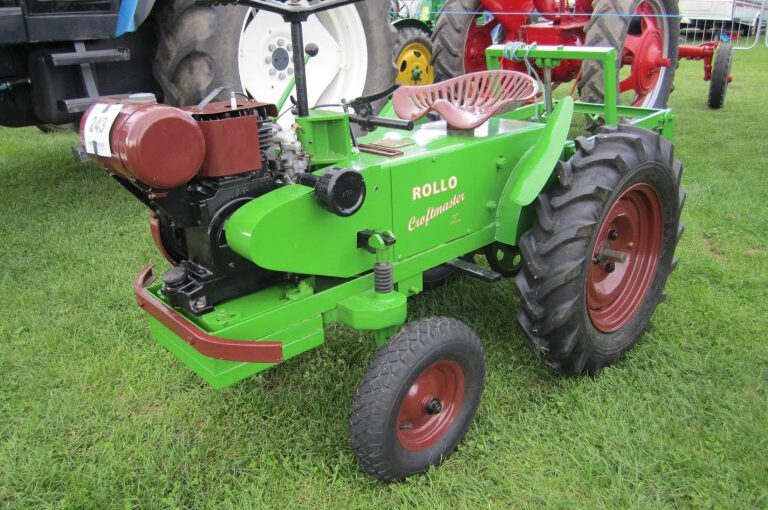
It’s the threshing machine moving on to a new farm.

The thresher is an expensive piece of equipment, so farmers prefer to hire their use by the day.

Each mill has its own district and it’s kept busy from now till the end of April. Its crew of two usually live in a caravan towed behind the mill.

As soon as the day’s work is over at one farm the outfit moves on to the next usually arriving after dark.

The crew are shown where the mill is to be set and get busy at once putting it into position and levelling it up.

It won’t work properly unless it is dead level, so spirit levels are fitted into the machine.
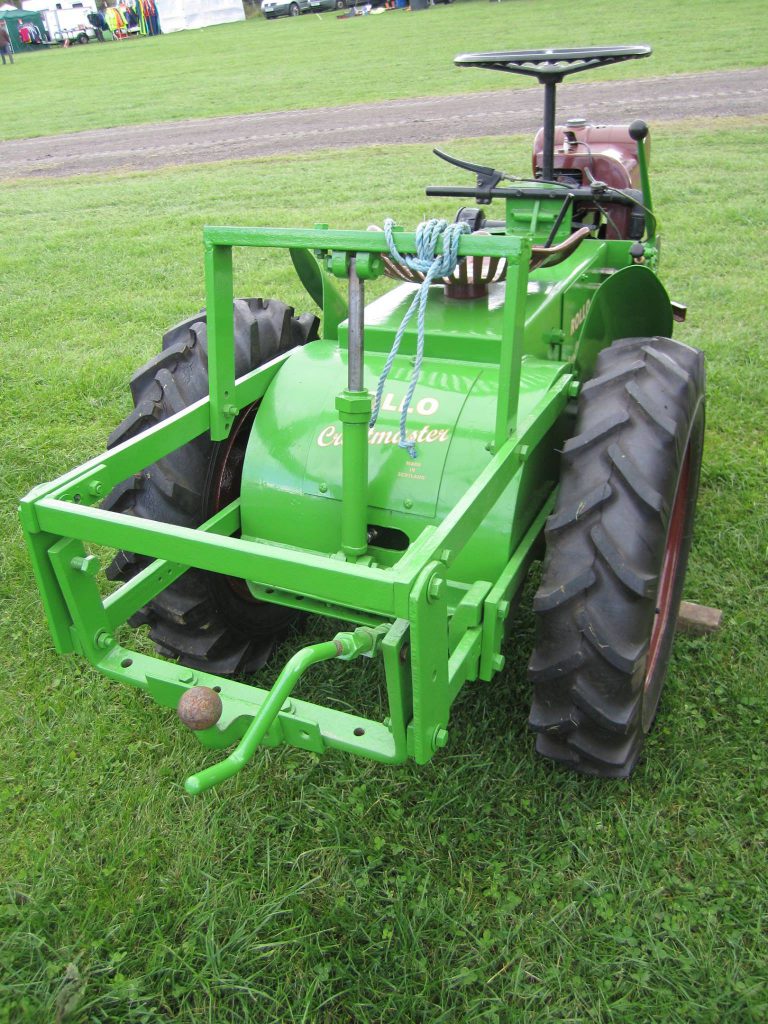
Next morning the mill men are up before the farmer, raising stream in the engine boiler and oiling their machinery.

When the real work starts one man feeds the corn into the mill drum which whirls round a thousand times a minute, while the other attends to the machinery.

Exchange jobs

The two change over frequently. Feeding the mill is hard toil. Keeping it operating is dusty and unpleasant.

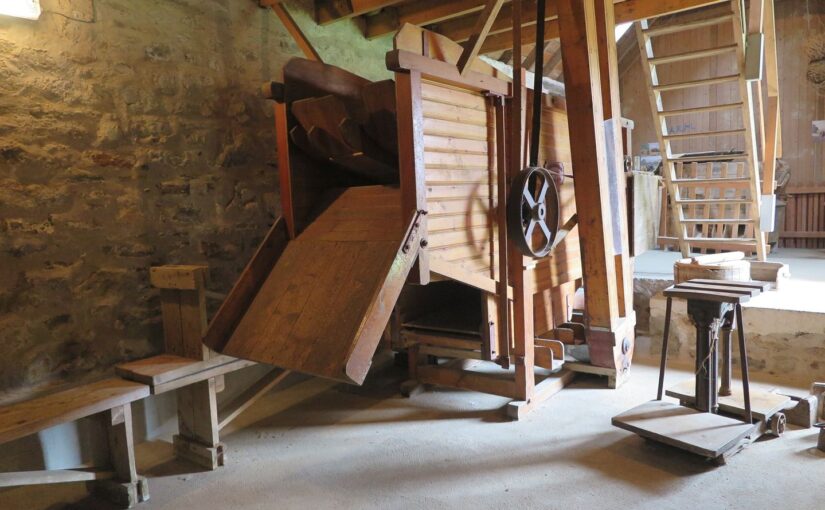
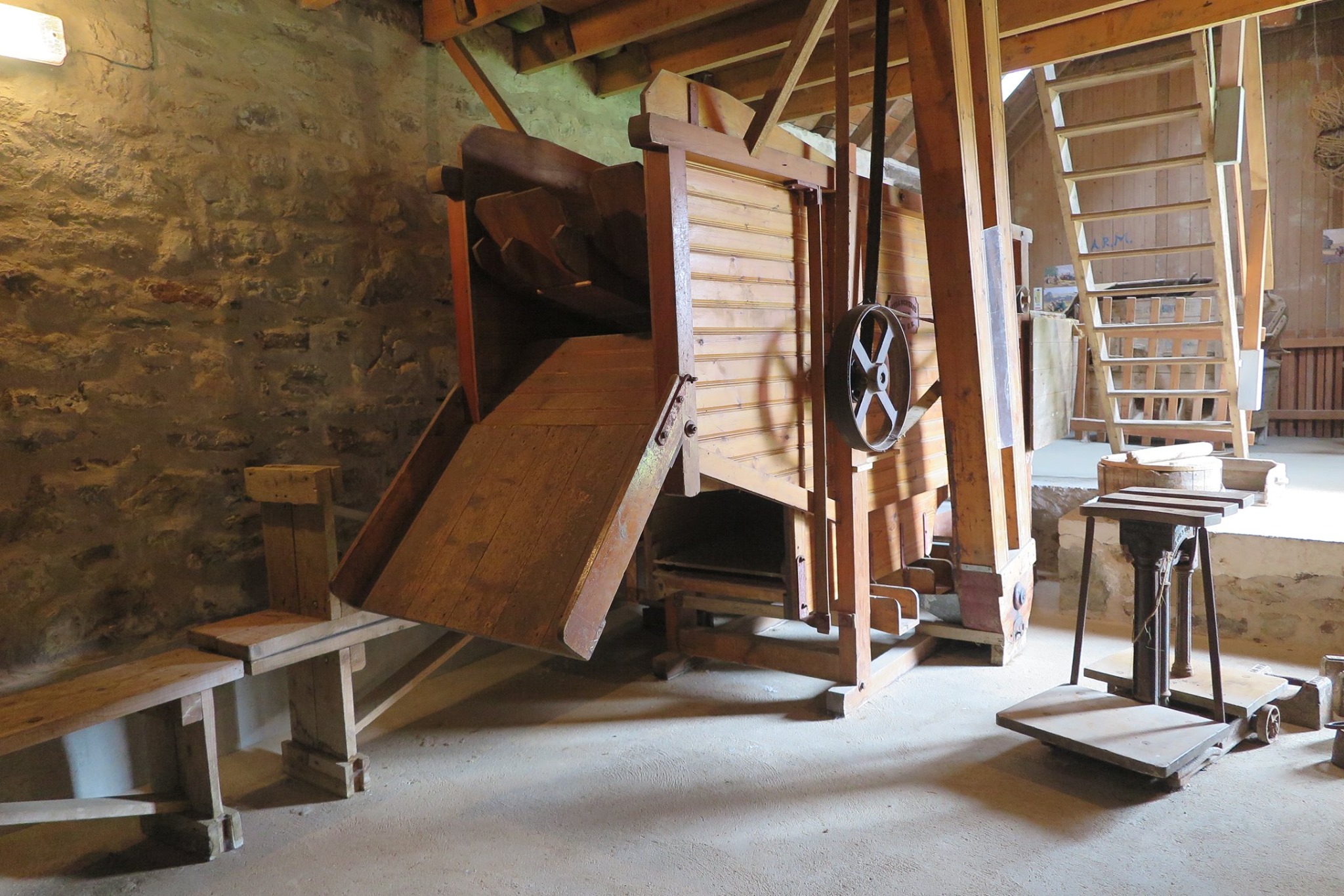
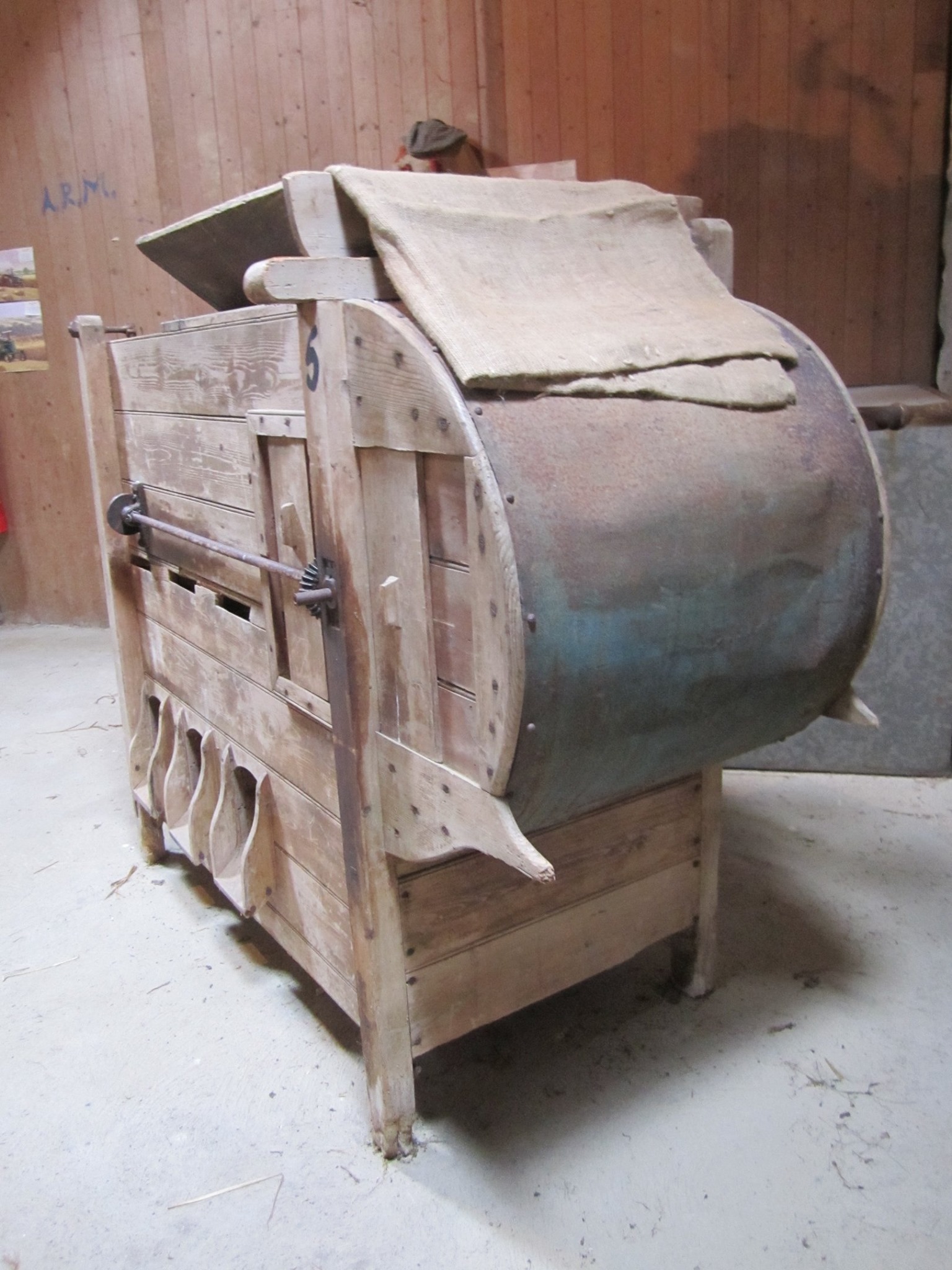
The modern mill is a clever piece of mechanism. Not only does it separate the grain from the ear. It removes the chaff and cleans the grain by means of air blasts and riddles. It throws out thistle heads and small weed seeds. It sorts out the true grain into three grades-seed corn, seconds, and tailings.

It can deal with 80 sacks of wheat in a day.

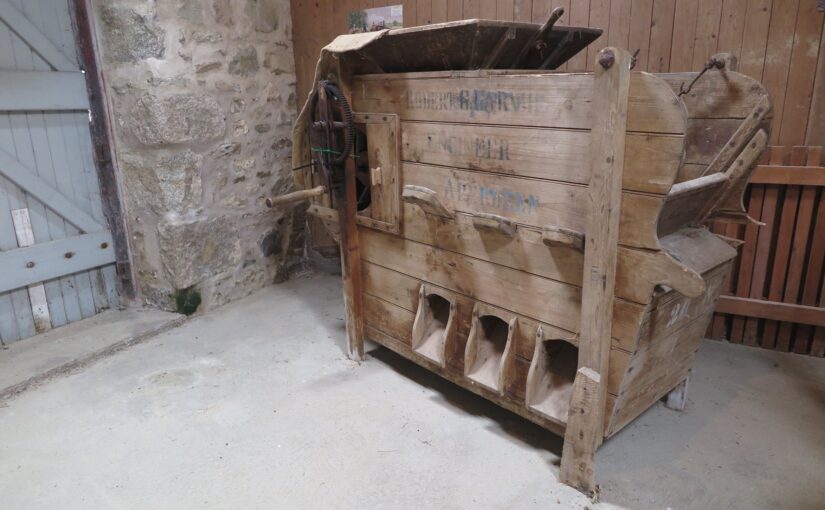
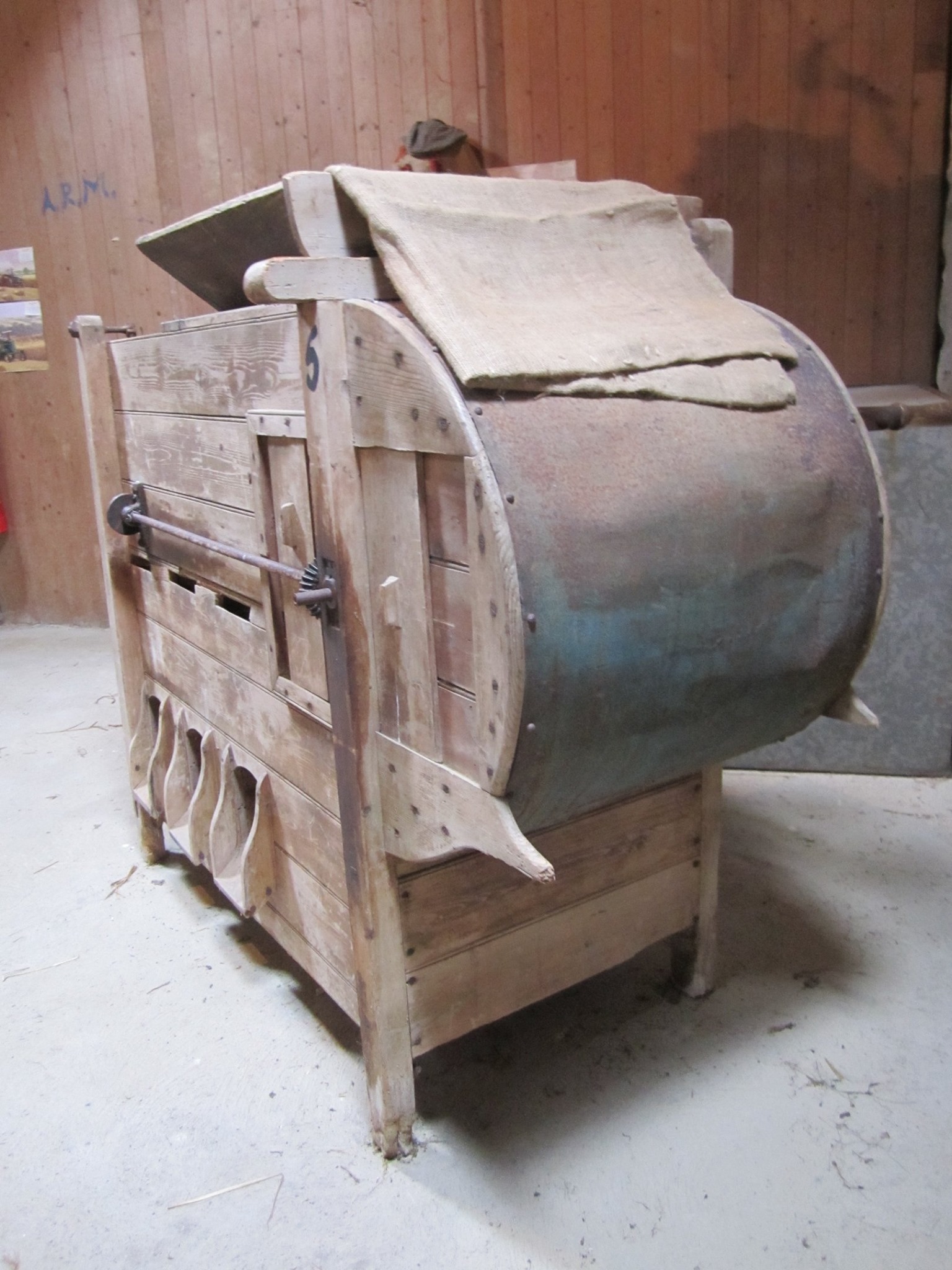
Petrol driven threshers are common in some districts, but the steam type is still in the majority. Many still on the roads are over 70 years old-a tribute to the quality of old-fashioned workmanship, but to the great pride all thresher crews take in caring for their machine. Till 1743 all grain was threshed by hand, the corn being beaten on a barn floor by flails. It was laborious and expensive. It employed man men, and the barn floors had to be removed frequently.
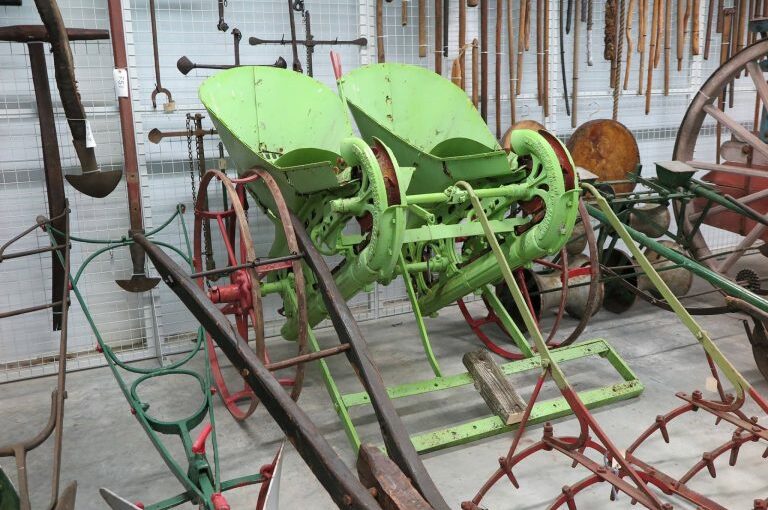
Then a Scot named Michael Menzies invented the first crude threshing machine in which flails were operated by water power.

In 1786 Andrew Meikle, an East Lothian millwright, had a much better idea. His machine had a central drum armed with fixed beaters and rotating at a high speed.

Meikle couldn’t get a Scottish patent for his invention because he had operated the mill in public before applying for one. But he obtained an English patent.

Threshing machines were worked by horse or water power till 1850, when the first steam-driven models were introduced.

Now a combined harvesting and threshing machine, imported from Canada, Australia, and the USA, looks like putting the other methods out of date.”

Share

Innovation in the Second World War – a demonstration at Eassie Farm in 1944

Given all the restrictions that were placed on Britain during the Second World War, we do not always think of it as a time of agricultural innovation. However, mechanisation and its increased use was an important part of the war effort. Although there were no major agricultural shows help during the war – such as the Highland Show – there were some demonstrations, including ones at ploughing matches, others arranged by the agricultural colleges throughout the country as well as tractor distributors and the Royal Highland and Agricultural Society of Scotland.

An important demonstration was held at Eassie Farm in April 1944, organised by the Royal Highland and Agricultural Society of Scotland. The following is an account of it from the pages of the Kirriemuir free press and Angus advertiser of 27 April 1944:

“Demonstration at Eassie Farm

New war-time implements

The tremendous strides made in the application of power to agriculture in Scotland since 1939 was amply demonstrated at the two days’ display of new farm implements, held under the auspices of the Highland and Agricultural Society at Castleton, Eassie, last Wednesday, when no fewer than eighty different types of implements were on view. The arrangements were carried out by a committee of management, of which Sir Joshua Ross-Taylor, Mungoswells, Duns, was convener, and Mr John Stirton, Edinburgh, the secretary. There was a large attendance from all parts of Scotland, and from Northern England and as far south as Wales.

Power farming come to stay

Power farming has come to stay and is recognised as a vital factor in agricultural development. Before the war something like 50,000 tractors were in service in Britain; now there are over 150,000 in regular use. In Scotland the number of tractors in the hands of farmers is more than 16,000 and with the machines held by contractors and the Government reserve, the tractor strength of the country is almost three times what it was in 1939.

The use of ordinary tractors with rear attached toolbars for three-crop work was demonstrated late in the afternoon, and was the high-light of Wednesday’s event. It was successfully carried out in light sandy soil. Among the other notable implements were the robot potato planters and the robot transplanter of vegetable crops. The potato planter opens up the ground, plants the potatoes, sows the manure, and forms up the drill all in one operation. There is one man with the tractor and one with the machine.

The handling of dung is one of the heaviest manual jobs now left on the average farm, and considerable interest was taken in the Thwaites power manure loader. The device is effective, and certainly reduces the toil of dung handling, but whether it proves an economic advantage to the equipment of any particular farm will probably depend a great deal on the lay-out of the yards from which dung is to be drawn. A manure spreader was also demonstrated with success.

A large crowd examined a portable thresher shows by Scottish Agricultural Industries Ltd (Messrs Barclay, Ross & Hutchison, Aberdeen). It is fitted with an automatic sheaf conveyor, self feeder, also an automatic weighing machine for the grain. In addition, there is a straw lifter for carrying away the straw.

Among the exhibits not for demonstration was a combine harvester, the use of which is extending in Scotland. It is likely to be demonstrated at the Society’s autumn trials. There was also a new type of binder which is being made in this country; it has a direct drive for tractor use. Also on exhibition was a “complete potato harvester”, and two hill drainage ploughs which will be demonstrated at the later trials.

Among the Scottish exhibitors were:-

Macneill Tractors Ltd, who showed the David Brown 3-furrow unit principle plough and unit principle potato spinner; L. O. Tractors Ltd, Coupar Angus, the John Deere farmyard manure spreader, with lime spreader attachment, angle-dozer for Fordson tractor, mill drainage plough, and potato harvester; Mr James Mackintosh, Forfar, Massey-Harris elevator digger, power lift combined seed and fertiliser drill and combine harvester; Mr Alexander Scott, three-way two-wheeled tipping trailer; Scottish Agricultural Industries Ltd (Barclay, Ross & Hutchison), Aberdeen, chemical dresser for coating seed grain with mercurial powder, driven by a 1 1/2hp petrol engine; J. B. W. Smith Ltd, Cupar, the “Catchpole Beet Harvester”; John Wallace & Sons Ltd, Glasgow, 5-furrow tractor plough and row crop tractors with equipment.

Thursday’s proceedings

The display and demonstration was concluded last Thursday. There was even a larger number of visitors than on the previous day, with over 5000 people attended. It was estimated that well over £200 has been raised for the Red Cross. Exhibitors expressed satisfaction at the business done.

Mr T. A. Wedderspoon, on whose lands the exhibition was held, said the directors of the “Highland” were very well satisfied.

A number of recordings were made. Sir Joshua Ross Taylor, chairman of the machinery committee of the Highland and Agricultural Society, spoke on the part of the Society had played; Mr T. A. Wedderspoon dealt chiefly with Angus and the need for maintaining fertility, and with larger crops the need for crop row machinery; Mr C. Davies, technical adviser to the Ministry of Agriculture, dealt with tool bars, and Mr J. Mackie, The Bent, Laurencekirk, spoke on mechanisation and the need for better standards of agriculture.

Visitors on Thursday included Mr Allan Chapman, Scottish Under-Secretary; Lord Radnor, chairman, Agricultural machinery development Board; Sir P. laird, Secretary, Department of Agriculture for Scotland; Mr Bonanquet, principal assistant secretary, Ministry of Agriculture and Fisheries.”

Share

Looking forward to the mechanisation of Scottish agriculture – in 1962

The 1960s was an important time for mechanisation on the farm. How could the state of mechanisation be described? What was there to look forward to?

An article published in the Fife Free Press on 26 May 1962 carried a story of a talk from Mr Gavin Reekie, Cupar, who spoke to the Rotary Club of Kirkcaldy about farm mechanisation. It is an insightful piece about developments, the state of mechanisation and looking forward to the future. You might recognise some of the developments that Mr Reekie predicted would be adopted. The article is quoted at length:

“Mechanical farm of the future

Talk to rotarians

The farm of the future was visualised by Mr Gavin Reekie, Cupar, a well-known agricultural engineer when he spoke at yesterday’s meeting of the Rotary Club of Kirkcaldy.

To begin with, Mr Reekie spoke of the revolution which had occurred in the farming industry over the last twenty years. It had been brought about by rural workers coming increasingly more often into contact with the town and city worker, by better transport facilities being available, and, latterly, by the ownership of cars. This contact by the rural worker brought home to them the fact that industry was providing better conditions of employment and a higher standard of living because of mechanisation and the drift to the towns started. This had forced the farming industry to take the ache out of back-ache and to mechanise in order to retain labour.

Mr Reekie said that in this period one could fairly point to the late Harry Ferguson who pioneered the introduction of mounted implements actually mounted and hydraulically controlled on the tractor, to what was termed today as the “three point hydraulic linkage.”

Since that time, continual improvements had been made in traction design and to implement design. There had been recent changes in grass conservation and since grass was now considered a major crop, more progress would be made there.

Potato harvesting machinery had been made considerable progress and soon, probably machines would do all the harvesting work without the need of school children.

“I am not against the use of school children gathering potatoes”, said Mr Reekie. “I personally feel that this sort of work tends to harden youth to the rigours of life that lie ahead. We have famous schools providing toughening processes for which they receive high fees, but here we have young people going out to gather potatoes and they are being paid for getting tough.”

Speaking of the future, Mr Reekie suggested that just as in the past the impetus for the revolution had come from mechanisation, so in the days that lay ahead would it come from the Common Market.

Stock feeding, he forecast, would be on the push button system and instead of silage he suggested the compressing of grass into small cakes which would be stored in bins thereafter fed into the cattle troughs.

Of the potato crop, he said there had been some advance in handling and the future would appear to lie in potatoes being stored at the farm in boxes of at least one ton capacity. Considerable progress had been made in the presentation of potatoes to the public and the accelerated freezing process, if the processing were justified should appeal to the housewife. Mr Reekie also forecast air conditioned tractor cabs and the cutting out of the gearbox by the use of hydraulics, a form of in-built irrigation with a switch-on under the control of a moisture metre.

“I suggest”, he said, “that a premium has always been placed on new thinking which can be converted into new methods whereby the individual tries to do the best job he can in his career. Competition is therefore essential for the well-being of our nation and it is this spirit of competition and adventure which will make this nation a most powerful partner in the Common Market.”

Share

A noted Peterhead business – James Simpson & Son

In 1846 James Simpson of Prince Street, Peterhead, described himself as a cart and ploughwright. By the following decade he had developed his business, becoming a coachbuilder and cart and ploughwright. In 1877 he described his business as an agricultural implement maker, becoming an agricultural engineer in 1902. The Edinburgh Gazette of 23 January 1917 described his business as “cartwrights, engineers and implement makers”.

While the business made a range of agricultural implements and machines, it was well known for its broadcasting sowing machine for grain and grass seeds from the early 1860s onwards. The high quality workmanship of the business was noted by the Aberdeen Press and Journal on 22 July 1915: “Mr Simpson’s work is widely known. Well seasoned material is used and the result is a strong, well build vehicle. The finish leaves nothing to be desired. The carts are fine to look at and as good to work and last.”

The business was a regular attender at the Highland Show from 1858 onwards, especially when it was held in Aberdeen, Edinburgh and Glasgow. It also attended the local shows, especially the Royal Northern Agricultural Society Show. Its broadcast sowing machine for grain and grass seeds as well as its sowing machine for turnips were both awarded a first prize at its spring show in 1862. It also won sovereigns for the best one horse farm cart at the Highland Show of 1858.

The two men who came to be behind the business – John Simpson and Henry Francis Simpson – dissolved it in 1916. Thereafter John Simpson carried it on for a time. However, this was not for a long period. On 20 January 1920 the Buchan observer and East Aberdeenshire advertiser, advertised the business for sale:

“Agricultural implement and engineering works in Peterhead for sale

The old-established Business of Messrs James Simpson & Son, Agricultural Engineers, Peterhead, is for sale. The firm have been in existence for a period of over 80 years. They are widely and favourably known among the Agricultural Community of the North of Scotland, possessing a first-class reputation as makers of Farm Carts, Broadcast Sowing Machines etc. This offers a favourable opportunity for anyone possessed of the necessary capital, and energy, as the Business is being disposed of, solely on account of the advancing years of the Proprietor. Mr John Simpson, who will furnish all information on application.”

The business was bought and in June 1920 became known as James Simpson & Son (Peterhead) Ltd, Peterhead, Aberdeenshire. It continued in business until 1981. On 11 December 1981 the Aberdeen evening express included an advert from Shirlaw, Allan & Co. auctioneers and valuers, Hamilton, for the company’s displenishing sale of “extremely modern garage plant, equipment and tools, spares and accessories, 27 private cars, office furniture and equipment etc”. Most of the plant and equipment had been installed new in 1979/80. The company was withdrawing from car sales and servicing.

Share