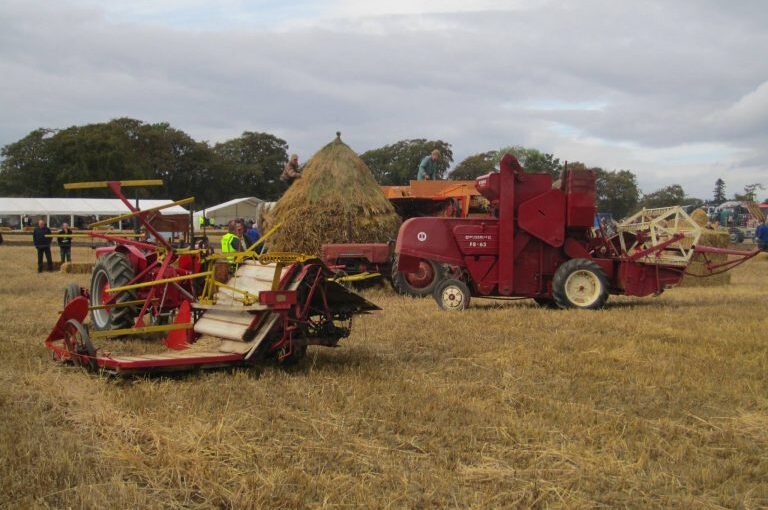
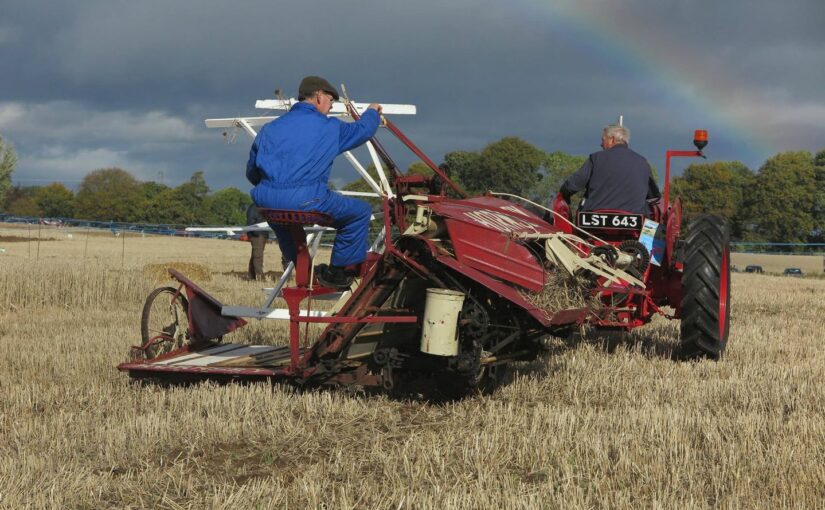
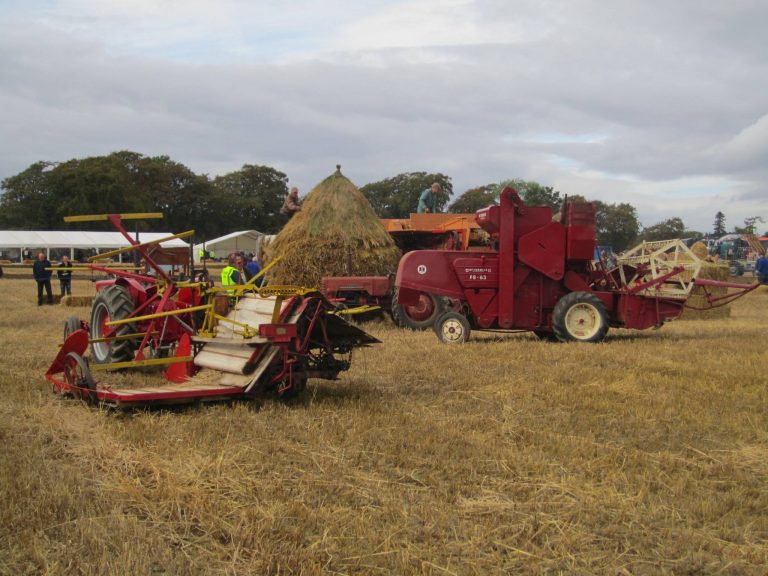
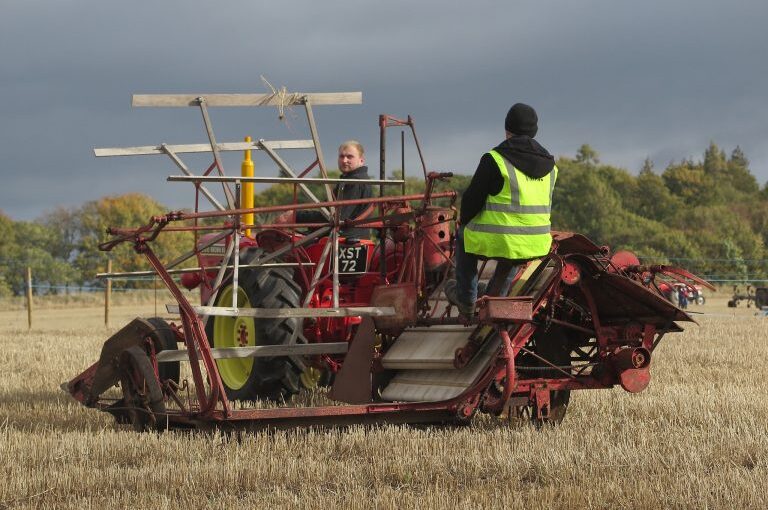
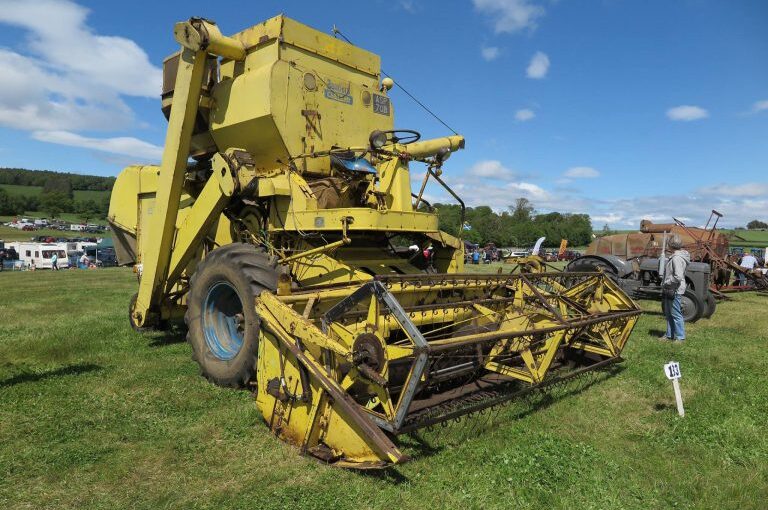
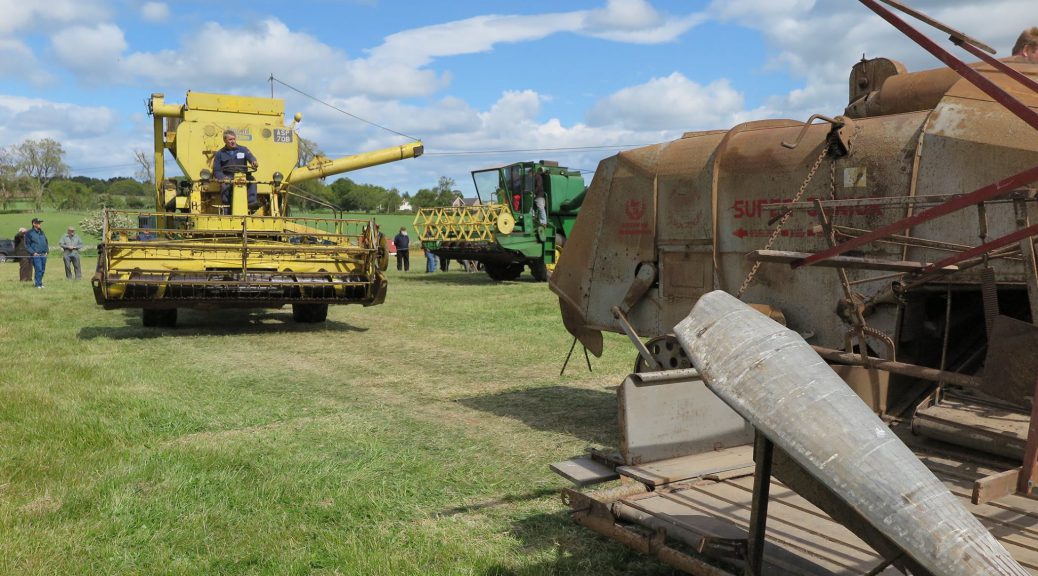
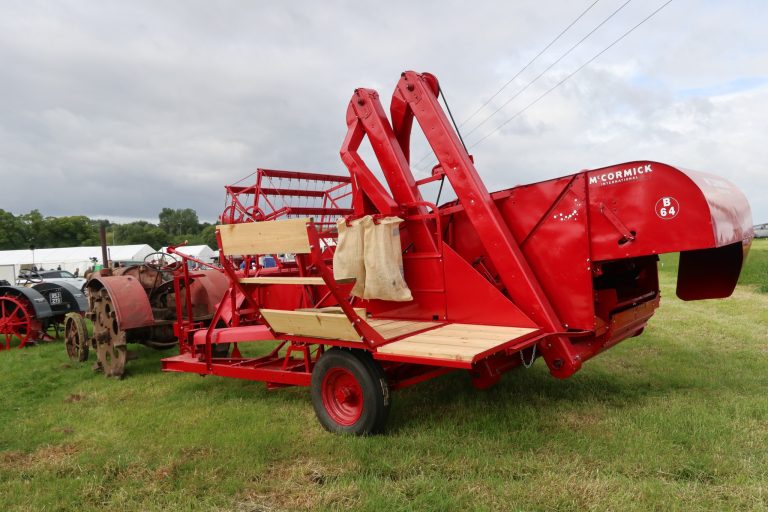
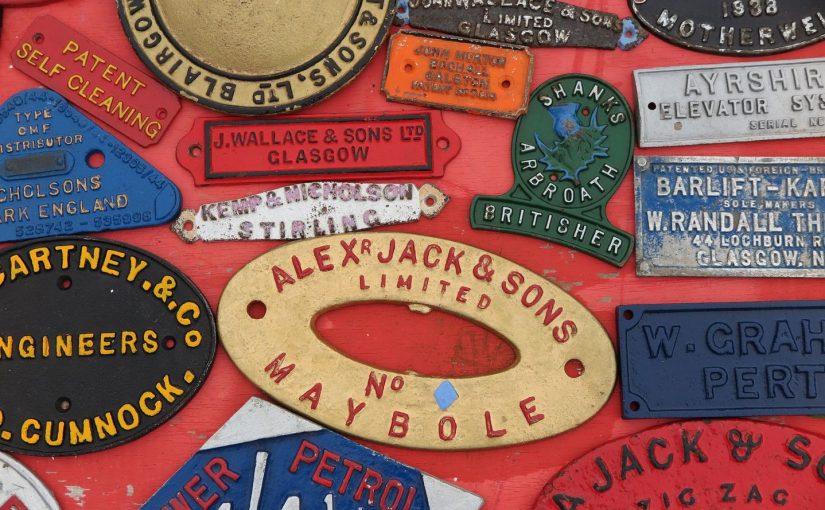
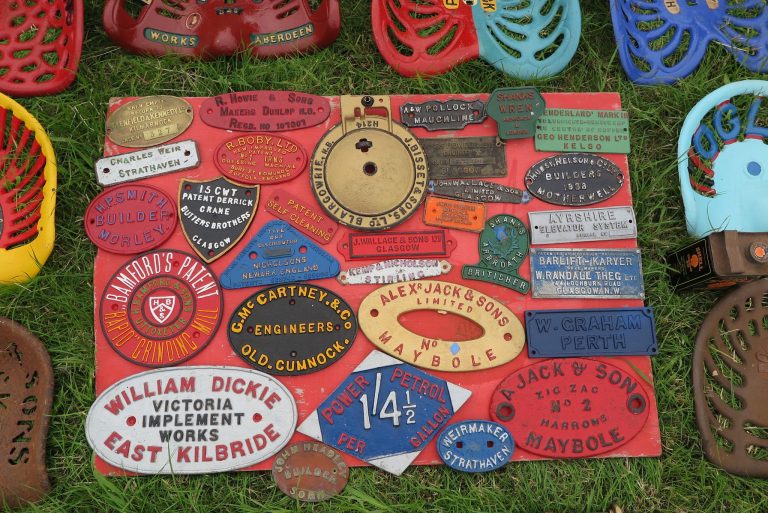
The early 1930s was an important period in farm mechanisation in Scotland (and throughout Britain). One of the key developments was in the adoption of the combine harvester. In Scotland the newspapers carried a number of articles on this new machine, and views on whether it could or would be successfully adopted by farmers.
The following are some articles that report the early days of the combine harvester and other technologies at this time:
From the Midlothian advertiser, 4 March 1932
“The combine harvester
Cuts Canadian labour requirements
The introduction of the combine harvester has been an important factor in reducing demand for labour for the farms on the Canadian praries. By the earlier system of harvesting by means of the self-binder, still extensively used, the best efforts of a labourer in the harvest fields did not accomplish as much in the way of harvesting as his same efforts would accomplish in the spring in the planting of the crop. In other words, it required about two men in the autumn to harvest the crop which could be planted by one man in the spring.
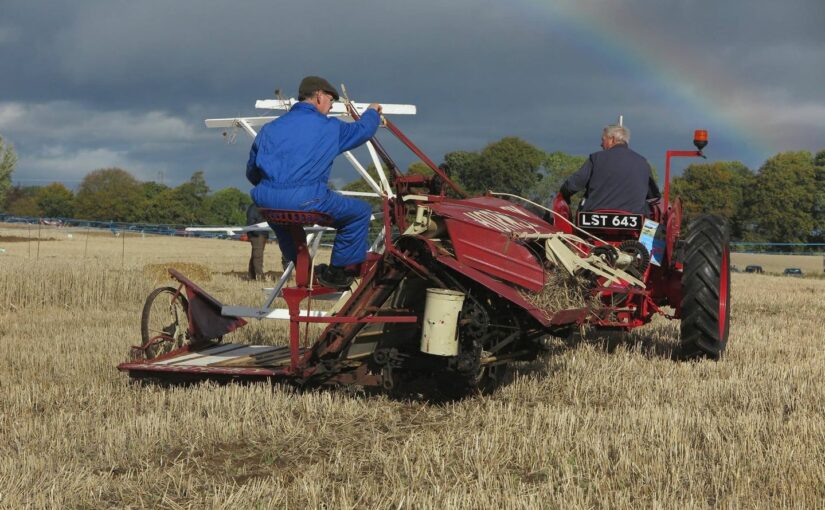
Labour saving is effected due to the fact that all the harvest work is combined in one operation. By the self-binder method the grain must be cut, the sheaves must be set up in stooks to dry, the stooks must be loaded on to the waggon and hauled to the threshing mill, and there the threshing must be done. The combine harvester combines all these operations into one, cutting the wheat and threshing it as rapidly as it can be moved over the field. All the labour of stooking, for which the harvest hands were particularly required, is eliminated. The cost of binder twine, also a considerable factor in wheat farm expenses, is saved.
Notwithstanding these advantages, however, there is little reason to believe that the combine will entirely displace the self-binder. On account of their cost, combines, to be used economically, must be operated on large farms or groups of farms.”
From The Scotsman, 13 January 1933
“The combine harvester
The combine harvester cuts the heads of wheat, leaving the straw standing, it carries the heads into a threshing drum, threshes, winnows, and bags the grain; it weighs the bags, and they are them removed ready for dispatch to the railway siding. Machines are made to cut a 10 to 15 foot swathe, and with their aid two men can complete the harvesting of 50 acres of wheat per day. Grains need not be man-handles at all from the field right through to the bakehouse. For the most effective use of the combine harvester, the standing crop must be completely ripe and sufficiently dry to allow the wheat to be bagged within a minute of its being cut; moreover, the machine is only economical in use where large areas of wheat are harvested. These factors impose limitations upon the world-wide adoption of the combine harvester, but modifications in the size of the outfit, the adoption of methods of artificially drying the grain, and the breeding of wheats which can stand long enough to reach complete maturity, are extending its use to areas of moderate-sized farms and to moister climates. Combine harvesters have successfully harvested English crops under favourable weather conditions. Adaptations to local conditions will probably be made. Nevertheless, the general use of the combine harvester in its most economic form is at present limited to the West and Middle West of the United States of America, Argentina, Australia, parts of Canada, and the drier districts of Russia, such as the Northern Caucasus. Probably in Hungry climatic conditions are also favourable, and the same is true of most of Italy.”
From the Dundee evening telegraph, 27 July 1934
“Robots are coming to our farms
Mechanisation is rapidly invading every sphere of agriculture.
Indeed, just as the present era of engineer-farming supplanted that of the old-fashioned primitive hand cultivation, the former is being ousted by what has been aptly named “robot-farming”.
A striking example of this is to be seen in Norfolk. There, on one farm of many hundreds of acres, hedges have been removed and small fields thrown into large ones, and not a single animal is seen, every operation being carried out by machinery.
Evidence of the coming change can be seen at all large agricultural shows, such as the Royal Show held recently at Ipswich, where some of the most impressive displays show the latest mechanical aids of agriculture side by side with the centuries-old appliances of the village and rural craftsman.
Such, for instance, are the veritable super-ploughs now being built, which may cost as much as £6,000 each, and which are capable of turning an acre of land an hour. Some are of 150 horse-power, and weigh 15 tons.
The combine harvester
In the future there is not the slightest doubt that machinery will be indispensable during the harvest.
A few years ago the combine-harvester was unknown in this country; now it is found in all parts.
This machine cuts and threshes the corn as it works round the field, doing away with the necessity for standing up the corn in shocks, carting and stacking, and at the same time relieves the farmer of the worry of getting his corn wet through before he can get it stacked and thatched.
This season it is expected that at least 10,000 acres will be cut and threshed by combine-harvesters.
Machines of this type are used in Canada and the United States. Eight years ago the Dominion had fewer than 200 of them, but at the present time there are something like 10,000 in use, worth approximately £5,000,000.
Defeating the weather
The hay harvest , or “haysel”, is another operation which frequently gives the farmer considerable worry, especially in Britain, where climate is fickle, and where on occasion whole crops have been ruined by inopportune rain.
For this reason the agricultural engineer has turned his attention to this crop too, and striking advances have been made.
The old method of cutting hay with the horse mower was satisfactory, but tractor mowers work far quicker, and take a wider sweep, so that the hay can be cut when in the best condition, and the haysel finished when the weather is good.
The farmer is also defeating the weather in another way, for electricity has come to his aid in the drying of the crop.
Rain has now little chance of deteriorating the cut where such aids are utilised, for the hay is carted directly after being moved, and a stack is erected over ducting of simple construction. An electric fan forces air through the ducts, and the hay is cured in this manner.
This is only one of the applications of electricity on the modern farm, and it is estimated that 2,000,000 farmers throughout the world have electrified their holdings.”
The newspapers in Scotland recorded the introduction of a number of implements and machines. These accounts provide an important historical record that shows where, when and who first introduced them. They also highlight the reaction to them, including the amount of attention given to them.
There are reports of a number of trials of these implements and machines. They include the first combine harvester. The following account from The Scotsman, on 2 September 1932, records the first trials in East Lothian:
“Combined harvesting machine
On the farm of Cairndinnis, East Lothian, owned by Lord Traprain, a new combined harvester completed successful trials this week. A similar type of machine has been used extensively in Canada and America, while several have been operated successfully in England, but this is the first occasion on which this thresher has been tried in Scotland.
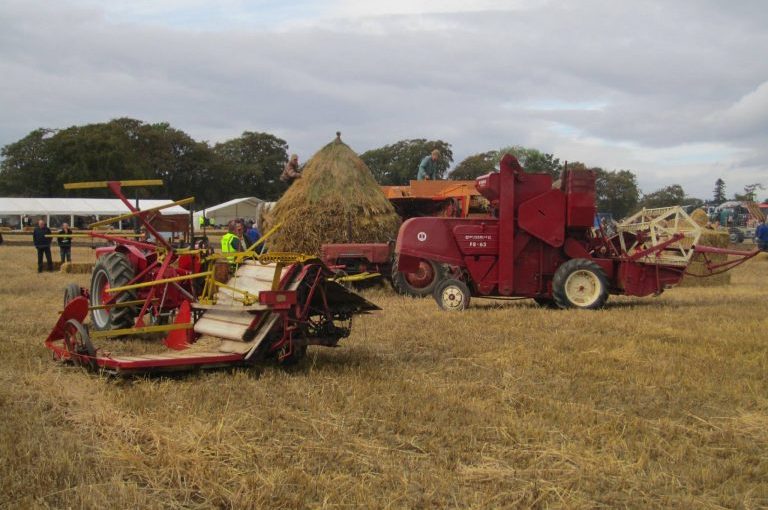
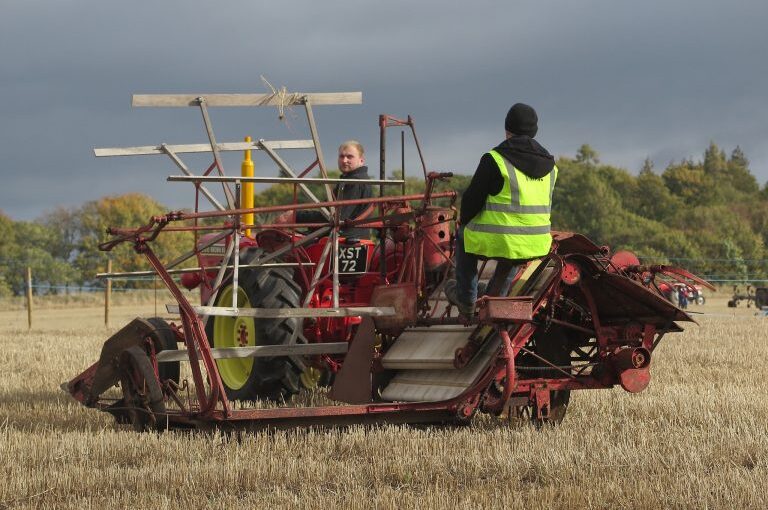
The machine, which is drawn by a Caterpillar tractor, has a crew of four men, and eliminates the laborious work of stooking, pitching, stacking, and threshing, and thus saves loss from rats and stacks. It can be adapted, as in other countries, to merely cut off the heads of the grain or the straw. The machine, which has a 12ft cut, does the work of four reapers. By its use the grain cut can be placed in the granary on the same day, and therefore a great deal of risk consequent upon bad weather is avoided. When the grain is cut it is taken up by conveyor belts to the threshing machines, the straw and chaff being discharged by means of a window at the rear. The grain, which is dressed, emerges at the bagging platform, and can be graded into three different grades. The machine is operated by one man who drives the tractor, one on the header watching the knife, and two on the bagging platform who fill and tie up the bags with grain and place them in a shute holding four bags, which can be immediately released by pressing a lever.”
The years following the Second World War continued to be difficult: there continued to be shortages of food, rationing, and problems with securing raw products and manufacturing products. However, it was also an important time for increasing mechanisation and the adoption of a range of new implements and machines including tractors, ploughs, milking machines, and combine harvesters.
The following reports record the statistics of the increase in mechanisation in Scotland in 1947 and 1948. They note the main types of implements and machines.
Increasing mechanisation (from The Scotsman, 10 January 1947)
The Department of Agriculture for Scotland issued the statistics on “Agricultural Machines and Implements in Scotland”. Increases are shown in practically all the main categories of mechanical aids and implements on the farm.
The number of tractors in use at February 4, 1946, was 23,580, compared with 20,510 at the same date in 1944. Although there is a slight decrease in single furrow-ploughs, which is not unexpected in view of the increasing use of multi-furrow power presses, there is an increase in the total of all classes of ploughs, the figures being 79,430 and 77,060 for 1946 and 1944 respectively.
During the two years there has been an addition of 700 milking machines in the country, the 1946 total being 7,930. Binders numbered 30,120 as against 29,370 in 1944, but perhaps the most impressive figure, although it is a small one, is that for combine harvester threshers, which have been more than doubled in numbers. At February 1946, there were 210 of these big machines in Scotland compared with 100 in 1944.
Progress of mechanisation (The Scotsman, 13 August 1948)
The Department of Agriculture’s return of agricultural machines in use in Scotland reveals the steady march of mechanisation in practically every item listed with the main exception of ploughs, but this is understandable, for the tractor ploughs can over-take so much more work per plough than the horse-drawn types.
The main increases of machines and implements are (1946 figures in brackets): tractors, 29,900 (23,580); petrol and oil engines, 26,010 (23,850); fertiliser distributors over 5ft wide, 18,330 (15,870); potato spinners, 14,230 (12,490), milking machines, 10.080 (7,930).
The newspapers used to report detailed accounts of the progress of the harvest. These included the state of the grain, the condition in which it was secured, the number of workers or “hands” employed, the slowness or the speed in which the crop was secured. A number of accounts also report changes in harvesting methods and the introduction of new technologies. In 1927 they included the use of the Combine Harvester in western Canada. In 1945 they record the extent to which the new Combine Harvest technology was spreading in Scotland. Although numbers were still small (though they were growing), there were said to be “many combines in use”. Accounts from these two years provide interesting insights into the harvesting season and the spread of the use of combine harvesters.
From The Scotsman, 21 October 1927
The protracted harvest
The harvest is pretty well over in the lower districts of Scotland, but much grain is still lying out in the higher districts. A good deal of damage has been done to the grain generally; the amount can hardly yet be computed, as much will depend on the weather for the drying of the stacks. Very little threshing has been done yet, as farmers are anxious to get on with potato lifting. The season is late, and the danger of frost for the potatoes is keeping farmers working busily with the harvesting of the tubers. So far as threshing has gone, the results show great variation in quality. The grain that was secured under good condition is bringing satisfactory prices, but a great proportion of the grain is now coming to the market is damp and of inferior order.
New harvesting methods
New methods of harvesting which were tried for the first time in various points in Western Canada during last month have aroused keen interest among agriculturists. These new methods included the use of the Combine Harvester, a new piece of machinery which is about as revolutionary in its effects on grain harvesting (states a correspondent) as was the invention of the self-binder in contrast with the old cradle and hand-binding system. With this new machine the wheat, in one operation, is cut, threshed, and loaded for transport. The invention secures also the elimination of binder twine. Twine costs about 15 cents (7 1/2d) per lb, and it takes two pounds to bind per acre. For every section (one square mile) under wheat the cost works out at over £38 for twine alone. From the framer’s point of view, the chief advantage is the greatly reduced cost of harvesting. Our correspondent has just visited farming districts where wheat has been harvested and delivered to the elevators at a cost of 3 cents (1 1/2d) per bushel, this is in striking contrast with general methods, which entail a cost of 20 o 30 cents (10d to 1s 3d) a bushel. If such a saving could be brought about generally, it would mean at last $100,000,000 (£29,000,000) in lower harvesting costs for the benefit of Canadian farmers.
From The Scotsman, 7 September 1945:
Many combines in use
Combine harvesters have been extensively used this season-between 30 and 40 have been at work in Berwickshire-and have greatly facilitated harvesting operations. On higher ground in several counties considerable areas have yet to be cut, but if the weather remains favourable for a week or ten days more the cutting should be about completed. Says an Aberdeenshire farmer, referring to the crops in his area, “If we get another week or two of good weather we shall have one of the best harvests we have ever had.”
This may not be the experience everywhere. In Moray the crops are described as good; cutting is almost finished, and a proportion of the crop has been stacked. “Generally good” is the description given to the crops in Perthshire, but some of those in higher districts are light, especially on land severely cultivated during the way years. In Fife, wheat “is a little lighter” than usual, with barley and oats “above the average”. The yield of grain in Berwickshire “looks as if it would be heavier than last year”.
At the time when combine harvesters were starting to be introduced in increasing numbers in the late 1940s, there was still a lot of debate over their use by comparison to the binder. An article in The Scotsman on 13 August 1948 noted a number of them. It captures very well the major changes that were taking place on the harvest field and also in grain handling. It is worth quoting at length:
“Serious problems of the harvest
“Combines” score in bad conditions
“When you think your barley is ready for cutting, go away and take a week’s holiday”, us an old and useful piece of farming lore, but there are seasons when it is difficult to follow such advice and this is likely to be one of them.
It is possible, in fact, that it may be nothing more than a race against time to get the crop in, whatever its state.
Sodden fields, as flat as if a road roller had been put over them, are already the heartbreaking experience in some areas where cutting could have been under way.
In spite of the present heavy setback by the weather and the fairly wide incidence of lodging in certain districts it is possible to express the cautious view that, with an early return of better conditions and a sustained period of reasonable weather, there will be a better grain crop-in the south-east of Scotland, at any rate-than there was last year. An improvement of 40 per cent in the oat and barley crops is the estimate of one authority. Last year the crop was, of course, very light, and it will not be difficult for this year’s to achieve much higher results.
Should the season stay bad those in the possession of combines will score-at least as far as harvesting is concerned, for combines will deal with laid crops far better than any binder. Before now a combine has saved a crop which would have been largely lost.
When to cut, depends of course on the crop. Barley must be dead ripe to achieve the best results both in the yield and in the keeping quality, for if the crop is fully matured on the stalk then a shower will dry out quickly. Oats may be cut with a touch of green. In other words, the crop, the method used in harvesting, and the weather are the deciding factors in assessing time to cut. It is not easy to decide, but farming is not an easy job, although some people seem to think so.
Combine development
A recent statistical report shows that there are 260 combined harvester-threshers in Scotland this year, which is 50 more than two years ago, and 160 more than in 1944.
While it is encouraging to think that such up-to-date methods of harvesting are being developed steadily it is well to remember that combines bring other problems in their trail, the chief among them being those concerned with the driving and storing grain harvested by these means.
The common method of harvesting by binder, stooking, and threshing, spreads the grain delivery over several months. The combine produces the grain in one operation. The merchants and the mills may not be able to deal with it all at once, and there may be allied problems of transport.
The fitness of the grain for storage depends on the moisture content. Barley should be brought down to 10 or 12 per cent, for safe storage, but should this season continue on its unhelpful way, the moisture content is going to be much higher. The brewers and distillers can take barley up to a certain content, but above the line the drying charges increase, and it may be a costly business before the grain is finally disposed of.
The question which arises is, therefore, are combines arriving faster than the facilities for dealing with the grain? The answer seems to be that in a bad, wet season, we have not the capacity for dealing with the crop, and one expert remarked in the course of a conversation the other day that the combines would “choke themselves”. There is already indication that drying facilities will be in demand this year, and one plant is now dealing with orders from firms who did not require these facilities before.
From this point of view, therefore, as well as from the general good and wellbeing of the farming community, we need a good long-term change in the weather.”
Agricultural shows provided an important forum for the exhibition of the latest and newest agricultural implements and machines. Some of the regional shows in Scotland were especially important for demonstrating them. They included the Perth Show. The Dundee Courier included a lengthy account of some of the most important exhibits at that show in 1922. The account is worth quoting at length for its insights into what was new and important at that time:
Aids to modern farming (Dundee courier, 4 August 1922)
“Fine implement display at Perth Show
The Perthshire Agricultural Society holds its annual show on the South Inch, Perth, to-morrow. This county fixture attracts a great deal of interest outside the field of the Society’s local operations, and many visitors attending to-morrow will have come long distances.
An agricultural show is something more nowadays than a turnout of animals. The first industry has developed so rapidly within the past half-century that the manufacturers of all kinds of machinery and implements required by those engaged in husbandry seize the opportunity to display their wares where agriculturists forgather. The competition between firms have become so keen that the implement yard at the Perth and other shows is a great exhibition in itself. There is to be an exceptionally large display of all kinds of things used in agriculture on the Inch to-morrow.
Round the stands
Messrs Lindsay & Fenwick, at Stand 7, are sowing bee appliances and dairy utensils, but the objects of most interest amongst their varied exhibits are probably the famous Coleman Quick-Lite lamps and lanterns. The Quick-Lite, which Messrs Lindsay & Fenwick exhibited so successfully at the Dumfries “Highland” gives a brilliant, steady, white light. It is a convenient, safe, clean, and economical method of lighting, and can be obtained at reasonable prices, viz, from £3 19s to £4 10s 6d. Messrs Lindsay & Fenwick, whose premises are at 143 South Street, Perth, are also showing at their interesting stand lime wash sprayers, stack covers &c.
Mr William Fulton, iron and steel merchant, 15-17 Kinnoul Street, Perth, has an attractive exhibition of blacksmiths’ and engineers’ tools of all descriptions at Stand 18. Mr Fulton is showing agricultural implements, binder, mower and plough parts, fencing materials, chains, and general ironmongery. All the material exhibited is of superior quality, and manufactured by firms well known for the high standard of their workmanship. This stand forms a feature of the extensive implement yard of the show, and cannot fail to attract many visitors from the community of enterprising farmers of Perthshire and other counties will be present.
At Stand 6 will be found the firm of Valentine’s Motors, Ltd., King Edward Street, Perth. Here, in addition to a comprehensive display of motor accessories, there are to be seen Austin tractors Glasgow tractors, three-furrow Oliver plough, disc harrow, and Newland self-lift cultivator. In modern up-to-date farming the tractor is becoming almost indispensable, and the Austin and Glasgow are amongst the most popular machines of this kind in the market. Land cultivation is made comparatively easy with either tractor, together with the ploughing and other appliances which Valentine’s Motor’s Ltd, are able to supply.
Essential tools
Mr Harry Johnston’s (8 King Street, Dundee) display at Stand 6 is bound to appeal to visitors in general. As Mr Johnston points out, one cannot do without those tools which are essential for work on the farm, the bench, the car, or at home. He has a magnificent selection for one to choose from, and the implements offered for inspection are the kind that will last and give satisfaction to whoever may employ them. The prices are popular besides. Framers and allotment holders in need of tools may be specially recommended to give Mr Johnston a call.
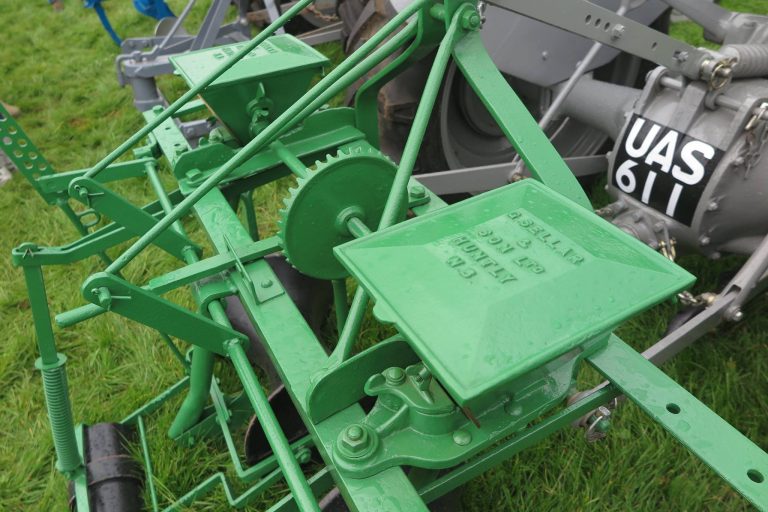
George Sellar & Son, Ltd, agricultural implement makers and iron founders, Huntly, whose extensive works are at Alloa, occupy Stand 4. The firm, whose address at Perth is Glasgow Road, are exhibiting all up-to-date agricultural implements, and a cordial invitation is extended to all visitors to the implement section of the show. The Messrs Sellar, who are noted for the high-class ware they provide, have made a judicious selection of implements of many descriptions for exhibition.
Messrs Ferguson & Walker, saddlers and harness makers, 19 Princes Street, Perth, who have a branch at Stand 11. Messrs Ferguson & Walker do a big business in the Big County, and their reputation has been established by the excellence of the goods they supply and the efficiency of their work. They are offering for inspection trunks and portmanteaux and leather goods, all of very fine quality. The stand is a particularly interesting one for the general body of visitors who are certain to find their way to the implement exhibition.
At Stand 15 there is to be seen the popular Garrett finishing thrashing machine. This machine is to be found in all parts of the country. It is of the latest type, and can be fitted in any farm establishment. It is a wonderful piece of mechanism, and runs with perfect rhythm. The Garrett has established its name in agricultural Scotland by the excellent work it can perform. The firm enjoys Royal patronage.
Mr Alex Lindsay, ironmonger, 34 King Edward Street, Perth, has a most interesting display of farm and household ironmonger at Stand 16. There is a varied collection of articles admirably displayed and all of superior manufacture. The exhibits include cream separators, sculls, binder twine &c. There is a special display of petrol lamps and lanterns, Government surplus, halters, collars, and ropes, also the Willey tool which, it is claimed, does 28 different jobs and is indispensable to farmers.
Messrs H. W. Mathers & Son, agricultural engineers, Perth, have an exceedingly attractive stand, at which is assembled a fine collection of implements which every farmer visiting the show should make a point of inspecting. The collection includes a Garrett finishing thrashing machine; horizontal engine-driven turnip cutter (portable type); Massey-Harris binder; Nicholson horse rake; Amanco pumping set, and other specialities. The articles on exhibition are of the most up-to-date description, and the best that can be produced.
At Stand 5 Mr Peter Rae, joiner, Battleby, Redgorton, is exhibiting coup and harvest carts, cattle float, farm harrows, ladders &c. Mr Rae is very well known for the high-class nature of his manufactures, and farmers in all parts of Perthshire have been supplied with much of their equipment from his establishment. The very best of material is used in the manufacture of his goods, all of which bear the stamp of perfect workmanship. Mr Rae is a very highly-skilled and experienced joiner.
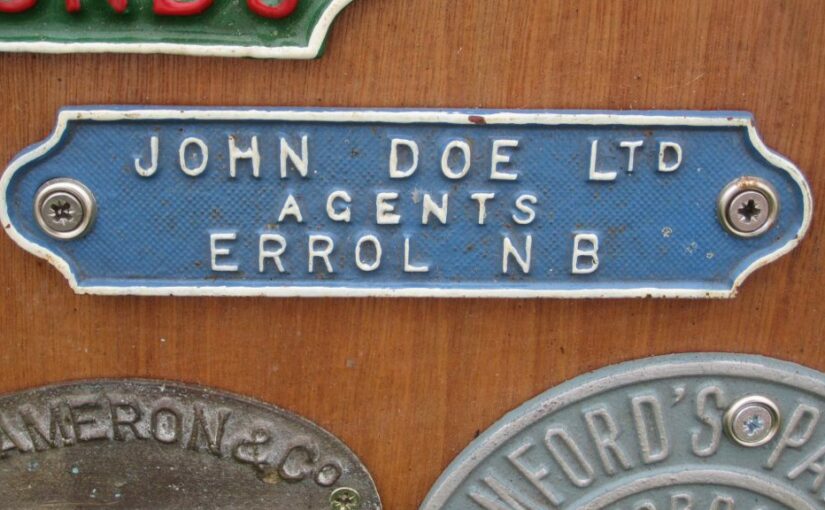
John Doe, Ltd, Perth, Errol, and Cupar, occupy Stand 9. This popular, old-established Carse firm are displaying a large variety of implements which are of outstanding merit. The Messrs Doe have a wide business connection throughout Central Scotland, and they have established their high reputation by always supplying farm accessories and necessities of the very best standard. The firm will appreciate a call from progressive farmers who are desirous of keeping their places equipped to perfection.”
Accounts of dinners and other events of the Scottish agricultural implement makers sometimes provide nuggets of information about the history of the makers, the development and introduction of particular implements and machines. One such account was published in The Scotsman of 29 November 1922. It related to a dinner for Mr William Poole of Armstrong & Main (Ltd), Edinburgh. He had been working in the trade since 1871. He played a key role, working for one of the important makers and agents. He had a number of important recollections, including that of the binder into Scotland. This was to play a key role in the mechanisation of the grain harvest. Here is what the newspaper account wrote of that introduction and Mr Poole’s reflections on the implement making sector:
“Scottish implement trade
Introduction of self-binders
Mr William Poole, of Messrs Armstrong & Main (Ltd), Edinburgh, who has been for fifty years associated with Messrs A. & J. Main (Ltd) and Messrs Armstrong & Main, and is a director of the Highland and Agricultural Society and a member of Edinburgh Town Council, was last night entertained at dinner by the Agricultural Implement Trade in Ferguson & Forrester’s, Edinburgh. Mr James H. Steele, Edinburgh, presided, and at the chairman’s table were Councillor Poole, Sir Isaac Connell, S.S.C.; Bailie A. Thornton Hunter, Maybole (Messrs A. Jack & Sons); Mr W. B. Wallace (Messrs Wallace), Glasgow; and Major J. kemp Smith (Messrs kemp & Nicholson), Stirling.
East Lothian demonstrations
Bailie Thornton Hunter, Maybole, in presenting Mr Poole with an illuminated address and other gifts, said much water had run under the bridges since Mr Poole commenced his business life under the late Mr James R. Main in 1871. He often wondered if the agricultural engineer got the credit he was entitled to for inventing and improving machinery to assist the farmer in his endeavour to make the proverbial two blades of grass to grow instead of one. It was admitted that one of the greatest inventions of last century was the self-binder, and Mr Poole’s connections with its introduction in this country was a unique and interesting one. In August 1878, at a field trial of the Walter A. Wood and the McCormick wire binders, he superintended and secured for his firm a gold medal for the McCormick manure. In the early eighties he had the honour of starting eth first twine binder ever put to work in Scotland. This demonstration took place on the farm of Mr Waugh of Eweford, Dunbar. Shortly after this the Toronto binder was introduced into Scotland by the late Mr Wm Ford of Fenton Barns. In the season following the introduction of the Toronto machine, he secured one of four Brantford all-steel frame binders, made by Harris & Son, Brantford. This machine was found to be an improvement on anything that had up to that time been used in this country. It, however, lacked capacity for dealing with the heavy crops grown in this country and it left a long stubble. Quick to see the defects and to know how improvements could be made, Mr Poole met a representative of the makers in the harvest field at Abbey Mains, Haddington, and from the suggestions made by Mr Poole this make of machine was so much improved that it at once jumped into popularity. So great was the success of this binder that the Massey Company found it would be to their interest to amalgamate with Harris & Son, which they did, and their joint production was the world-famous Massey-Harris binder. Mr Poole had contributed in so small measure to the art of agricultural implement making, particularly to the self-binder branch of the art, and a debt of gratitude was due to him by the whole agricultural community for his energy, ability, and enterprise. (Applause)
Importance of agricultural engineer
Mr Poole, in reply, said the manufacture of agricultural machinery in this country gad been looked upon by many as the Cinderella of the engineering profession, but, in his opinion, this was a misconception. In the great countries of the United States, Canada, Australia, New Zealand, Argentine, and South Africa the agricultural engineer occupied a position of pre-eminence, and, in co-operation with the farmer, had helped forward the development of these new countries with a rapidity that otherwise would have been impossible. During the late war the British Government discovered the importance of the agricultural engineer, and the amount of work entrusted to him. Through the manufacture of munitions of war and specialities connected with the same, was simply stupendous; and it must not be forgotten that it was in an agricultural engineering shop at Lincoln that the first war tank was designed and built. Mr Poole referred to the patriotic and valued services of the late Dule of Sutherland in land reclamation, spoke of the valuable assistance which the Scottish agricultural engineer has always received from the Scottish landed proprietors, their factors, and agents, and said that the passing of the landlords at the present time was nothing short of a national calamity. He had been connected with the Highland and Agricultural Society of Scotland since 1873, and with a few exceptions he had been present at the many trials and competitions that had been held under the auspices of the Society, and he had no hesitation in saying that the trials of tractors and tractor implements recently held at Dalkeith were, in his opinion, the most valuable and successful, so far as good and satisfactory work was concerned, that the Society had ever had. (Applause)
A fair field for Scottish agriculturists
Replying to the toast of “Scottish agriculture”, proposed by Mr W. B. Wallace, Glasgow, Sir Isaac Connell said Scottish agriculturists were up against a stiff proposition, but they were not going to lie down to it. They were not going to trust to Government promises or to political proposals. It was their own right hand and their brains on which they had to rely. It was right that the Government should help them with plant breeding, and to combat animal diseases. It was right that they should get the most up-to-date implements. If they got these, and were a fair field, he thought they would win through. (Applause)
Mr P. O. Turnbull, Smeaton, Dalkeith, in proposing the toast of “The Agricultural Implement Trade”, said farmers could not exist without implements, whether they were manufactured in Scotland or not, by they wanted implements which were suited to Scottish conditions.
Mr W. J. Hutchinson, Thurso Engineering Co., replied.
Other toasts included “Our Scottish Capital and its Civil Rulers”, proposed by Mr R. K. Anderson, and replied to by Councillor Philips Smith, and “The Highland and Agricultural Society”, proposed by Mr James Morgan (Messrs George Sellar & Son), and acknowledged by Mr A. B. Leitch, Inchstelly, Alves.’
William Ford of Fenton Barns was involved with the introduction of the binder in Scotland between at least 1887 and 1893. He advertised in the Scottish agricultural press in these years, exhibited at the Royal Highland Show and in 1895 participated in the Royal Highland and Agricultural Society of Scotland’s exhibition of binders at work. He appears to have been earlier a farmer at Hardengreen, Dalkeith.
The Royal Show, or the annual show of the Royal Agricultural Society of England, was a key event in the agricultural calendar, especially for English agriculturists. Scottish ones did attend, though their attendance varied according to the location of the show. The same was true for the Scottish implement and machine makers, though some did specially attend when they had new manufactures to show to the public, or when there were key trials for which they wanted to enter.
The number of Scottish exhibitors was generally small. They usually included some of the key ones. They brought with them their major manufactures to introduce them to an English and wider audience. These included ones that they were renowned for as well as improved ones. They also included ones that they considered filled a niche within the market for implements and machines.
The Scotsman included a lengthy account of the Scottish exhibitors to the Royal Show at Chester in July 1925. It is worth quoting at length as it says a lot about what was innovative and important about Scottish agricultural implement and machines and who were some of the most important makers. It states:
“For the third time in his history the Royal Agricultural Society of England is this year visiting Chester, and the show which was opened to-day in the implement department promises to be one of the most successful that has yet been held by the premier agricultural society of the Kingdom. It is thirty two years since the last Royal Show was held at Chester, which resulted in financial profit of £2404.
The showyard
The site of the showyard at Saltney is an admirable one in every respect, being within easy reach of the railway stations, and owing to its surroundings being almost secluded, about 130 acres have been enclosed as compared with 70 acres in 1893.
So numerous are the exhibits in the implement yard that no less than 11,000 feet had to be provided for the 438 separate stands, and in addition there are many “open space” exhibits. The collection of machinery is not only varied but comprehensive, and embraces all the most recent inventions which agriculture engineering skill has produced. The leading firms in England are strongly represented, and visitors may spend hours very profitably in witnessing at work the many appliances which steam, petrol, and electricity have enabled the implement manufacturer to bring to bear on the economy of the farm. Thirty new implements have been entered for the Society’s silver medal, as against 39 at Chester in 1893. A number of these can hardly be described as strictly new, but they all contain some improvement in details which secures greater perfection in construction and more efficiency in working. Two new implements are entered by Scottish exhibitors. Messrs John Wallace & Sons, Glasgow, show a potato digger which is fitted with adjustable graips, trees for two or three horses, and a patent wheel gig arrangement. Messrs Storie, Ltd, Kelso, exhibit a surface sowing coulter, with disc shoe, which can be fitted to any make of drill.
There are more than a dozen Scottish implement makers represented, and considering the expense that is involved in the conveyance of a large collection of heavy implements, they make a creditable appearance. Taking the exhibitors from the north of the Tweed in the order in which they appear in the catalogue, the first stand is that of Messrs Barclay, Ross, & Hutchison Ltd, Aberdeen, who show threshers and a manure distributor. Messrs W. Elder & Sons, Ltd, Berwick on Tweed, have a large display of broadcast sowing machines, turnip sowers, drill rollers, coup carts, hay bogies, and thistle and bracken cutter. The Aberdeen firm, Messrs R. G. Garvie & Sons, show thrashing machines with bagging elevator, an artificial manure distributor, a saw bench, and a broadcast seed sower.
Messrs George Henderson, Leith Street, Edinburgh, display their Waverley manure distributors with patent enclosed and self-lubricating driving mechanism, a thistle cutter, corn bins, hay collector, water troughs, and fencing plant.
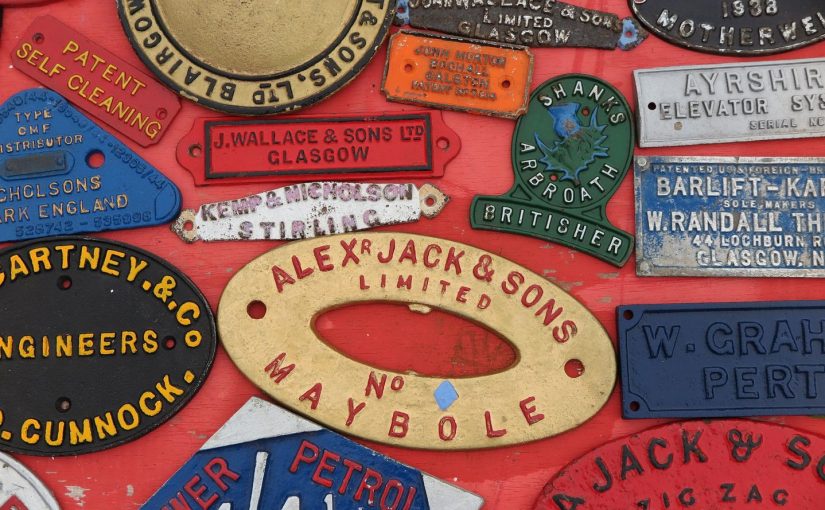
Ayrshire is represented by Messrs Alex. Jack & Sons, Maybole, who have on view their patent potato diggers, which have provision for altering the set or angle of the digging forks, Imperial manure distributors, lime and basic slag distributors farm carts, and horse hoes.
Messrs Marshall & Philip, Aberdeen, make a feature of spraying machines. The Dumfriesshire firm of Messrs John S. Millar & Son, Annan, specialise in windmills, cream separators, churns, and pumps, of which they show a large variety. Messrs Storie, have a large assortment of implements, including manure distributor, drill scarifier, and turnip and manure sower manufactured by the Leith firm, Messrs A. Ballach & Sons. Vaccar Ltd, Gretna, show pumps, milking units, and samples of lubricating oils.
Messrs John Wallace & Sons, Glasgow, have the largest Scottish exhibit, which includes the Wallace engines, the Glasgow cultivators, horse hoes, corn bruisers, chaff cutters, oilcake breakers, grinding mills, and Oliver ploughs. Messrs J. & R. Wallace, Castle Douglas, show their Royal medal milking machine and manure distributors. Messrs Watson, Laidlaw, and Co., Glasgow, has a varied collection of cream separators, including a belt-driven separator of 900 gallon capacity. Messrs A. Cross & Sons, Glasgow, are among the exhibitors of chemical manures and feeding stuffs.
The newspapers carried extensive and descriptive accounts of the implements and machines that could be seen at the Highland Show. In 1924 the Scotsman newspaper carried the following account. It pointed out the trends in implements and machines and what was notable among the stands.
“The display of farm implements is arresting in its scope and variety of interest. All phases of agriculture are represented, and many firms noted for the character of their products have stands. Particular interest naturally attaches to the new contrivances designed to aid the farmer in his operations, while noteworthy improvements in detail are to be noted on familiar implements. The casual visitor, as well as the agriculturist, will find a round of the stands an instructive experience.
A wide range of implements and appliances is shown by Messrs Gillies & Henderson, Bread Street, Edinburgh, at stand 172. Useful types of binders and mowers are shown, as well as a manure distributor, a horse rake, hay collectors, and a hay bogie, a rick stand, a potato digger, and other implements.
At Stand 127 of Messrs A. Newlands & Son (Ltd), St Magdalene Engineering Works, Linlithgow, there is a fine display. The Newlands tractor and horse cultivators and grubbers, horse hoes, and horse rakes are all marked by superior workmanship. They have also on view a wide selection of well-known implements by other firms, including the McCormick rake and grain drill, and the “International” tractor.
A notable feature of Stand 149, Messrs J. L. & J. Ballach, Gorgie Implement Works, Edinburgh, are the patent scarifiers produced by this firm. The No. 3 patent disc drill scarifier is fitted with compensating spring levers and sidelands arrangement, and the No. 4 patent combined scarifier has hoeing attachments. Turnip sowers, a combined turnip and manure sower, grinders, a potato sorter, a vertical steam boiler, complete with steaming pans, suitable for dairies and piggeries, and an artificial manure distributor are also among the exhibits, which embrace different aspects of agricultural activities.
Besides having two new implements on view, Messrs Thomas Sheriff & Co., West Barns, Dunbar, have some of their familiar and well-made implements at Stand 155. Their drills, seeders, and sowers have a well-established reputation for good workmanship, and there are typical examples to be seen at their stand.
A large variety of iron goods, chains, and blacksmiths’ supplies are on view at Stand No. 222, occupied by Neilson & Cleland (Ltd), Coatbridge.
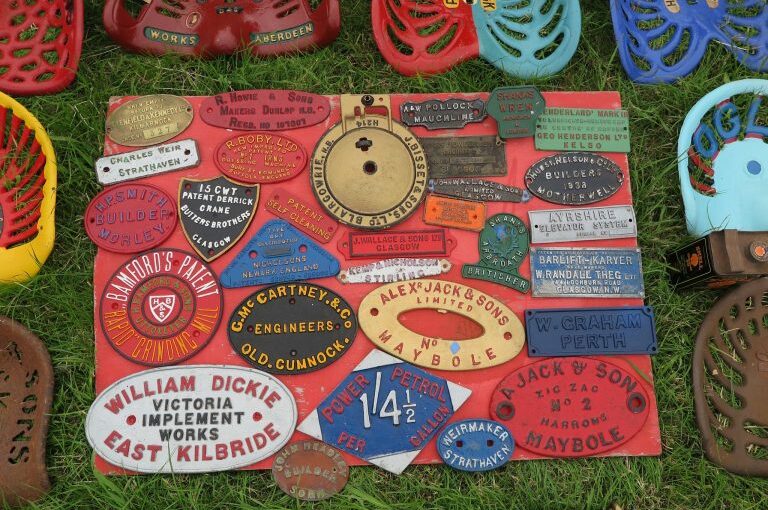
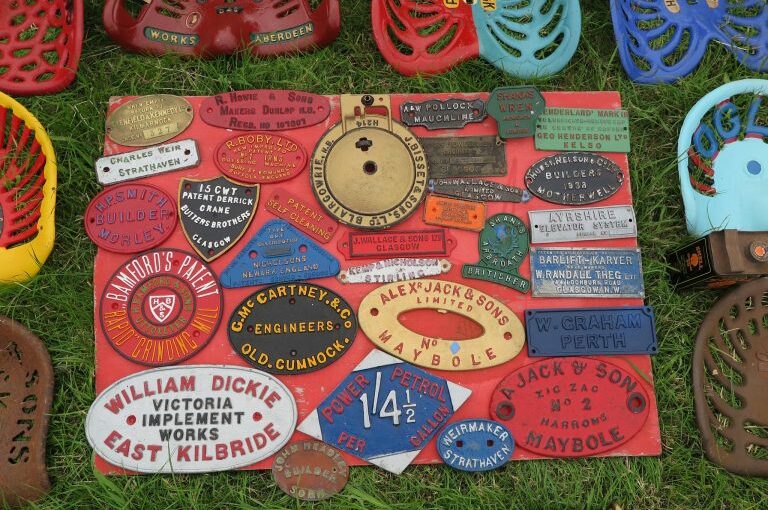
Among the other exhibitors of implements are such well-known firms as Messrs Robert Begg & Son, Dalry, Ayrshire; Messrs J. D. Allan & Sons, Murthly; Messrs Jas Gray & Co., Stirling; Messrs William Wilson & Son (Crosshouse), Ltd, Stirling; Messrs Wm Elder & Sons (Ltd), Berwick on Tweed; Messrs David Irons & Sons, Forfar; Messrs Alexander Jack & Sons (Ltd)., Maybole; Messrs Geo. Sellar & Son (Ltd), Huntly; Messrs John Doe (Ltd), Errol; Messrs J. Bisset & Sons (Ltd), Blairgowrie; and Messrs A. & W. Pollock, Mauchline, Ayrshire.
With such a representative list of makers and agents the implements section of the yard has many points of interest and lessons of practical value.”
The Highland Show has always been an important event for looking at – and purchasing – implements and machines. The Scottish newspaper press usually provided extensive accounts of the key ones that were exhibited by the different exhibitors.
When the show moved around Scotland in the different show districts (until 1960) Glasgow was an important show district. It included an extensive population; it was a large industrial and manufacturing district; and it included some of the most prominent makers in Scotland.
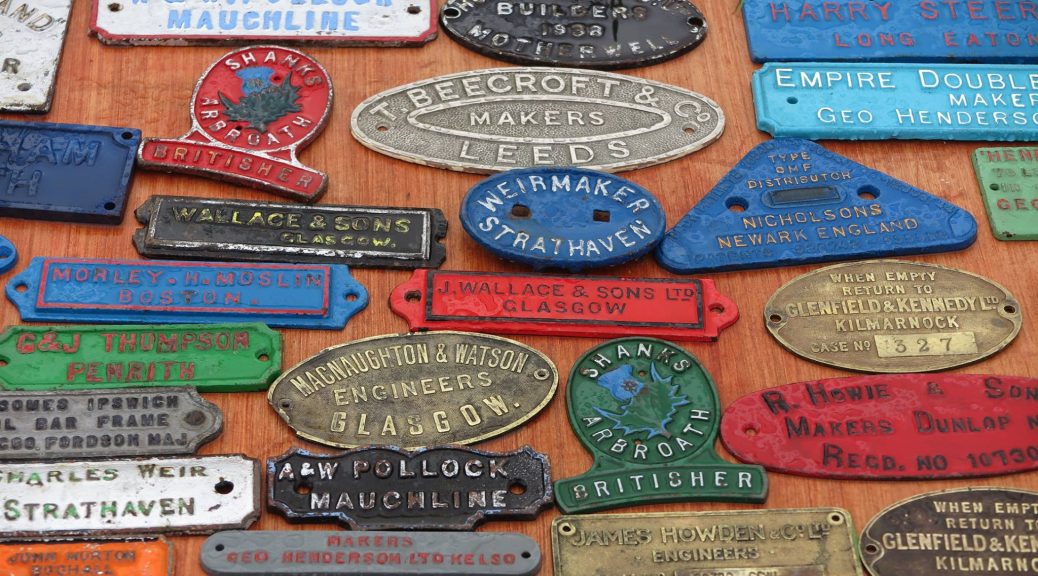
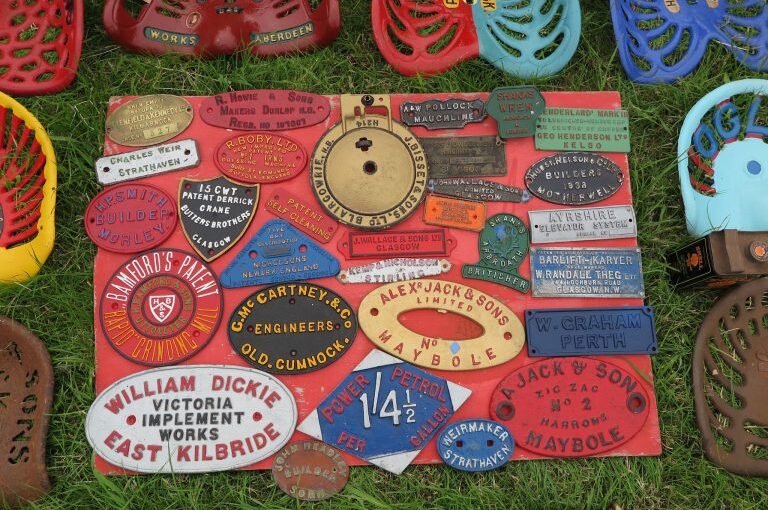
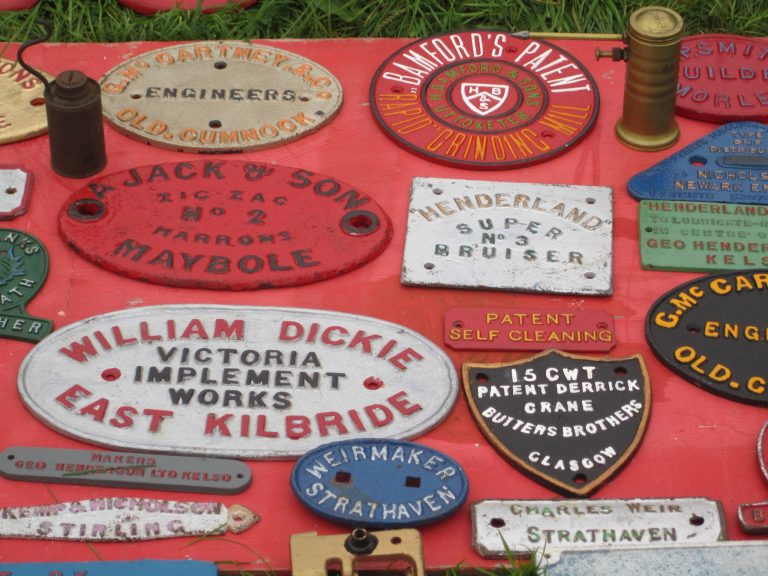
What was at the Glasgow Show of 1897? The Scotsman newspaper provided an extensive account of the implement department of the Show. One of the things you will note is how it provides a comprehensive overview of the stands and indicates the most important manufactures that were being exhibited. Some of the names of makers were well known into the twentieth century.
“The space set apart for the implement yard exceeds 5,000 feet, and there are 2,227 implements shown on 183 stands. Although not the largest show of implements that has been seen at Glasgow, it is all over a good exhibition, and embraces everything that embraces everything that enters into farm husbandry. At Perth last year the number of implements shown was 1,945, and at Dumfries in 1895 they reached the large number of 2,265. This year’s entry has been exceeded at only seven of the seventy shows held by the Society; and it is larger by 600 than that at last Glasgow show in 1888, but is 400 less than at the show of 1882. Although there are no absolute novelties in the implement section, there is no end of variety, and all the productions of the agricultural engineer are shown with their most recent improvements. The Society do not this year offer prizes for implements, but in connection with the show a competitive test of milking machines took place a month or two ago, when the prize of £50 was awarded to Mr William Murchland, Kilmarnock. His machine will be shown in working operation daily, and will be one of the chief attractions of the show. It was seen by the judges at work on three farms, and on each occasion samples of the milk drawn from the cows by the machine, and from the same cows by hand, were taken and set, in order to test the keeping qualities of the milk. On two of the farms the machine had been at work since 1891, and on the third for two months, and the judges stated that in each case it was found to perform the operation of milking efficiently and speedily. The time occupied for each cow was generally from four to six minutes, sometimes rather less. It seemed to cause no discomfort to the cows, and no injury to the teats or udder. It drew the milk by continuous suction, without any apparent pulsating movement. The apparatus was simple in its construction, equally simple in its working, and not difficult to clean or keep clean. The power required to work the machine was not great, At the first farm a half-horsepower oil engine milked ten cows at a time quite easily. Until this engine was put in recently, the machine was worked by one man, with an ordinary force pump. In every instance, the samples of milk drawn by the machine were found to keep satisfactorily. After a lapse of forty-eight hours they were perfectly sweet and in no respect inferior to the milk drawn by hand. The judges state that they regard this machine as a practical success, and are of opinion that in large dairies, where milkers are scarce, it may be introduced with advantage.
The exhibition of implements is the largest that has been seen at the Highland Show for the last twelve years, and in every respect the department is most complete. Every class of machine used in husbandry is on exhibition, and no more striking example of the great progress that has taken place in the economy of the farm could be afforded than the present display of machinery for facilitating the farm work of today. One of the first stands to command attention is that of Messrs George Gray & Co., Uddingston Plough Works, where a very fine assortment of ploughs of all kinds is on view. Next to this stand is that of Messrs John Drummond & Son, engineers, Cumnock, who exhibit two kinds of superior thrashing machines. A large and complete stand is that of Messrs A. Newlands & Sons, Linlithgow, where all kinds of farm machinery are on view. One of the features of this stand is the display of drill ploughs, which baulk up the drills in such a fashion as to leave no green potatoes. A particularly good implement is the potato-lifter, which so works as to lift up the tubers without injuring them. The action of the machine is the same as that of a man lifting potatoes. Its action is very natural. In most machines of this kind the action is rotary, but here the machine only describes a half-circle, with the result that the potatoes are delved out as if by manual labour. The invention, which is patented by Mr Newlands and Mr Burns, a potato merchant, has been in use this year digging out the green potatoes at Girvan. Another exhibit at this stand worthy of mention is a self-acting horse-rake of very simple mechanism. Passing on, the next stand to call for notice is that of Mr William Elder, Berwick upon Tweed, who shows a varied and interesting group of machines. A feature is the improved mower and reaper, worked from the hinge bar instead of from the pole, thus dispensing entirely with side draught. The broadcast sowers of this firm are known all over the country, and are great favourites on many leading farms. Some improvements have been introduced into them this year, and seed box having been made larger, to mention only one improvement. The steel-board ridging ploughs are so constructed that the draught weight is reduced to a minimum. Great labour-saving implements are the drill rollers and grubbers, which are so notched as to break the clods, and can be adjusted to any size or width of the drill. Mr A. Pollock, Mauchline, shows a very good collection of labour-saving applicances, and it may be mentioned that many of the products of this firm have already been booked, so great is the demand for the machiens of this prominent Ayrshire maker. A very good substantial combined reaper and mower of a new style, with a tilting board for hay and corn, is one of the features of this stand; while a hay and straw press, which is on show, is so arranged that one person can lift it by its own lever on to its wheels in one minute after the men stop baling, making it easy for transport. Practical agriculturists should make a pause at this exhibit. The distinction of having won the gold medal at Haddington belongs to this press. A very handy rick lifter is case-hardened in the centre of the wheel as well as in the axle, thus adding to its durability. This machine only weighs 6cwt gross. A patent hay collector is also on view, as well as an improved potato digger; while there is an example of Nicholson’s patent switchback hay turner, which Mr Pollock was the first to introduce into Ayrshire. There are also shown a double cheese press and a patent curd mill, similar to those used in the Dairy School at Kilmarnock. The features of the curd mill are the round teeth and the open grating in the centre, enabling it to break up more effectively, and without getting twisted round the breaker.
Messrs George Sellar & Son, Huntly, have a goodly show of ploughs, harrows, grubbers, and binders. Messrs P. & R. Fleming & Co., Glasgow, have one of the largest stands in the implement yard. A prominent feature is the corrugate d steel shed fitted with the horse fork. Beneath the shed is a large assortment of dairy and laundry utensils, while a large Bradford windmill is one of the features of the landscape. It is claimed for this windmill that the highest wind will not overcome it, and certainly it has plenty of opportunity of distinguishing its capabilities yesterday. The firm also show many of the machines for which they are the agents. Messrs John Gray & Co., Uddingtson, have on show a large display of ploughs and other agricultural implements; while Mr Charles Weir, Strathaven, exhibits rick lifters and churns. Mr Thomas Turnbull, Castle Bank, Dumfries, has a stand on which he shows an improved Dumfries broadcast sower for grain and grass seeds, along with chaff cutters and grinding and churning mills. Weighing machines have of late been coming to the front in farm work, and the stand of Messrs Ward & Avery, Glasgow, devoted to these exhibits, is therefore all the more interesting. Messrs Henry Pooley & Son, Glasgow, also show in this department a number of weighbridges of various capacities. Mr John Scoular, Stirling, makes a large display of agricultural appliances; and the stand of Mr J. P. Cathcart, Glasgow, is also a most complete one. The machines of Walter A. Wood are exhibited at the stands of Messrs P. & R. Fleming, Glasgow, and George Sellar & Sons, Huntly. Messrs Kemp & Nicholson, Stirling, have a large stand on which they show horse rakes, reapers, mowers, hay collectors, spring carts, farm carts, vans and lorries. The Morgan hay baler at this stand is a machine which can load 50cwt of hay on an ordinary railway wagon, pressing hay to double the density of the old-fashioned press. An improved cart turnip cutting machine is worthy of notice here. Messrs James Grey & Co, Stirling, have also a goodly collection of implements. One of the largest stands in the show is that of Messrs A. & J. Main & Co., Edinburgh and Glasgow. The chief exhibits at this stand are the Deering binders, an American make of machine which has been pushing its way to the front in Scotland. The Deering pony binder is fitted with roller and ball bearings while the Deering ideal mowers and combined mowers and reapers are also fitted in a similar fashion. The Deering Harvester Company introduced ball bearings into their machines five years ago, and since that time many other firms have adopted this contrivance. One of their pony binders is fitted with slot conveyors instead of canvasses. Their McDonald turnip topping and tailing machine won a silver medal at the Dumfries Highland Show. Shown for the first time was the one horse back-delivery reaper and mower, which is specially adapted for small farms and crofts, and which is used as a supplementary machine to the binder for opening up fields. With Brown’s Cammo cart turnip cutting machine, also exhibited at this stand, a cartful of turnips can be cut in seven minutes. Messrs Thomas Hunter & Sons, Maybole, show a very nice collection of implements of general utility in the cultivation of the soil, chiefly applicable to the root crops. Mr Wm McNaughton, Stirling, shows hand presses. Messrs J. D. Allan & Sons, Dunkeld; Mr William Dickie, East Kilbride; Mr Matthew Dunlop, Glasgow, and Messrs John Turnbull & Sons, Dunmore, Larbert, have all good collections of various kinds of agricultural implements. Messrs G. McCartney & Co., Old Cumnock, exhibit a couple of thrashing mills- one of them a high speed machine fitted with riddle and fanners. An attractive display is made by Messrs Thomas Sherriff & Co., Westbarns, Dunbar. A feature of their exhibition is an improved broadcast sowing machine for grain and grass seeds, which at Haddington Show on Saturday was awarded a silver medal. This comprehensive stand also includes a collapsible sheep fodder rack of novel design. Messrs john Wallace & Sons, Glasgow, like many other local firms, have a large display, comprising the City of Glasgow and the Thistle binders, the popular Massey-Harris cultivators, and the Champion potato-digger, with two and three horse trees. The hay “tedders’ exhibited by the firm are worth the attention of visitors. Driven by one horse, they are every day coming into greater demand. Naturally a prominent machine on the stand of Messrs J. Bisset & Sons, Blairgowrie, is the firm’s open back binder, which was shown at the trials in connection with the show at Edinburgh in 893, and obtained a favourable notice from the judges then. Among the firm’s other exhibits is the safety potato digger. Messrs Alexander Jack & Sons, Maybole, have a large stand, on which are specimens of the strong and compact Empire binder and the well-known Caledonia potato digger, which, being fitted with enclosed gearing, is capable of standing a great deal of wear and tear. The digger, which was first at the trials of the Leicester Royal Show a year ago, holds a prominent position in the market as a perfectly arranged machine. A moderately priced horse hoe and specimens of the Dux Canadian ploughs are among the other exhibits by which the firm is represented.
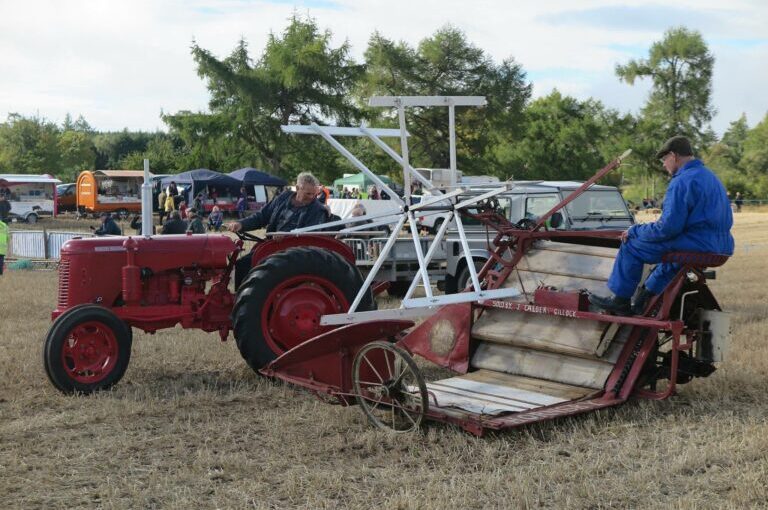
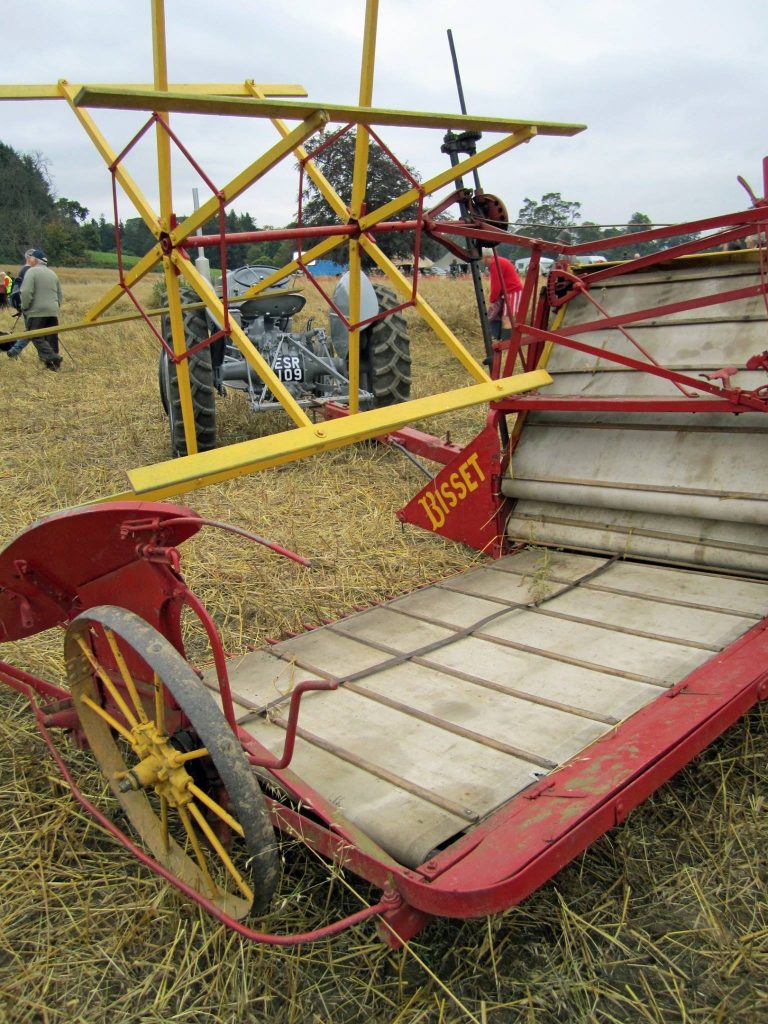
The motion yard is not very extensive, but it is extremely interesting, and embraces an excellent collection of machinery of the farm. Mr H. B. Fleming, Kirkliston, shows the “Bisset” reaper and binder. Messrs Carrick & Ritchie, Edinburgh, show a large collection of their improved turbines, pelton wheels, jet water motors, and other appliances for the utilisation of water for power for mills, farm machinery &c. the application of water power to country house lighting by electricity is illustrated by a combined turbine and dynamo. Another novelty is a combined jet water motor and dynamo suitable for lighting a small house containing thirty lamps. Another application of water power for the ventilation of buildings is shown. This is a very compact combination of a jet motor and ventilating fan, by which the town water supply entering a cistern may be made to yield up its power in driving the ventilating fan, and then pass into the cistern for domestic use. Messrs Ben Reid & Co., Aberdeen, have an attractive stand, at which the show in notion five thrashing machines of the newest and most improved type, fitted with double blast and barley awner. They have also at work one of the Massey Harris Brantford binders, fitted with the original patent slat conveyer. They likewise show their well-known broadcast sowing machines and manure distributers, together with a varied assortment of useful articles for farm work. Thrashing machines and engines are the leading features of the stand occupied by Mr R. G. Morton, Errol, and these are of an excellent description, neatly designed, and well finished. Windmills are conspicuous objects on the stands of Messrs P. & W. Maclellan, Glasgow, and Messrs John S. Millar & Son, Annan. As in former years, Messrs Thos Gibson & Son, Fountainbridge, Edinburgh, have one of the largest individual spaces in the yard allotted to their exhibits. Their name is so well known for ornamental iron work that little need be said on their behalf. Mr William Sinton, Jedburgh, shows an interesting assortment of churns; and Mr John Gray, Stranraer, has on view cheese vats, presses, refrigerators, and other dairy utensils. The Dairy Supply Company, Edinburgh, exhibit a large collection of separators and other appliances of a useful character. The Sorn Dairy Supply, Glasgow, have a working dairy, which should prove a source of much attraction, the process of buttermaking being carried on daily. Messrs Watson, Laidlaw, & Co., Glasgow, show a number of cream separators in this section of the implement yard.”