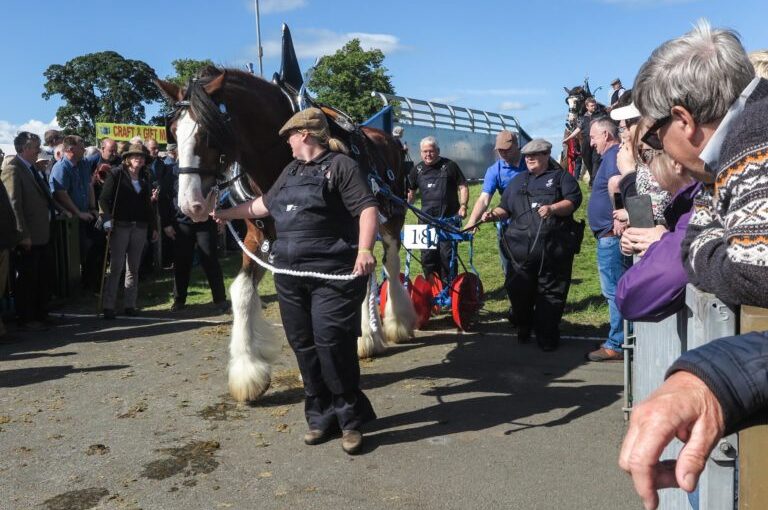
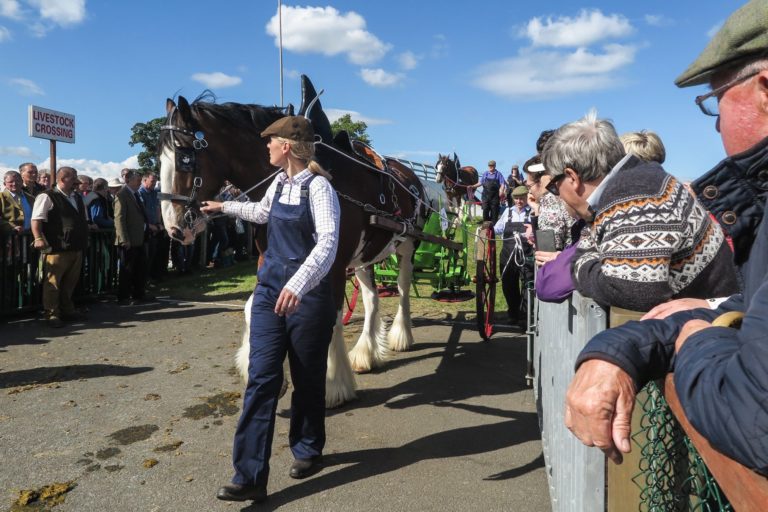
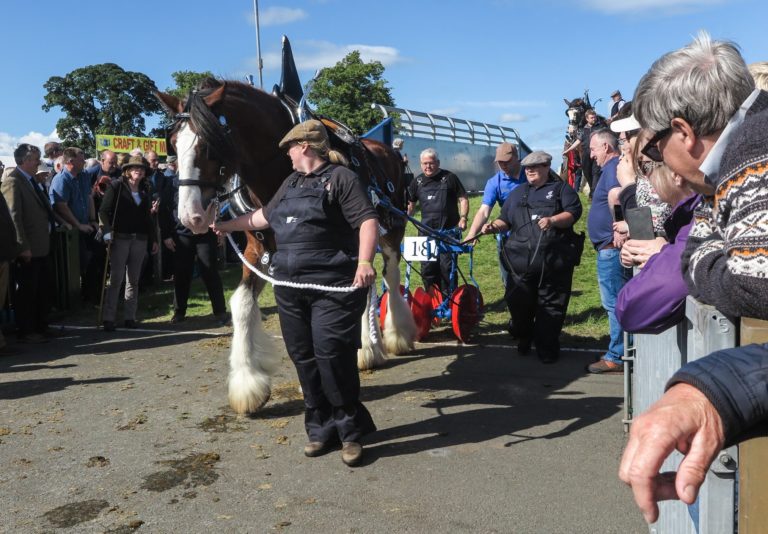
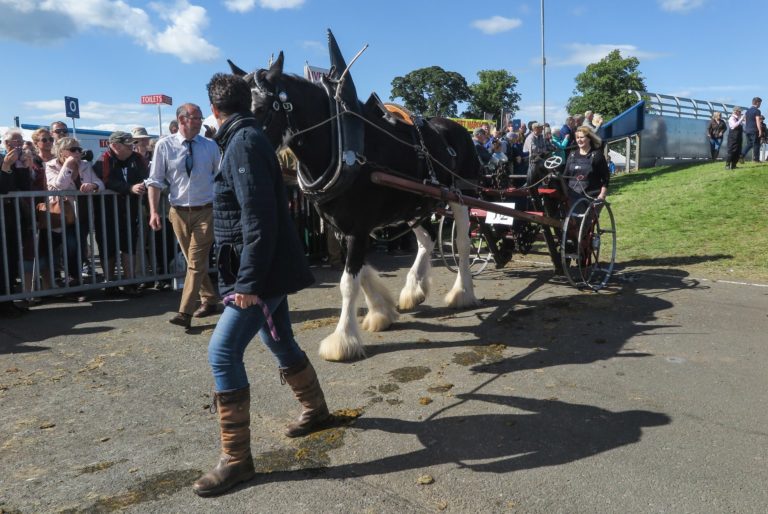
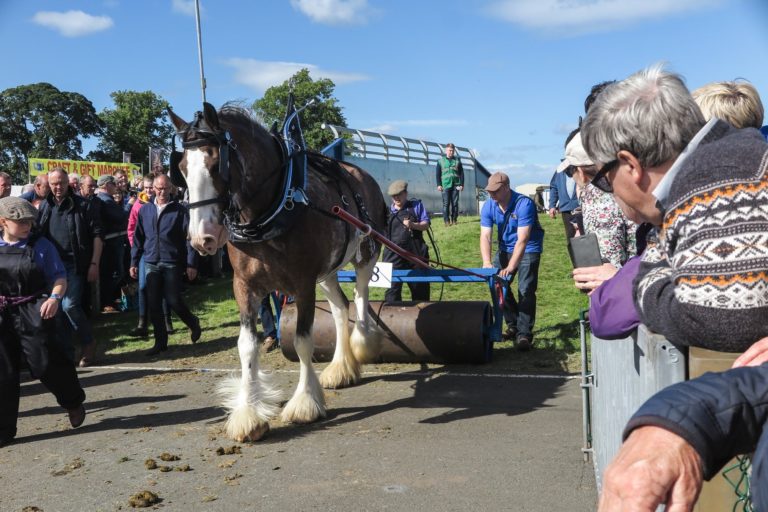
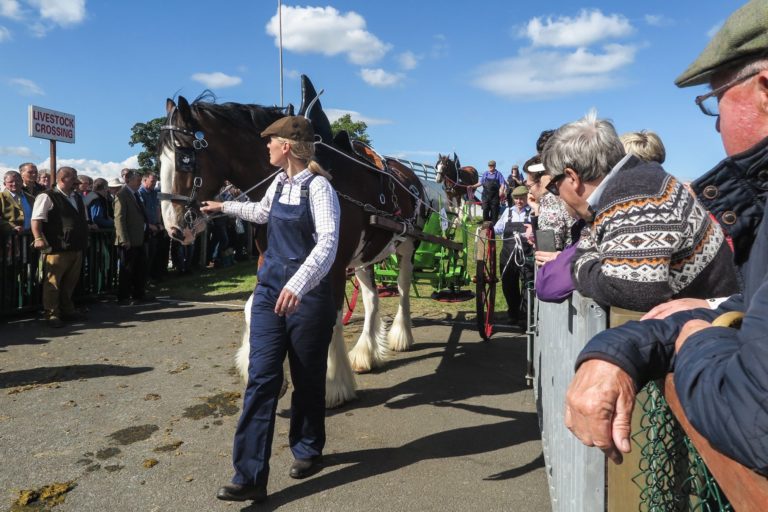
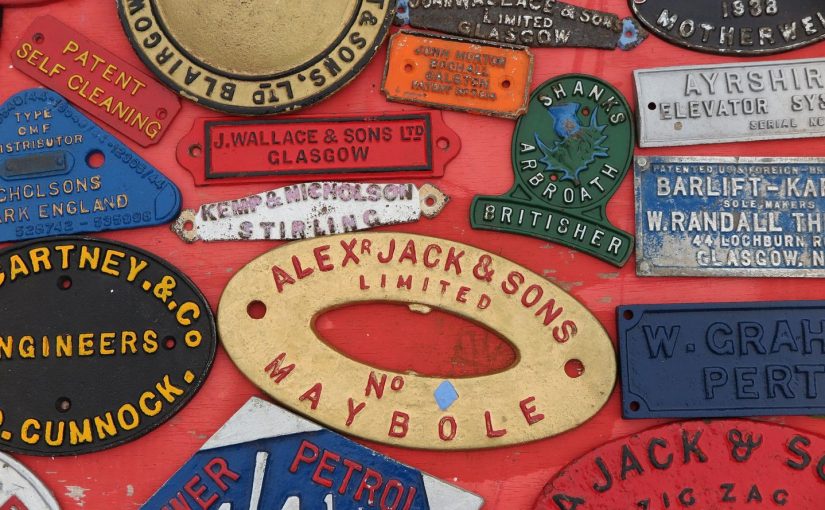
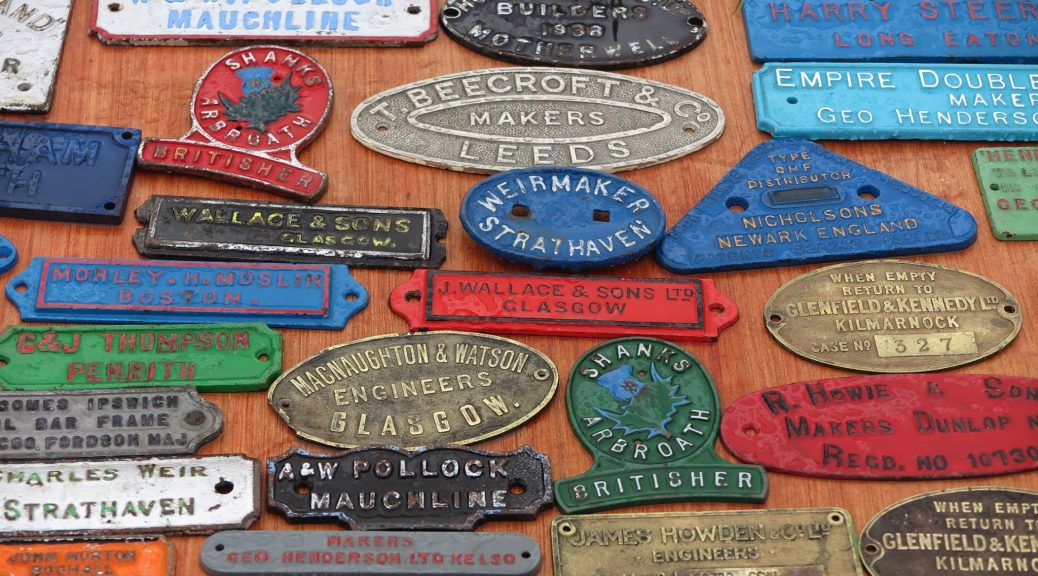
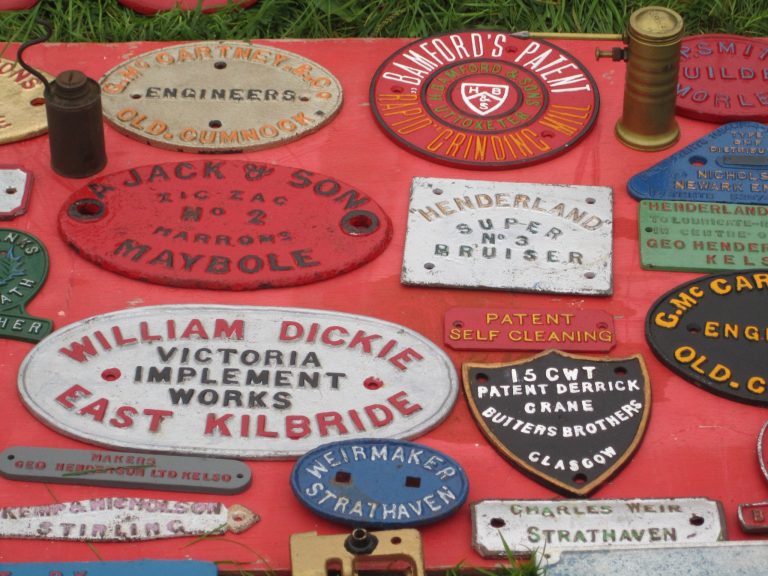
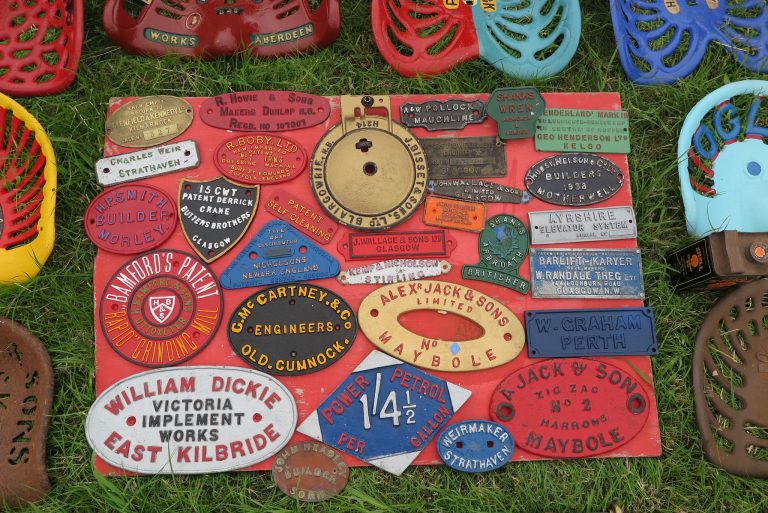
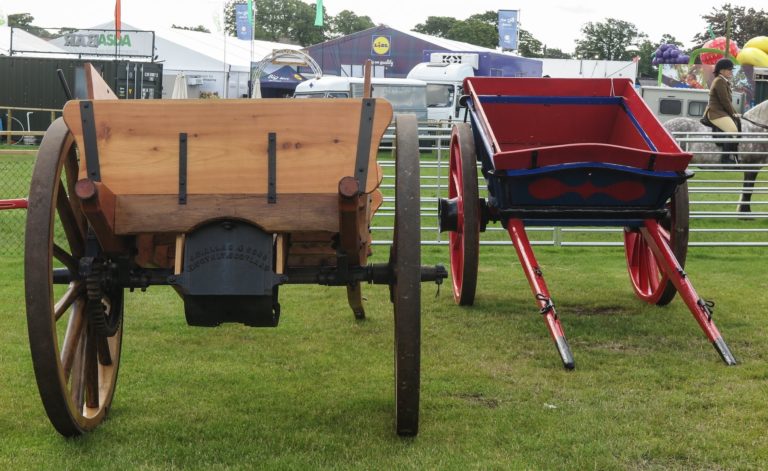
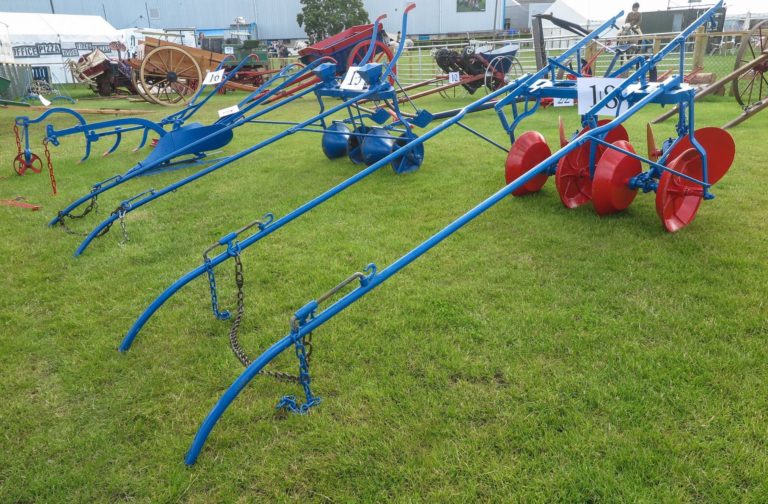
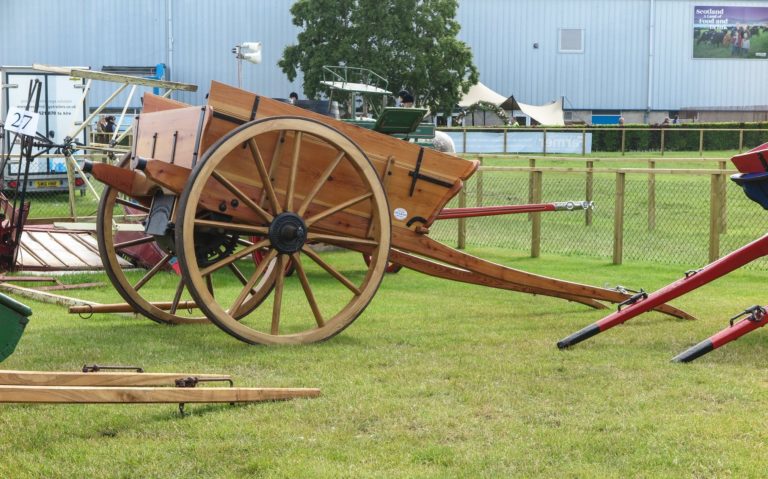
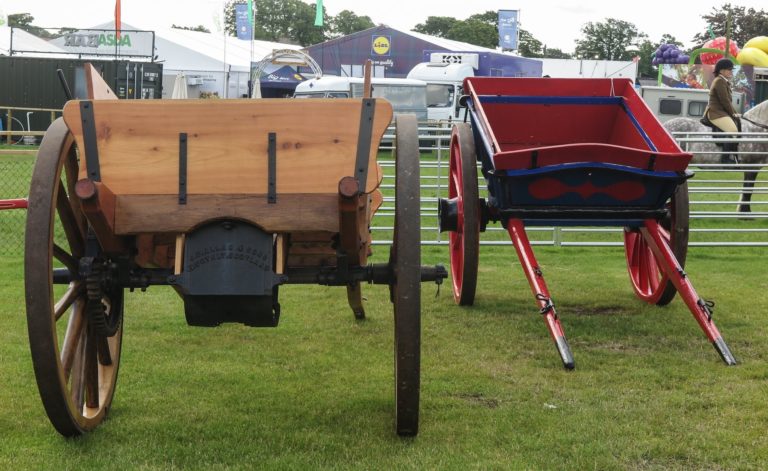
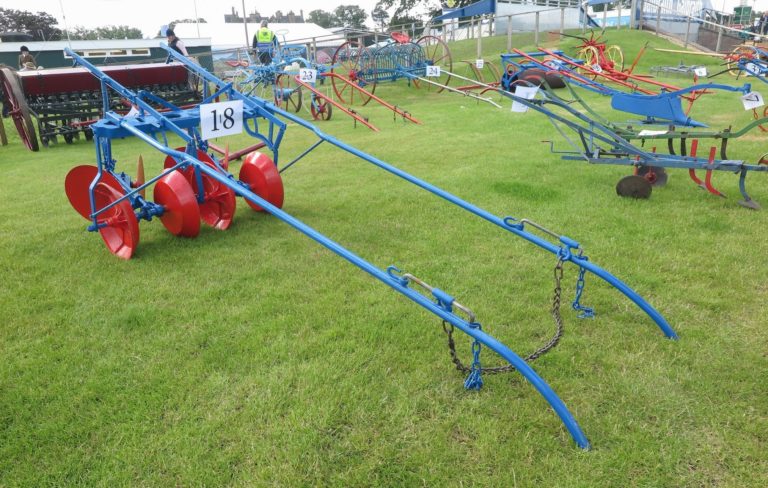
Local and county agricultural shows used to – and some still do – play an important role for the exhibition of agricultural implements and machines. These include the shows at Ayr, Glasgow and Perth. They were forums for the exhibition of what was new and desirable for the farm that could be purchased locally.
Some newspapers provided lengthy and detailed accounts of the implements and machines exhibited at these shows. They include the Dundee Courier. It provided such an account of the Perth Show in 1925. It provides an account of what framers in the county (and surrounding areas) were purchasing or looking to have as new implements and machines. It also shows what was new (and could be desirable) as well as who was exhibiting and what they were exhibiting.
The following article appeared in the pages of the Dundee Courier on 1 August 1925:
“The implement Yard at Perth Show
Excellent displays by well-known firms
The implement yard at the Perth County Show on the South Inch to-day will provide an interesting feature of the great exhibition.
Messrs H. W. Mathers & Son, Perth, are showing a collection of up-to-date agricultural implements and machinery, including their well-known self-propelled turnip-cutter. Bentall’s food preparing machinery, Fordson tractor, Masset Harris binder, Amanco pumping set and portable truck, and a mower lifted with roller bearings throughout recently introduced. The last-mentioned has been adapted specially for flax cutting as well as for harvesting work. The flax-cutting machine is fitted with a special cross-cutting-knife bar and self-delivery gear. The mower is eminently suited for ensilage crops. Messrs Mathers have been favoured with an order from Messrs A. Proctor & Co. Blairgowrie, for twelve of these mowers.
Messrs Ferguson & Walker, saddlers and harness makers, 19 Princes Street, Perth, have an attractive stand on which there is a large and varied collection of harness, leather goods, motor rugs &c. The quality of the exhibits us very high-class. The firm has a very large clientele among agriculturists, and extend a cordial invitation to visitors to call and inspect their exhibits.
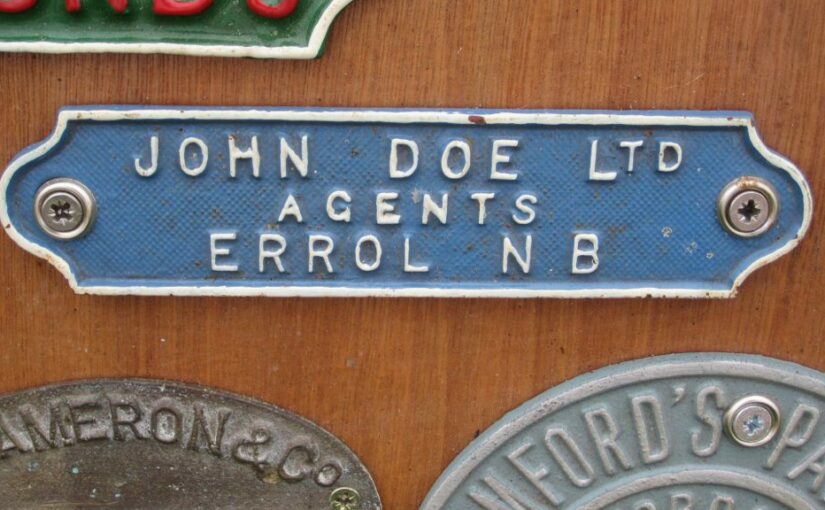
John Doe, Limited, Errol, have a grand display of seasonable implements of leading makers. The exhibits include Albion and Massey Harris binders and mowers; Ransomes horse rake, cultivator for drills, and potato digger; Listers cream separator, churn, and butter worker; Ballach’s patent scarifier and horse hoes; Ogle hay forks; Dickies hay bogey; pig troughs, cake bins, stack covers &c.
At this stand will also be seen the 12.20 Case tractor.
Sectional huts
Mr Charles Brand, building contractor and wood, iron, machinery, and meal merchant, Dundee and Lochee, is exhibiting sectional huts as garages, bothies, houses &c. Any sizes can be made to order. In addition there are at this stand new and second-hand timber for building purposes, wash-hand basins, fireclay troughs; all classes of stoves, portable boilers, ranges, navvy and garden barrows, ladders, rooflights, felts, and general requisites for farm and estate use.
Messrs Lindsay & Fenwick, Perth, are showing the “New Lister” cream separator, the price of which with table base is from £7. There are also Primus stoves and Hestia ovens, petrol lamps, stoves andirons, unbreakable “Thermos” flasks, binder twine, stack rope, stack covers, potato sculls, &c. the numerous articles on exhibition are very well arranged in a most attractive stand.
The old established firm of Messrs A. Johnston & Sons, St Catherine’s Road, Perth, are represented in the implement yard, where they have a display of carts, extra wheels and axles &c.
The firm are well-known cartwrights, motor body builders, and general blacksmiths, and do an extensive business in repair work in the city.”
The 1860s and 1870s were two important decades for the mechanisation of Scottish and British farming. New implements and machines were being rapidly developed and used on farms. There were revolutions in the way crops, especially the most labour intensive ones, such as grain and potatoes were being sown, grown, harvested and stored. Important innovations included the development of the reaper, the steam plough, the potato spinner.
A number of agricultural commentators wrote about the rise of agricultural implement and machine making at this time. The Scottish Farmer newspaper (not the one we know by that name today) provided a lengthy account on these changes while commenting on the implements and machines at the Ayr Show in May 1863. It is worth quoting at length for the insights it brings. It makes an interesting comment about beliefs on the introduction of implements and machines. There are comments about the increase in the number of implements and machines sold as well as reaping machines made by local makers in Ayrshire.
“In no department of British industry has there been such marked progress of late years as in that of agricultural implement-making, and in none has there been brought to bear more energy, perseverance, skill, and ingenuity on the part of those engaged. Manufacturers of agricultural machines have had a hard up-hill battle to fight. They have had to war against prejudices strengthened by the precedents of thousands of years-prejudices consecrated like heirlooms, which it would be shame and dishonour in the sons not to transmit to posterity intact, as they had received them at the hands of their fathers. Surely it was too much in these mechanics to ask that the sickle, which had come down to the present generation almost unchanged from the days in which it was used to lay low the golden crops of Boaz, should be cast aside for the clipping or sawing apparatus of a Presbyterian clergyman, or that the picturesque and time-hallowed wooden plough, drawn by its slow oxen, or lazy sleek-sided horses, should be superseded by the savage grubber, fierce digger, or many furrowed plough, impelled by the quick impatient steam engine? In the good old days the cattle browsed the natural grasses of the thousand hills over which they roamed; why should they now be confined in courts, or chained up in stalls, to feed upon artificial meats? Even after green crop husbandry, which was certainly an unwarrantable departure from our fathers’ customs, came into practice, the beasts munched their whole turnips, and chewed their uncut straw with gusto-should we not, therefore, be wanting in respect to the memory of those who have gone before to employ pulpers and chaff-cutters to tear the turnip to pieces, and chop the straw into almost imperceptible particles, especially when the beasts themselves can accomplish this with the natural griinders? And, again, why should farmers employ the draining plough to ensure dryness where wetness is the normal condition; and is good likely to result from a violation of nature? Our fathers knew better, and let the marshes alone to produce their rank growth of valueless vegetation, and their noiseome malaria. From the first the husbandman scattered the grains over the earth with his own capacious hands, and the crops yielded, we are told, their thirty, forty, fifty, and hundred fold; we shall adopt no new-fangled and complicated arrangement of tin-cups to deposit the seed at regular intervals in the soil. And is it not a tempting of Providence to make use of wind raised by mechanical contrivance for the separation of the grain from the chaff, instead of taking advantage of such blasts from heaven as can be secured by the opening of two opposite doors and the flapping of a couple of sheep skin wechts? Fanners are the devil’s own invention, an outrage on Christianity, as well as an offence against ancestral practice.
Against such and such many other prejudices, “uttered or unexpressed” on the part of farmers-as well as against the greater mechanical difficulties involved in the construction of locomotive (which most agricultural machines are) as compared with stationary machines-the agricultural implement makers had to contend, and it is in the highest degree creditable to them that they have almost entirely overcome them. And the victory may be said to have been gained within the last dozen years-since the Exhibition of 1851. That international display gave an impetus to what has been called mechanical agriculture, but more properly the mechanics of agriculture, which has never been lost, but which in the interval has been greatly increased. At every show of the national agricultural societies since held, the implements have been assuming a more important position in the yard, until in Battersea, in 1862, they numbered no less than 5064 articles, all more or less connected with the science and practice of agriculture, and designed to effect saving as well as greater efficiency in the labour of the farm.
An indication of the immense number of implements and machines now manufactured for farm use us afforded in the table published in the introduction to the report on English Agricultural Machinery by the Jurors of the late International Exhibition, and given in the Scottish Farmer of last week. The table indeed is very defective, giving only returns of certain kinds of machinery manufactured by some half-dozen of the principal firms; but still it will serve to illustrate the already vast extent and rapidly increasing importance of the agricultural implement trade. Beginning with steam-engines, we find that six firms which in 1852 turned out only 270, in 1861 manufactured 898, an increase of more than 330 per cent. Two firms, which were not in existence in 1852, or whose attention at all events had not then been directed to plough making, in 1861, sent out 9309 of these implements. Cultivators are of more recent introduction, and four firms, which commenced their manufacture in 1858, made in 1199 in 1861. Corn drills made by three houses have risen from 338 in 1852 to 703 in 1861; and the same number of firms sold in the latter year 383 corn horse-hoes-a number, however, smaller than sent out in previous years. The figures as to reaping machines do not afford even a hint of the real number now in use, but they sufficiently indicate the great and growing feeling in favour of reapers. The four makers who have sent in returns, in 1858 made only 32 reapers, in 1861 they sent out 1715. Hay tedders made by two firms have increased from 50 in 1852 to 721 in 1861; and the horse-rakes of five firms have risen from 611 in 1852 to 1739 in 1861. Six firms in 1852 made 327 thrashing machines, in 1861 the number they manufactured was 1084. The chaff cutters made by three firms in 1855 numbered 1004, in 1861, 4905; and corn-bruisers, by five firms, which in 1852 were but 64, in 1861 were 2680. In the report nothing is said about turnip cutters, of which we know one firm alone, the Messrs Samuelson, of Banbury, makes annually about 4000, and grain bruisers, cake breakers, turnip pulpers, sowing machines, manure drills, corn screens &c, are made in numbers equally large. And what, perhaps, is even as noticeable as the increase, is the improvement in the manufacture of implements since the first Great International Exhibition.
And it is not alone at national and international exhibitions that agricultural implements are displayed; they now form a most interesting and instructive feature at almost all country and district shows. At the exhibition at Ayr last week, for instance, there were no fewer that 254 entries in the implement department of the catalogue. In these entries were included twenty reaping and mowing machines, three of which were sent by the Messrs Samuelson, of Banbury, through their Scottish agent, Mr Pringle-a self-delivering four-armed reaper, calculated to lay the sheaves about twelve feet apart, a very good medium distance; the “Eclipse”, a one horse reaper, of remarkable cheapness, only sixteen guineas; and a combined reaper and mower. Of the simplicity in construction and lightness of these reapers we have before had occasion to speak (see Scottish Farmer for December 31, 1862), and during last harvest we had many opportunities to report, and always favourably, upon the work done by the patent self-acting machine, which has since undergone improvements calculated to lessen the draught and obviate the chances of the gearing getting clagged up.
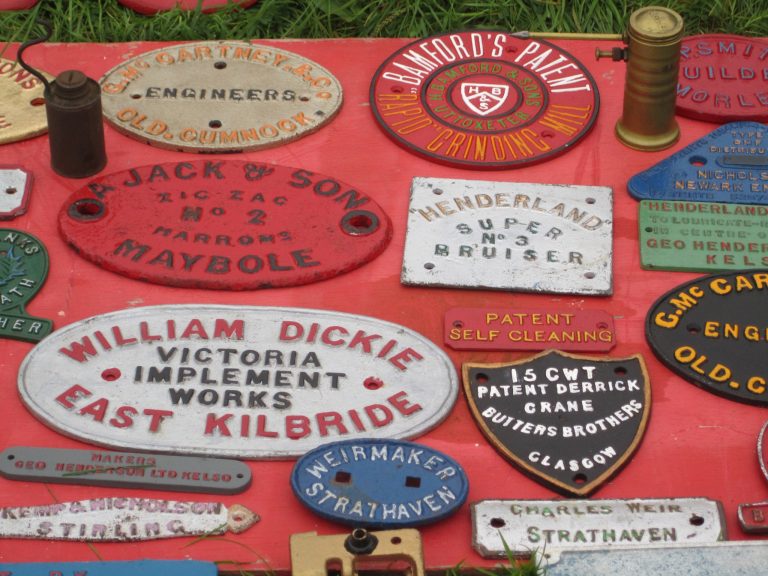
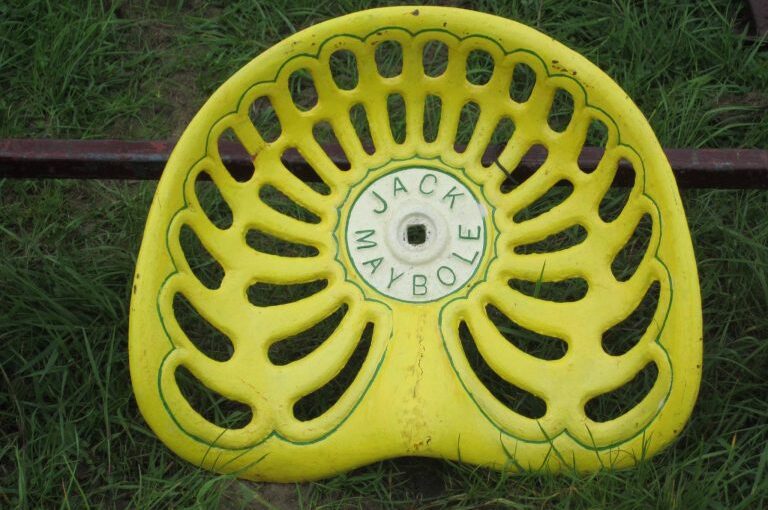
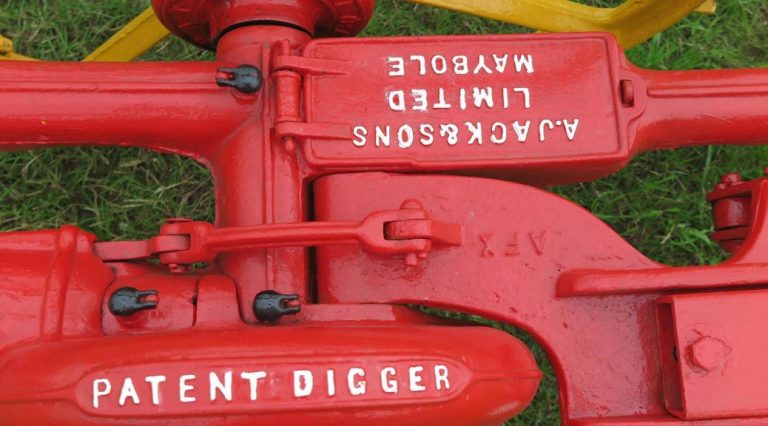
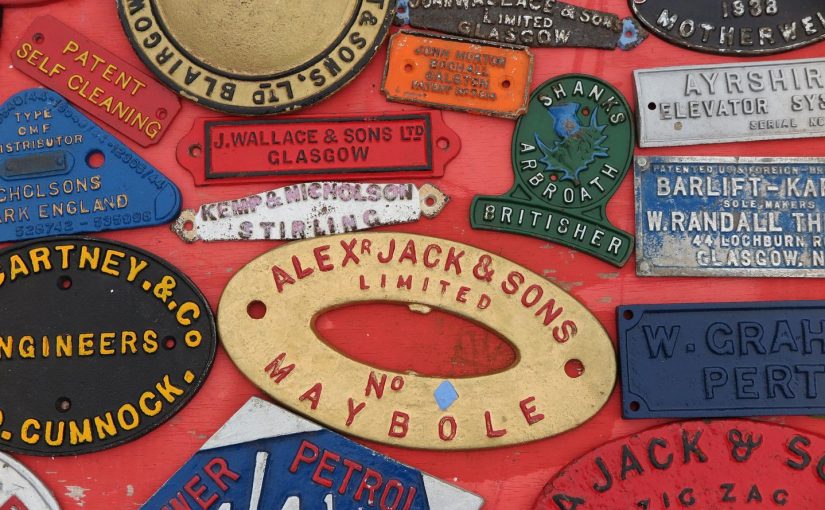
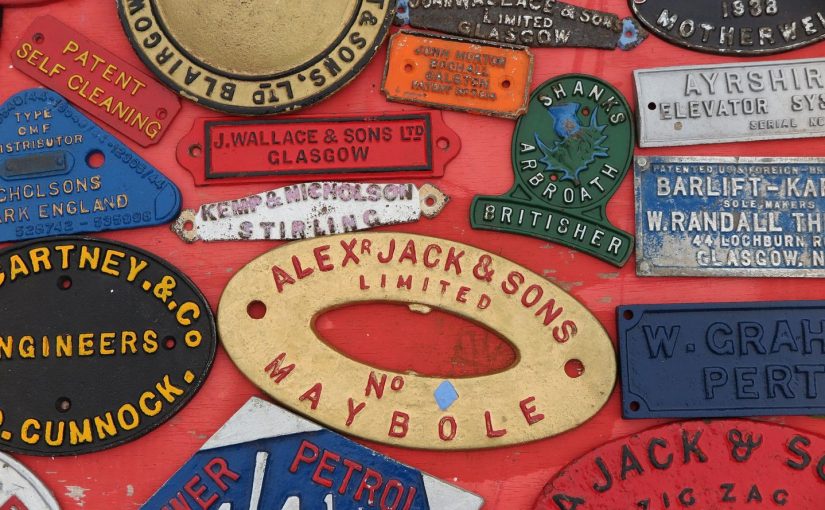
The Messrs Jack, of Maybole, had six different reapers and mowers on the field, all of excellent and substantial workmanship. Two were designed to affect mechanical delivery-one by merely introducing a reel to throw off the sheaves at intervals. This arrangement we do not believe will ever come into general use; the other plan we think a great deal of. By this latter method, which is the invention of Mr Alexander Jack, the tilting board is divided into two unequal parts, united together by hinges, the portion nearest the cutter or fore end of the machine being the narrowest. The back part of the platform has an angular hinged division made in it to aid in throwing off the sheaves. The tilting board is actuated by many jointed iron arms, which derive their motion from a friction plate in connection with the driving-years, and which, at intervals varying from nine to fourteen feet, according to the nature of the crop, lift up the board and deposit the sheaf. The front part of the platform rises with double the speed with which the hind portion is depressed, an arrangement which would seem to ensure that the sheaf will be well and squarely thrown off. To prevent a short straw crop falling between the platform and the knife, a bar of wood has been placed across underneath. The machine was not completed when we saw it; it wanted a reel to bring down the crop to the cutters, and a better method for communicating the power to the automation arms than by friction will no doubt be adopted; with that addition and improvement, we have hopes that this machine will take a place among practical self-acting reapers. Another improvement we noticed on one of the Messrs Jack’s machines was a hollow cylindrical knife bar, which would appear to secure the advantages of strength and lightness at the same time.
Mr Wallace, of Fenwick, exhibited three reapers of excellent construction, and whose draught, as tested at several trials last years, is very light. One of them has a self-acting arrangement for adjusting the knife bar to the inequalities of the ground-a very useful improvement. Some knife bars are divided in the middle for the same object, but they would not overcome the difficulty of the furrow so well as Mr Wallace’s. A very curious looking reaper was exhibited by the Messrs Wallace, of Dreghorn, mounted on wheels than those of ordinary carts, the driving gear being affixed upon the axle. The fingers were large enough to admit almost half a sheaf at a time. We can say nothing in favour of this reaper, its curiosity being its only attraction. Mr Bamlett, of Ripon, whose agent in Scotland is Mr Begbie, of Haddington, showed a combined reaper and mower-an excellent machine with a tilting platform adapted to various heights; Messrs Brigham & Bickerton showed a Buckeye-a machine which is capable of good work with little expenditure of power; Messrs Brown & Young, of Stirling, showed one of their reapers “with flexible universal jointed platform”; and Messrs Young, of Young, showed a manual delivery reaper. One of Wood’s mowers, with an adaptation to turn it into a reaper, was shown by Mr McCutcheon, of Carlisle; and one or two local makers also showed reapers. On the whole, the Scotch reapers looked very substantial, but perhaps they might be made a little lighter without impairing their strength and durability. They looked rather heavy beside the English ones.
Excellent turnip and mangold sowing machines were shown by the Messrs Young of Ayr, and the Messrs Jack, of Maybole-the merits of which were considered so equal by the judges that they agreed to divide the prize. Both do their work capitally, perhaps as well as it is possible for such machines to work. Messrs jack also exhibited some capital grubbers; as likewise did Mr hunter, of Maybole, who showed a large and varied collection of ploughs, harrows, and horse-hoes with side paring coulters, which were greatly admired. The judges’ report, which we give in another column, will indicate the best of the other agricultural articles shown at this very successful county show.”
The Royal Show, or the annual show of the Royal Agricultural Society of England, was a key event in the agricultural calendar, especially for English agriculturists and implement and machine makers. Scottish makers did attend, though their attendance varied according to the location of the show and whether they had new manufactures to show to the public.
The number of Scottish exhibitors was generally small. They usually included some of the key ones. They brought with them their major manufactures to introduce them to an English and wider audience. These included ones that they were renowned for as well as improved ones. They also included ones that they considered filled a niche within the market for implements and machines.
The Scotsman included a lengthy account of the Scottish exhibitors to the Royal Show at Nottingham in 1928. It is worth quoting at length as it says a lot about what was innovative and important about Scottish agricultural implement and machines and who were some of the most important makers. It states:
“The Royal Show
Features at Nottingham
Labour-saving devices
The Royal Agricultural Society of England are meeting for their annual show at Nottingham under happier auspices than they did at the same place thirteen years ago, when the shadow of the Great War cast a gloom over everyone, but the later war period was marked by a time of exceptional prosperity for agriculture. The swing of the pendulum has been as significant in the opposite direction. The agricultural interests have been passing through difficult and trying times in these latter years, but confidence is gaining in its revival. As a productive national industry the Royal Show at Nottingham indicates the vitality there is in agriculture. It is no effete industry. It supports hundreds of large engineering and other firms catering for its requirements, and indirectly find employment for thousands of men in the industrial districts. One had only to walk through the implement section of the showyard to-day for abundant evidence of this.
Scottish exhibits
As evidence of the place which Scottish implement manufacturers occupy in providing machinery that will effect the utmost economy in agricultural labour, it is interesting to note that, while only four Scottish firms were represented at the first show at Nottingham forty years ago, there are to-day over three times as many stands by Scottish makers illustrating the latest improvements in farm husbandry. Mr George Henderson, Forth Street, Edinburgh, exhibits two manure distributors, including the Waverly pattern, which has a patent enclosed and self-lubricating mechanism, as well as a new thistle cutter, a wide range of fencing material, and a variety of troughs and corn bins. The Glasgow firm, John Wallace & Son (Ltd), have a big display of Scottish implements. The make a feature of their well-known potato diggers with adjustable graips, and they have a large variety of implements and machinery for the farm. From Aberdeen, Barclay, Ross & Hutchison (Ltd) have forward two of their noted threshing machines, as well as manure distributors and cultivators. Messrs Marshall & Philip, Aberdeen, show lime washing machines. The Ayrshire firm of Alexander Jack & Son (Ltd), Maybole, never fail to be represented at a Royal Show, and they exhibit a number of their specialities, including a new potato digger which has provision for altering the set or angle of the digging forks.
In the Dairy Congress section a Galloway firm, J. & R. Wallace, Castle-Douglas, exhibit one of the new Wallace milking machines, which have gained a high reputation among dairy farmers in the south-west of Scotland, and the automatic water bowl. The Glasgow firm, G. & J. Weir (Ltd), Cathcart, have on view various dairy equipment manufactured from pure nickel. The hard smooth surface of pure nickel permits of rapid cleaning and thorough sterilisation with the minimum of labour. Messrs John S. Millar & Son, who specialise in windmills, have also on view cream separators and churns.”
During the summer months there were plenty of jobs to do on the farm to keep it looking trim. This included keeping down weeds, including thistles. While hand tools were available to take out thistles in pasture, mechanical means were much more efficient.
From the late nineteenth century onwards there were a number of attempts to develop thistle cutters. An especially noted one in the first decade of the twentieth century was the Sutherland thistle and fern cutter, developed by William Sutherland, Peel Farm, Tibbermuir, Perthshire. It was made locally by George Barker, Tay Iron Works, Perth, a maker that also acted as an agent for a number of key makers. In 1903 the Sutherland thistle cutter was noted to be “in great demand”. Barker continued to exhibit it at agricultural shows for a number of years, until at least 1907.
The Sutherland thistle cutter was also sold in Ireland. In 1903 it was advertised in the Irish homestead magazine by the Irish Agricultural Society, 151 Thomas Street, Dublin, as one of the implements it was exhibiting at the Royal Dublin Society’s Spring Show.
How did the thistle-cutter operate? The Dundee courier published an extensive account of the cutter in its pages of 6 June 1902. It is worth quoting at length:
“The Sutherland thistle-cutter
The thistle has always been regarded as a cumberer of the ground, and in past days the scythe has usually been the implement of destruction. A new “destroyer” has been brought out in the Sutherland thistle and fern cutter, built to designs by Mr William Sutherland, Peel Farm, Tibbermuir. This implements, since it was first introduced, has been greatly improved upon, and in its present working order should deal most effectively with not only thistles, but other objectionable hard-stemmed plants so common on many farms. The machine is intended to be drawn by a single horse, going at about the customary ploughing pace, and this forward movement causes the thistles to be cut against a horizontal hanging bar. The knives, moving between this bar and the ground, do their work completely, and the bar being adjustable, there is no danger of the grass being injured. There is also a lever attached to the frame for raising or lowering the knives, which are protected by a steel cover, the driver having complete control of the height of cut. The cutters have a chain drive on each end of the reel, which makes the draught easy, whilst the width of cut is about six feet and the breadth of the machine over all is under nine and a half feet. This is a machine which has proved to be a success, as was proved at a recent trial. The driver of the machine struck a course on the occasion so as to take every hollow and height at right angles, as in the hollows there was one mass of strong thistles. He went through them sending them hither and thither in clouds, admist the hurrahs of those present. The work was splendidly done. Mr George Barker, Tay Iron Works, Perth, is the sole maker of this latest aid to the farmer.”
The Royal Show, or the annual show of the Royal Agricultural Society of England, was a key event in the agricultural calendar, especially for English agriculturists. Scottish ones did attend, though their attendance varied according to the location of the show. The same was true for the Scottish implement and machine makers, though some did specially attend when they had new manufactures to show to the public, or when there were key trials for which they wanted to enter.
The number of Scottish exhibitors was generally small. They usually included some of the key ones. They brought with them their major manufactures to introduce them to an English and wider audience. These included ones that they were renowned for as well as improved ones. They also included ones that they considered filled a niche within the market for implements and machines.
The Scotsman included a lengthy account of the Scottish exhibitors to the Royal Show at Newcastle in July 1923. It is worth quoting at length as it says a lot about what was innovative and important about Scottish agricultural implement and machines and who were some of the most important makers. It states:
“Royal Agricultural Show
Scottish implements at Newcastle
Highland Show winners forward
Everything promises well for the successful opening to-day of the great Show of the Royal Agricultural Society of England at Newcastle. This is the 94th which has been held in the history of the Society, and the sixth at Newcastle, the only blanks during the period having been in the cattle plague year of 1866 and in the two years of the Great Warm 1917 and 1918.
Imposing implement display
Some idea of the extent of the showyard may be gathered from the fact that nearly six miles of shedding has had to be provided for the accommodation of the stock and implements. There are 356 stands in the implement department, and these cover 8711 feet of space, exclusive of exhibits on open ground. The ordinary stands occupy 1760 feet, machinery 3880 feet, and special stands for seeds and fertilisers 3071 feet. At the first show of the Society at Oxford in 1839 there were only 54 implements forward, but at Newcastle in 1846 the number had increased to 735. During the intervening years great progress was made in the development of farming machinery and implements for the cultivation of the soil. Though there is a falling off in the number of implements this year as compared with the number at the Newcastle Show of 1923, this department of the Show is most interesting and attractive.
Scottish implement trade
The Scottish implement trade is well represented being about twenty firms exhibiting typical specimens of the agricultural appliances which are manufactured in the northern part of the kingdom, and in the production of which the makers show a considerable amount of skill and ability. Most of them are regularly seen at the Royal Agricultural Society’s shows, no matter how remote the district may be in which the tents are pitched, and they never fail to bring with them an interesting display.
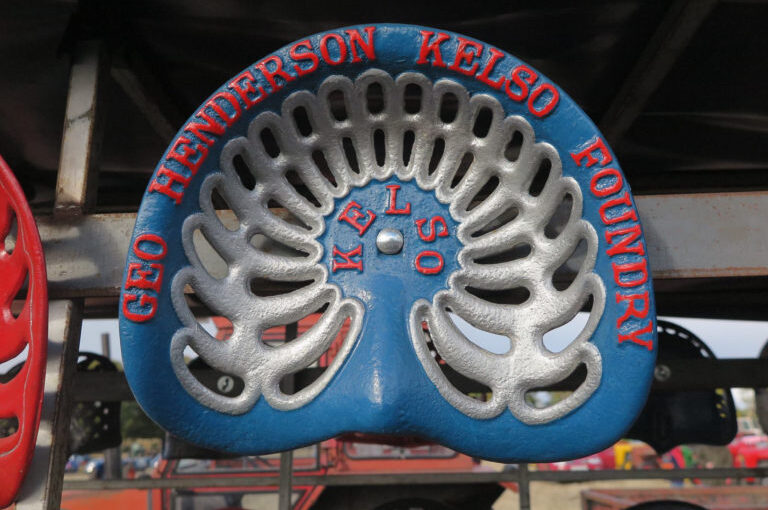
Mr George Henderson, Forth Street, Edinburgh, and Kelso Foundry, who exhibited the “Waverley” manure distributor at last Newcastle Show as an implement, has again on view a specimen of the same type with patent self-lubricating mechanism. They also exhibit a one-horse mower, ploughs, thistle-cutters, and hay collectors. Mr Thomas Nimmo, Fauldhouse, West Lothian, exhibits a New Zealand model of wire-strainers and a barbed wire winding machine.
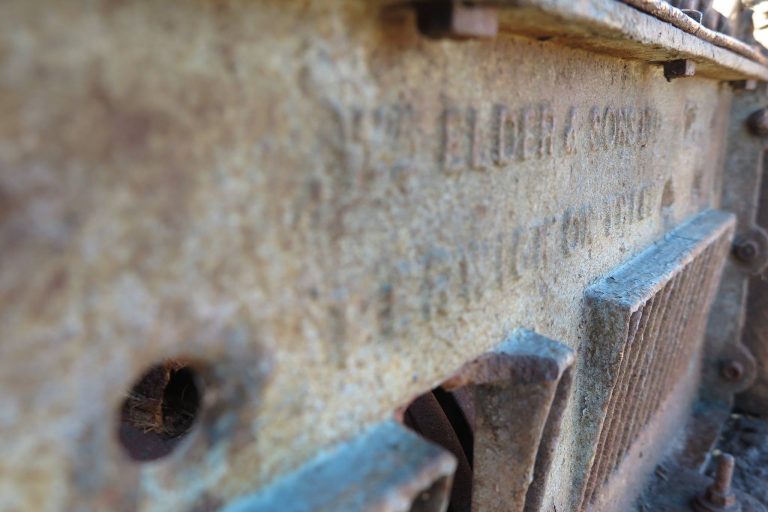
The Border firm of Wm Elder & Sons (Ltd), Berwick-on-Tweed, have a large display of agricultural implements, as well as carts and hay bogies fitted with pneumatic land wheels and high sides for conveying hay or straw.
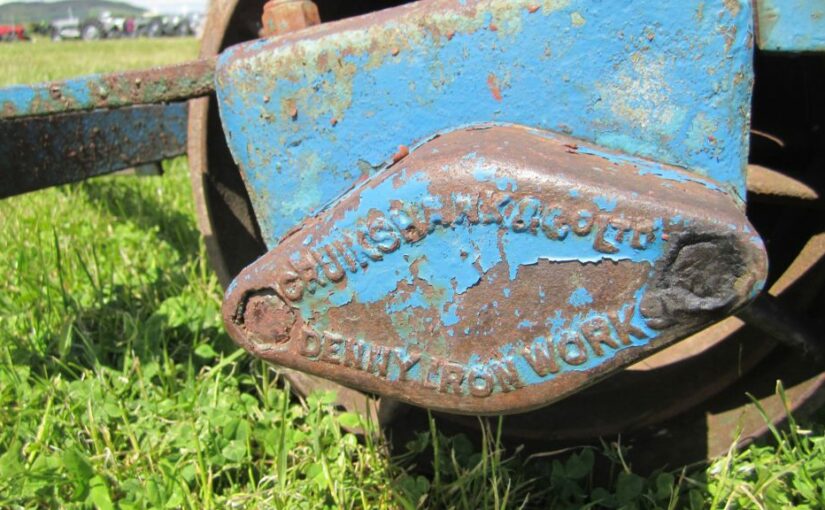
At the stand of the Allied Ironfounders (Ltd), Falkirk, will be found their fascinating Thermecon cookers, which were a great attraction at the Aberdeen Highland Show, as well as oil-fired ranges and boilers, and cattle bowls and feeding troughs. Cruickshank & Co. (Ltd), Denny Ironworks, Stirlingshire, show the Denny ploughs, a spring shock absorber for horse-drawn implements, disc coulters, and troughs for pigs.
An exhibition of horseshoes made in all parts of Great Britain is a feature of the stand of Messrs Wm Martin, Sons & Co., Dundyvan Iron Works, Coatbridge.
A Denny firm, George Paul & Co. (Ltd), Duncarron Ironworks, made a speciality of drinking-bowls, and show three varieties, two for cattle or horses and one for cattle or pigs. The “Meddo Automatic” water bowl, suitable for cattle, pigs, and horses, is on the stand of Messrs Thomas Cochran & Co., Glasgow. The Galloway firm, Messrs J. & R. Wallace, Castle-Douglas, also shown an automatic water bowl, as well as their milking machine and manure distributors.
The India Tyre and Rubber Co., Inchinnan, Renfrewshire, have on view various types of pneumatic tyres for horse-drawn vehicles and also tyres fitted to wheelbarrows.
The Aberdeen firm of Barclay, Ross & Hutchison (Ltd) have an attractive stand in which they display their well-known threshing machines, two being semi-portable and a third a high-speed portable, fitted with Dunlop pneumatic equipment. They also show a spraying machine, chemical dressers, and a variety of engines. Another Aberdeen firm, Messrs R. G. Garvie & Sons, show a threshing and finishing machine and a threshing and dressing machine.
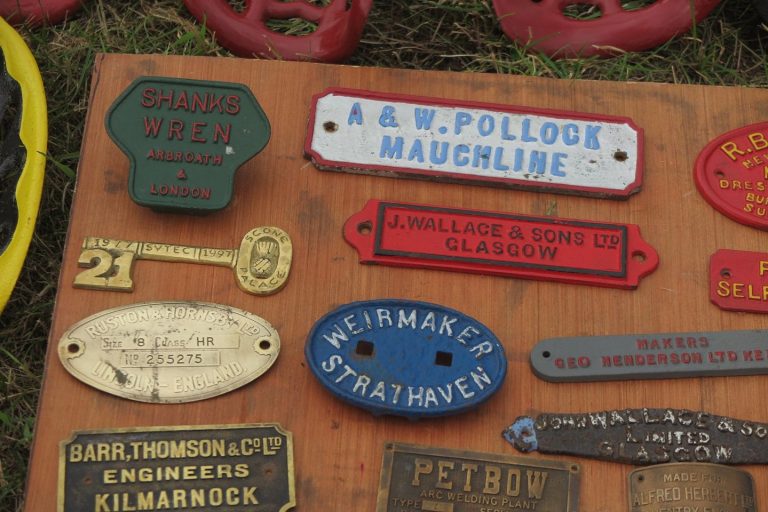
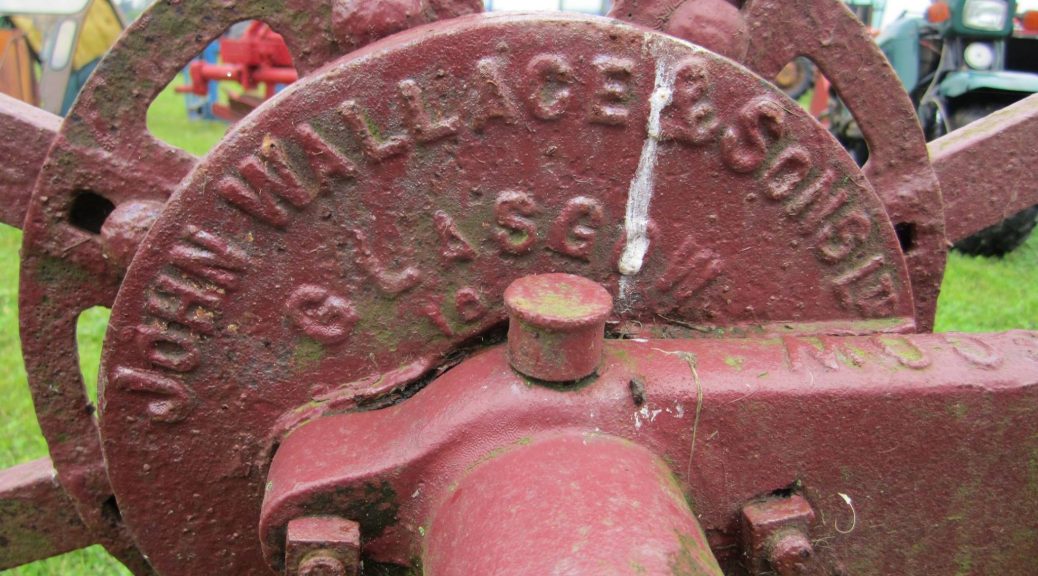
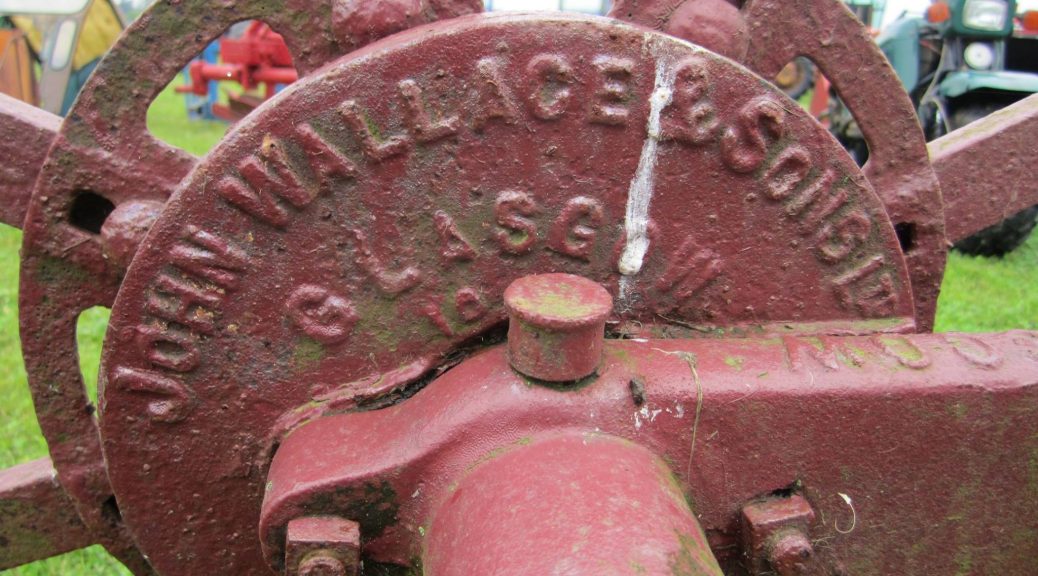
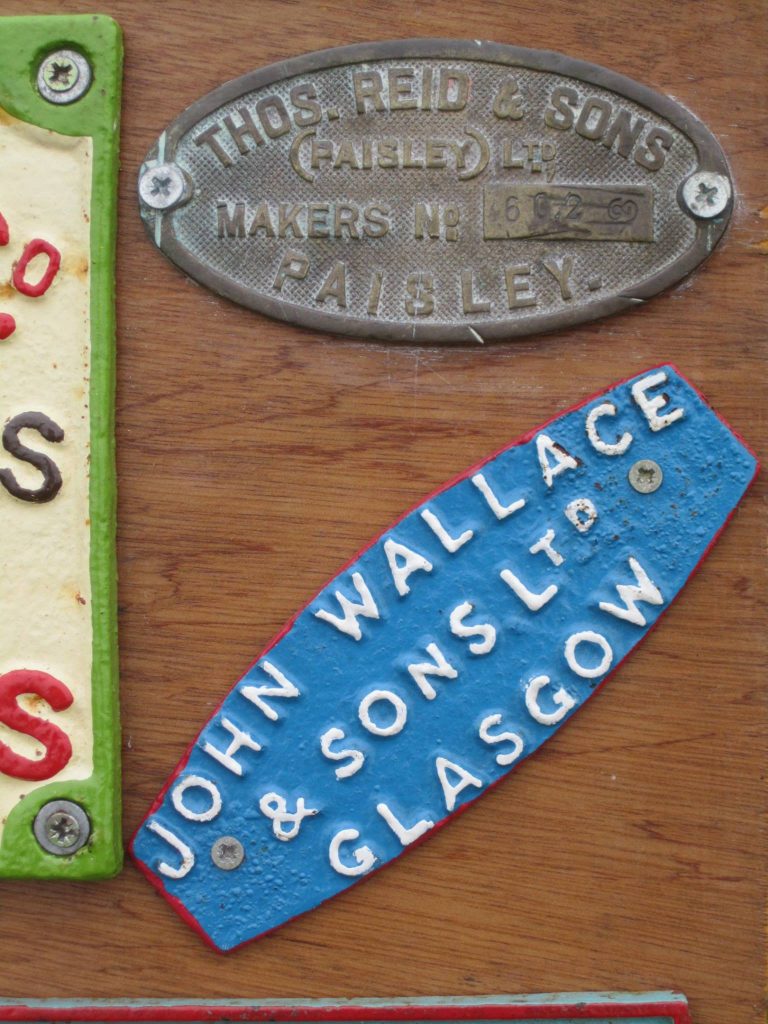
An attractively displayed assortment of agricultural implement and machinery is presented at the stand of John Wallace & Sons (Ltd), Dennistoun, Glasgow. They include agricultural tractors, tractor ploughs, horse ploughs and cultivators.
Scottish bracken cutter
The Collins bracken cutter is shown by Messrs Wm Henderson & Sons, Mauchline, and other Ayrshire exhibitors are well to the front. Alexander Jack & Sons (Ltd), Maybole, have a great variety of farm carts and manure distributors on view.
A & G. Paterson (Ltd), St Rollox Sawmills and Boxworks, Glasgow, have an excellent display of fencing material of all kinds, together with field gates, boxes, crates, sheep troughs, &c.
Farm harness, hunting saddles and stable requisites are shown by Mr Edward Henderson, Lockerbie.”
Obituaries can provide much information about the men and women behind the making of agricultural implements and machines, their businesses as well as their wider contributions to the communities in which they lived. We also get to read about their characters and sometimes their temperaments.
We have looked through a number of obituaries from some of the Scottish agricultural implement and machine makers from 1935. That year saw the passing of a number of makers. Some of them will be well-known to modern readers, others less so.
The first is David Davidson, Montrose, in the Brechin advertiser of 26 March 1935:
“Death of veteran agricultural engineer
The death occurred last Monday in the County Hospital, Brechin, of Mr David Davidson, who for many years had been associated with the engineering industry of Montrose. He was 87 years of age and for more than half-a-century had taken an active part in the installation of machinery in industrial concerns and farming establishments in the district.
The son of a farmer, Mr Charles Davidson, who was at one time tenant of Smallbank, near Marykirk, the deceased was born at Strachan, on Deeside. Eighty-six years ago, when Mr Davidson was born, the engineering business in Montrose was a flourishing one, and there were opportunities for the youth of the district to get a first-rate training. Mr Davidson served his time in the Links Foundry in Russell Street, and was employed for a time at Newcastle, but on leaving there he returned to Montrose, and had worked in this district continuously up to the date of his retirement. Threshing mills and farm machinery were a speciality of Mr Davidson’s, and until the introduction of oil engines there were few farms in the district which did not bear the mark of his handicraft.
Mr Davidson was a keen sportsmen and an expert shot. He did not retire until 73 years of age, when he came to Brechin up spend the remaining years of his life. He had a family of 14, one of whom, Sergeant-Major Davidson, of the 2nd Black Watch, was killed during the war. He is survived by six sons and five daughters, two of the former of whom reside in Montrose.”
A well-known Aberdeen name was Alfred Bisset of Bisset and Co., engineers, West North Street. The Aberdeen press and journal of 14 March 1935 noted:
“Former agricultural engineer
Death of Mr Alfred Bisset, Aberdeen
A well-known personality among farmers in the north-east of Scotland, Mr Alfred Bisset, engineer, died yesterday at his residence, 4 Park Road, Aberdeen.
Born at Aberdeen sixty-five years ago, Mr Bisset served his apprenticeship with his father, who was proprietor of the firm of Bisset and Co., engineers, West North Street. He succeeded to the business son the death of his father, and carried it on until some twelve years ago, when he retired.
The firm specialised in agricultural machinery, and Mr Bisset was widely known by farmers throughout the district.
Outside his business Mr Bisset had few interests except Freemasonry. He was a member of the Old Aberdeen Lodge.
Mr Bisset had been ailing for about a year, but had been confined to bed for only three weeks.
Predeceased by his wife thirteen years ago, he is survived by three sons and two daughters.”
A well-known Glasgow name was Robert Wallace, a director of Messrs John Wallace & Sons, agricultural engineers. Dennistoun, Glasgow, noted by The Scotsman on 3 July 1935:
“Late Mr Robert Wallace
The death has occurred of Mr Robert Wallace, a director of Messrs John Wallace & Sons, agricultural engineers. Dennistoun, Glasgow. The business was established over 70 years ago. Mr Wallace travelled for many years on behalf of the firm, and regularly visited the agricultural markets of Fife, Perthshire, and the Lothians. An authority on agricultural matters, his advice was much in demand. He was the youngest of four brothers.”
Accounts of local agricultural shows provide a snapshot of who was making and selling implements in a local area. They can provide evidence in the absence of other sources of evidence being available. This is especially important for geographical areas that are away from the main implement and making businesses.
An account of the Caithness Show from the John O’Groat journal of 4 August 1911 shows that there was a good display of implements and machines from a range of businesses. They included manufactures from local makers as well as leading makers throughout Scotland and further afield. They sold ones that they thought could be useful to the local farmers and crofters and were suited to the needs of the local district. For example, Ben Clyne had “the new Osborne binder, a machine that appears very suitable for the crofter”. There were also other implements and machines seen to be suitable for the smaller farmers and crofters. The author of the account also noted the practicality and economy of some of them.
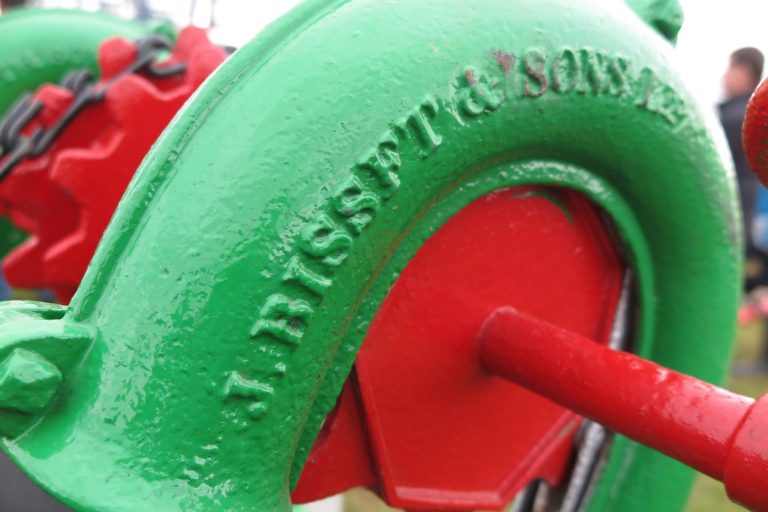
There were implements and machines from a number of leading makers in Scotland and further afield. They included: George Sellar and Son, Huntly, J. Bisset & Sons, Blairgowrie, Alexander Jack & Sons, Maybole, Melotte Separator Sales Co. (1931) Ltd, Campbell Gas Engine Co, Kingston, Halifax, and E. H. Bentall and Co, Heybridge.
The following is the account of the implements at the Caithness Show:
“Implements
There was a great show of agricultural implements on the ground. Messrs W. & A. Geddes, Wick, had a fine display of binders, back delivery reapers, corn winnowing machines, manure distributors, churns, and cream separators, samples of poultry food, sheep dip in paste and liquid, oil cake crusher, and a Sellar’s plough.
Mr Ben Clyne was on the ground with a specimen of the new Osborne binder, a machine that appears very suitable for the crofter. He also showed one of Bentall’s corn bruisers. We understand Mr Clyne had one of Campbell’s oil engines at the railway station, but failed to get it to the field in time for exhibition.
Messrs Jas McKidd & Sons, Thurso, showed their Leicester vertical engine, 4hp, in full working motion, being driven by petrol. This engine has been constructed specially for the smaller class of farmer and is suitable for being fixed up at little cost to drive a two or a three-horse mill. This is constructors maintain can be done much cheaper with petrol than is at present done with the oil engine. Messrs McKidd also exhibited a 12hp Tangyre oil engine, and one of Jack’s imperial manual distributors with with positive feed, suitable for sowing broadcast in drill or in pasture; also one of Ransome’s latest pattern of potato lifter, which is becoming very popular with south of Scotland framers. There was also shown by this form one of Wilmott’s galvanised iron sheep dipping tanks with patent lifting and lowering arrangement and draining platform.
Mr W. Keith, Castletown had samples of three Bisset binders on the ground, fitted with lathes instead of canvas, “Speedwell” reaper, grass-seed harrows, hay rake, &c.
Messrs Lindsay & Co., Thurso, exhibited a fine type of small plough suitable for crofters, also the celebrated Milwaukee binder, corn bruisers, sheep racks, feeding troughs, Martin’s patent drill plough, cultivators, and scruffier, a one-hand threshing mill, and a hand and foot threshing mill, hay collector, rakes &c.
Messrs Alex Robertson and Son, Wick, had a comprehensive exhibition of farm accessories and agricultural implements, including Scotch fanners, spring-tooth lever harrows, Calwell’s pay collectors, Melotte cream separator, churns, M.P. plough, washing machine, &c.”
In 1890 the Highland Show was held in the Perth Show District. While the show was usually held in Perth, the centre of that district, in this year it was held at Dundee, at Carolina Port. The show was a very successful one.
On 30 July the North British Agriculturist published an extensive account of the implement department. It is worth quoting at length:
“In such a busy commercial centre, it was only to be expected that there would be a good general display of farm implements. Not only have the local manufacturers and agents turned out in full strength, but there are many exhibitors from both north and south of the Tay; while a good few of the leading makers from the south side of the Tweed are, as usual, well represented.
There is, however, very little of a really new or novel character on exhibition. Various kinds of the implements such as potato diggers, harvesting machinery, &c, have been improved and perfected where this was possible since last season; but, as a general rule, there is little or nothing that will strike the visitor as radically new or much in advance of anything that has been seen for the past few years. All the exhibitors, however, have striven to make their collections as comprehensive and complete as possible; and the probability is that visitors will find this important department as well stocked, and as interesting at the Dundee Show as at most of the previous meetings of the Society. The competitive trials are this year confined to grist mills, for which prizes of £15 and £10 are offered. The price of the machine is not to exceed £25, and to be limited to eight horse power, and the mill is to be able to knibble or grind all kinds of grain. There are seventeen machines entered by the following exhibitors:-Blackstone & Co., Stamford; W. N. Nicholson & Sons, Newark; Woodroffe & Co., Rugeley; Wm Balfour, Pittenweem; Barford & Perkins, Peterborough; and R. G. Morton, Errol. The judges in this competition will conduct their operations simultaneously with those in the stock departments; and it is expected that the awards will be announced in the course of the second day of the show. Appended are a few notes of the various stands picked up in the course of a hurried walk through the implement yard on Monday-
Messrs J. D. Allan & Sons, Dunkeld, occupy as usual stand no. 1 with a large selection of their well known farm implements. Quite a new one is a turnip cutting cart for sheep, which Messrs Allan have recently introduced to meet a growing demand. It is specially suited for the requirements of those who purchased blackfaced cast ewes for fattening on the low ground. The turnips are loaded into the cart and are cut as they are distributed by a Gardener’s revolving turnip cutter fitted underneath the cart, the power being supplied from the motion of the wheels. The turnips are cut into finger pieces and distributed with regularity all over the field. The operation is performed much more easily and expeditioiusly than by being cut first, then loaded and shovelled out, as by the old method.
Messrs Auchinachie & Simpson, of Keith, occupy the next place with neat collection of very serviceable implements. Besides a turnip and mangold sower, ridging plough, and broadcast sower, this firm show their steel tined keyed harrows in several sizes. These harrows have from their efficiency obtained a good reputation for their strength and firmness, while it claimed for them that they will wear about twice the time of the ordinary harrow.
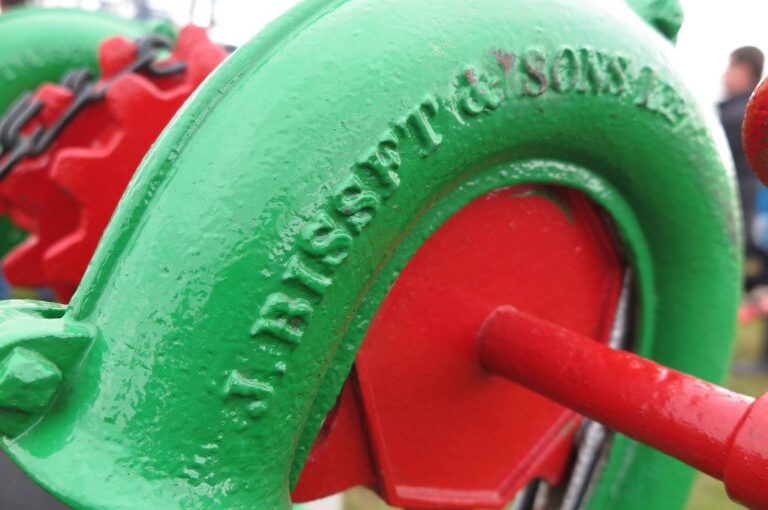
Messrs Bisset & Sons, Blairgowrie, have the largest stand in the showyard in the implement shedding, and here we find the “Speedwell” reaper, which for efficient back delivery and light working enjoys a good name, and also the “Bisset” mower, a new pattern machine which has done excellent service in the hay harvest this year, Two binders are also shown, but it is at Messrs Bisset’s other stand, in the machinery in motion section, that these now famous machines are to be seen to advantage.
Mr Thomas Hunter, of Maybole, amongst a very large selection of cultivating implements, shows the “Hunter” hoe-a remarkably serviceable little implement, which can be adapted to a great many purposes. It can be used for cleaning turnip drills previous to thinning, for ridging and grubbing potato drills, or it can be adapted to serve as an expanding drill harrow, or as a five tined drill grubber. The side frames being angle steel, are very rigid; and although the general appearance of the implement is light, it is nevertheless strong enough for the stiffest soils. Although this is one of the handiest little instruments we have seen for the requirements of green crop growers.
Stand No. 8 is occupied by Mr William Elder, of Tweedside Implement Works, Berwickshire on Tweed. Prominent among his exhibits is the Brantford steel binder, made by Messrs Harris, Sons & Co, of Brantford, Ont, Canada, who claim to be the largest manufacturers of self-binding harvesters in Her Majesty’s Dominions. This machine is strongly built of steel and malleable iron, and is fitted with all the most recent improvements. Mr John Clay, of Kerchesters, Kelso, is also agent for these machines, and has for several seasons cut his entire crop with them, and speaks very highly of their efficiency. This, by the way, is the binder which did such remarkable work in cutting laid crops in Northumberland last season, of which notice was taken at the time in our columns. Now that the harvest is approaching, the labour difficulty has again to be faced. Those who find difficulty in obtaining hands should make a point of inspecting this labour saving implement. Me Elder also exhibits several beautifully finished broadcast sowing machines, fitted with adjustable swivel for going through gateways. Horse rakes, turnip sowers, reapers, and mowers complete this display.
Messrs Kemp & Nicholson, the old-established implement makers, of Scottish Central Works, Stirling, show their “Stirling Castle” self-acting back-delivery reaper, their new “Waverley” reaper and mower, and also their new “North British” reaper and mower, into which steel parts have been introduced in place of iron where strength is required. Amongst their large and varied collection we select for mention their iron sheep fodder rack, which has not been shown at a Highland Show for many years, but which is an invaluable piece of apparatus for flockmasters. The chief novelty, however, on this stand is a cart turnip cutting machine, which is fitted with a revolving slicer for distributing turnips to sheep being fed on grass land. Another very prominent exhibit of this firm’s is a varnished tipping cart of superior finished, with double self-acting lock and elevator.
Messrs Ben Reid & Co., of Aberdeen, have their usual large and important collection. One of the first things to attract attention on this stand is their “Bon Accord” back delivery reaper and rake, which has won for itself a good name all over the north-east of Scotland. Next we observe their patent broadcast sowers, with folding apparatus, and then their patent manure distributor; but the name of “Ben Reid” attached to such implements is sufficient guarantee of their serviceableness, so that further description is needless. Grubbers, pumps, draining rods, garden seats, and hay gatherers are amongst the various specialities of this firm; but a hay baling press, of a new pattern, is a decided novelty.
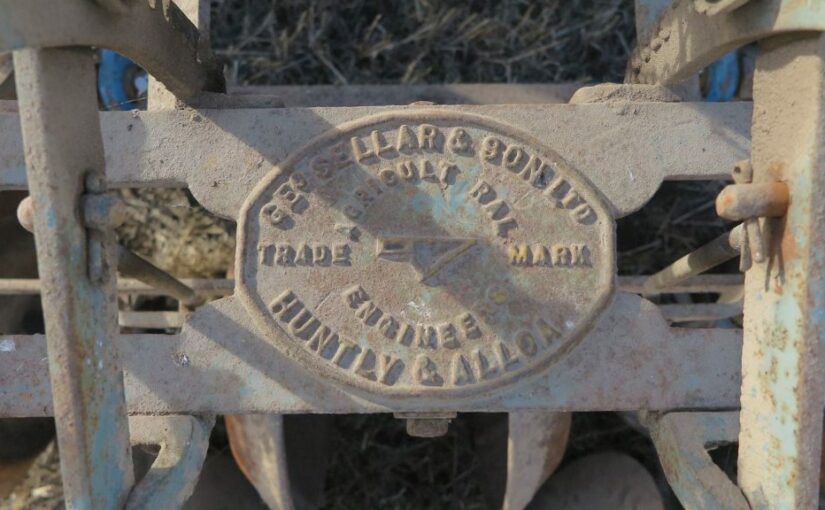
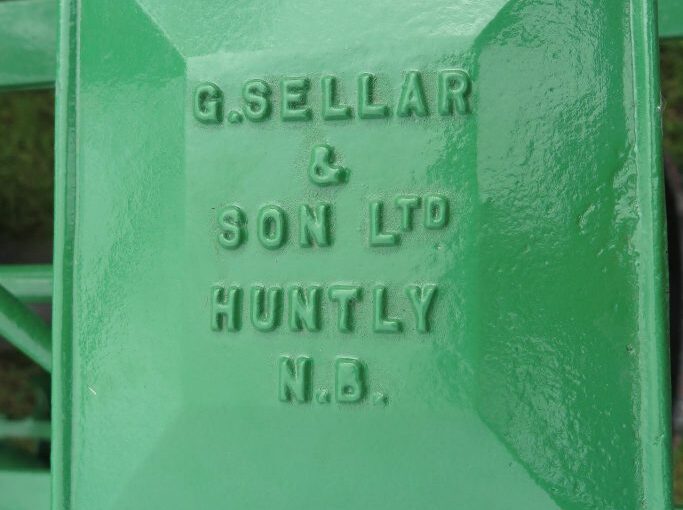
Messrs Geo. Sellar & Son, Huntly, have, as usual, a very striking collection of ploughs, with long mould boards, adapted for working stiff land. They also show their Anglo-American plough, which is adapted for working on lighter land; while harrows, made of steel, and driven tines, are also a prominent part of this old established firm’s display. It is shown this year with jointed finger bar and a new in-and-out of gear arrangement, for which an additional patent has been applied for. Altogether, this is one of the most efficient and approved harvesters in the market. Chaff cutters, oilcake mills, pulpers, and other food preparing machinery compete this firm’s exhibit.
Messrs jack & Sons, of Maybole, have a prominent stand, which are to be found specimens of their Caledonian “Buckeye” mower and reaper, which we have often described at former meetings of the Highland Society. Messrs Jack are also strong in cultivating implements as well as food-preparing machinery; while their spring carts and vans, as regards quality of material and workmanship, leave little to be desired.
Messrs G. W. Murray & Co., Banff. This old-established Scotch implement firm was represented at stand No. 20. Amongst their numerous exhibits are to be found their “Victory” back delivery reaper, as designed by the late Mr Murray, who was the first to bring out a back delivery reaper of the light pattern; and it must be gratifying to his successors to see other makers adopting the same principle. Messrs Murray show also their hand lever shearing machine, which can cut a bar of iron an inch thick, owing to the powerful way the leavers are arranged.
Mr Robert Kyd, of Coupar Angus, shows his potato diggers and planters, which we have often fully described.
Messrs Newlands & Son, of Linlithgow, show several very useful general purpose and drill ploughs.
Messrs D. Paterson & Sons, Alloa, show a self-acting horse rake and set of wrought iron whipple trees.
Messrs Thomas Sheriff & Co., Dunbar, are a firm we always expect to find in full at a “Highland”. Their display this year will well sustain the credit of this firm for broadcast sowers, for which they are experiencing a very good demand. Amongst these machines, we observe their broadcast sower which took the Highland Society’s premium at Dumfries, about twenty years ago, and also their machine of more recent type, which came out victorious at the Perth trials of 1888. Their fourteen row lever corn drill, with single wheel steerage and land measuring index, is a very useful machine, so that we are not surprised to learn that Messrs Sherriff find that it has become what we may call a “general favourite”.
Mr William Ford, of Fentonbarns, Drem, shows the “Toronto” binder, which, since its introduction several seasons ago, has attained quite an unprecedented popularity amongst the class who require binders. It is the same as last season, except in one of two minor details.
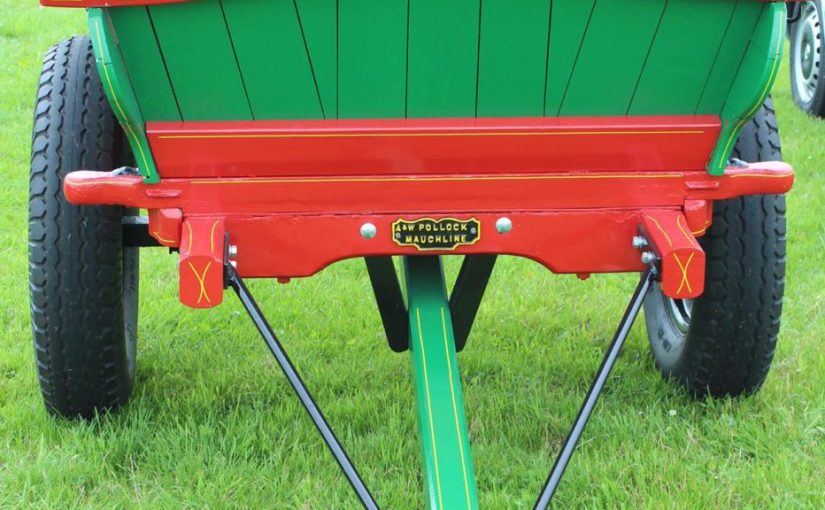
Mr A. Pollock, of Mauchline, showed his improved hay and straw press and trusser, which has a very ingenious transport arrangement; also his new patent rick shifter, which is now largely used in the west of Scotland. No other of Mr Pollock’s exhibits call for special comment.
Mr John Scoular, of Stirling, shows his patent horse rake, with triple active leverage, in nine different sizes.
Mr Alexander Grant, Rothes, shows a steel single plough, and a steel drill plough of approved pattern.
Mr Wm. Davidson, Mintlaw, is again forward at the “Highland” after a few years’ absence. His artificial manure distributor, and natural manure distributor, are first class machines of their kind, and a large number of visitors to the show were highly pleased with an inspection of these machines.
Mr John Doe, of Errol, who acts as an agent for a great number of important implement makers, has a large stand replete with farm implements of all descriptions.
Messrs Flear & Thomson, of Dunfermline, show Wardlaw’s patent turnip thinner, which is the only implement of this description made on the hortizontal principle, and which, we believe, has done excellent work. In a damp season like the present, when the young plants grow so rapidly, a machine like this is a vey valuable acquisition on any farm where there is a large acreage of turnips. On this stand there is also shown a potato dresser, made by Mr Mollison, of Balwearie, Kirkcaldy, which separates the tubers in various sizes by means of a revolving screen with graduated apertures.
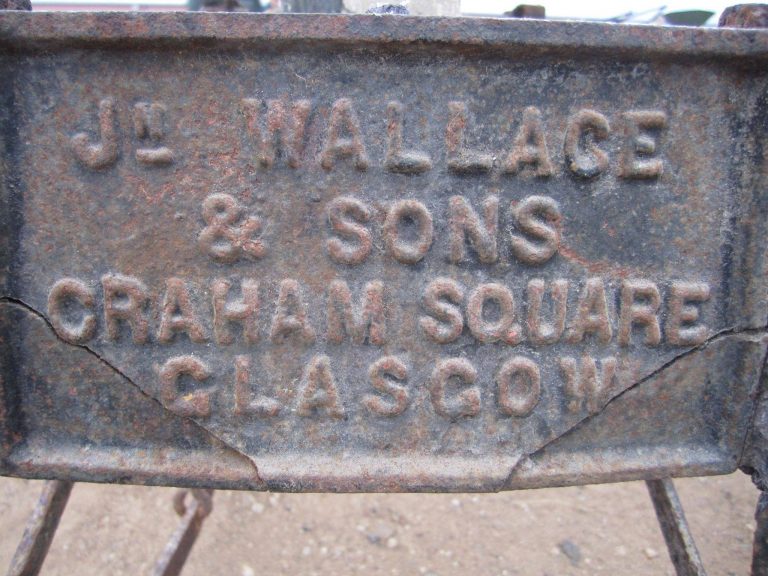
Messrs John Wallace & Sons, Graham Square, Glasgow, exhibit at stand 31 a large and interesting collection of reaper and mowers, food preparing machinery, horse rakes, cultivators, &c. Prominent amongst their harvesting implements are their well-known the “City of Glasgow” and “Thistle” reapers, both of which have acquired a wide reputation, and have been largely used for several seasons in both England and Scotland. There also exhibit a combination mower and reaper which is so constructed that it can be either used for back or manual delivery. The famous “Oliver” chilled plough is also seen to great advantage on this stand, the firm having the sole agency in Britain for the sale of this valuable implement.
Messrs John turnbull & Son, Carnock, Larbert, exhibit at the adjoining stand (30) two specimens of the portable hay or straw trusser with which they won the Society’s prize at the Melrose Show last year. This is a most useful implement on all farms, and it is not only light and simple in working, but exceedingly cheap.
Mr David Williamson, Carron Bridge, Thornhill, has brought all the way from Dumfriesshire, and exhibits at stand 32, several samples of his manufactures, such as farm carts, gardeners’ barrows, navvy’s barrow, and a Laide barrow. These useful articles appear to be substantially made, and are admirably finished.
Messrs Alex Wood & sons, Stockwell Street, Glasgow, make a speciality of farm and other weighing machines, several samples of which they exhibit at stand 53. These machines are made in great variety, and are fitted with all the latest improvements. This firm have recently invented and patented a process which completely removes the difficulty that has often been experienced in registering the exact weight of an article, owing to the vibration of the needle of the dial. By a simple process, the needle is made fast the moment the full weight is attained.”
In 1879 the Highland Show was held at Perth. This was a central location, within easy reach of the main populous districts in Scotland, many rural areas as well as to the south and English implement makers. The show attracted many key Scottish agricultural implement makers who brought their award-winning as well as leading implements and machines.
The year 1879 was an important year in Scottish agriculture: it was at the end of a period of continuing growth and increasing mechanism before a long period of agricultural depression that continued into the first decade of the twentieth century.
The Dundee courier of 30 July 1879 provided a detailed account of the implement department of the show. It included some of the key Scottish Makers (with names known well-into the twentieth century) and a wide range of implements and machines. There were a large number of celebrated implements and machines as well as award-winning ones. The article is worth quoting at length for its insights:
“Perth show 1879
Messrs Kemp & Nicholson, also from Stirling, exhibit a capital collection of agricultural implements and machines, comprising their celebrated Waverley, North British, and Caledonian reapers and mowers, horse rakes, hay collectors, farm carts, cart wheels and axles, two and three-wheeled grubbers, harrows, rollers, &c.
Specialities in turnip lifters on a greatly improved pattern are shown at Stand 89 by Messrs Auchinachie & Simpson, Keith, who have been awarded gold medals for these lifters. These gentlemen also show fine specimens of ploughs and grubbers.
Messrs J D Allan & Son, Dunkeld, exhibit at Stand 87 potato diggers, with improved spring lever lifter, and also improved reapers and ploughs and other implements, all of which are of a highly superior description.
A specimen of an American plough is to be found at Stand 135, which belongs to Mr Thomas Scott, Denny. The principal feature of this plough is that it is about a third lighter in draught than ordinary ploughs, while it is fitted with a sock which will serve a season without requiring repair. Mr Scott also exhibits a patent washing machine and an improved wringer, both of which are worthy the attention of heads of families, a wood reaping machine, and a number of other implements.
Messrs J. Bissett & Sons, Blairgowrie, exhibit, at Stalls 156 and 165, agricultural implements of every description and of the best class. Among the principal articles are the turnip lifter and a Scotia mower, fed with two speeds of knife instantaneously, and changeable improved gearing encased and apart from ground wheels.
Mr W. Macfarmane, Ardler, who occupies Stands 160 and 169, shows a great variety of agricultural implements, amongst which are reapers, horse rakes, and drill harrows. He also exhibits a new and improved threshing machine of English style, invented and made by himself, and which is a compact and handy machine for fixed or barn use. The machinery is all enclosed, so that the dust cannot get in, and farmers will find this thresher of a very suitable description. A vertical engine of 6 horse power for driving the machine is also on view, the engine and boiler being on the same base.
Mr R. G. Morton, Errol, exhibits an entirely new direct-acting, high speed threshing and dressing machine at Stand 186. This machine is suitable for either water or steam power. There are only three belts in connection with the machine, and these communicate the power direct from the engine. The machine, to which dust cannot enter, is fitted with Mr Morton’s patent lubricators, which can contain oil to serve for three days. Mr Morton also exhibits grist mills for grinding barley, Indian corn, &c. Wood’s reaper and binder, horticultural engine (fitted with patent lubricators); patent reaper, with Williamson’s back delivery, this reaper being a mower manual and self-deliverer combined, and being fitted with hinged finger-bar and double driving-wheels. The machine was commended at the Royal Northern Agricultural Show at Aberdeen.
At Stand 130 Robert Mitchell & Son, Peterhead, have a number of agricultural machines, amongst which we specially notice a couple of broadcast sowing machines for grain and grass seeds. The peculiarity of these is that the seed box is made in two divisions, and so constructed that each “swirls” round on a centre pivot at each side. The shortness of the half boxes keeps the fore end always at a distance from the horse’s head, and the whole thing is very portable and easily wrought, or stored when not in use. The boxes are of two lengths-18 and 14, the latter being specially suited for small holdings. Altogether, these sowers are likely to make their way with the farming fraternity. A number of rakes, grubbers, rollers, and ploughs at the same stand will repay inspection.
At Stand 139, George Sellar & Son, Huntly, exhibit a number of choice diggers, ploughs, harrows. Barclay & Sellar’s patent digger is now much used by the leading agriculturists in the north. It pulverises the lower part of the furrow slice, and turns over only the upper portion, leaving the roots of the weeds exposed to the winter’s frost, and the ground in a very friable condition. Stubble land cultivated by the digger does not require to be reploughed as it would do after the plough, but only requires to be harrowed in spring, and turnip land is left ready for the reception of the seed. Five of the ploughs at this stand are fitted with mould boards of an improved type, which were thoroughly tested last winter, and have proved very successful. The harrows are not fitted with bolts as usual, but have the tines driven firmly into the slots, thus forming a strong, simple, and durable article. The advantage of this style of harrow is that there is no danger of them shaking loose, and a farm servant can remove the tines when they require repair, and replace them again, without having to take down the whole harrow.
At Stand 147, Messrs Thomson & Co., Kinning Park, Glasgow, have a large number of weighing machines, suitable for use in various pursuits. Among others are machines for hutch weighing and other purposes at collieries, for iron merchants, founders, landing stages, stores &c. A very interesting machine is one of the patent lever construction, awarded the first prize at Compeigne ten years ago, capable of weighing an ounce to 100 tons. This variety are only themselves about half the weight of the hydrostatic weighing machine, and the eight weights of compound lever, an article made to scale five tons, have only a weight of 36lbs. Those with tube cutters and expanders and emery grinding machines ought to commend them for adoption by those concerned, as all are of proved utility in their own way.
At Stand 158 (John D. Doe’s), Adamson & Co. of Dundee and Errol exhibit a very fine selection of agricultural drain tiles from 1 ½ inches to 14 inches in diameter, and also roofing tile, pressed brick, cut, and hardware. These are all being extensively used by agriculturists, and are entitled to practical patronage from farmers and others in want of such material, alike from their clean make and finished, yet substantial workmanship.”
The Highland Show (now the Royal Highland Show) has always been an important forum for the exhibition of the latest agricultural implements and machines. It enabled makers to show their manufactures, for farmers and other agriculturists to be able to compare what was available from other makers, and for the Highland and Agricultural Society of Scotland to recognise the most important innovations and developments, providing with them with awards.
In 1865 the Show was located at Inverness, one of the eight show districts. This was the centre that was of particular interest to those in the north of Scotland. Because of its distance from the more populous districts (and England for the attendance of English exhibitors), there tended to be a larger number of more local implement and machine makers from the area. However, this did not mean that there were not prominent makers from other parts of Scotland. The implement yard could therefore provide some interesting insights into the demand and supply of agricultural implements. This included the different types of them that were brought to the show and the makers who considered this geographical area as being important to their businesses.
The North British Agriculturist, the national Scottish agricultural newspaper from the mid nineteenth century onwards, provided a lengthy account of the show which is worth quoting at length for the insights that it provides. Although the show was over 150 years ago, some of the names of exhibitors were still well-known well into the twentieth century:
“Highland Show
Implement department
The implement department is not imposing, there being none of the complicated and more expensive machines which are so attractive to the ordinary visitor. There is no machinery in motion. The articles are arranged in rows, part being displayed under wooden sheds, and part without any protection. The more eminent English makers are not patronising the present exhibition of the Highland Society. Doubtless the distance from the seat of their manufacturers, and the number of orders which still remain unexecuted, are the causes which have influenced implement makers in withholding contributions to the present show. There are, however, in several of the stands implement and machines from English manufacturers. It does not argue well for the estimation in which the farming of the north of Scotland is held that there is only one portable steam-engine in the yard, exhibited by Williamson Brothers, Canal Iron Works, Kendal, who also exhibit a combined thrashing machine, a turbine water wheel, and a centrifugal pump. The implements which are shown in the greatest numbers are ploughs, harrows, and reaping machines. Mr Allan, Culthill, Dunkeld, shows several well constructed ploughs and horse shows, with two turnip sowing machines. Mr Barber, Leicester Buildings, Liverpool, exhibits the “Eagle” mower. Mr Bradford, Manchester, an extensive collection of washing-machines and other articles for the laundry. Messrs Brigham & Bickerton, Berwick, exhibit several of their well-known excellent reaping-machines. Messrs Jack & Son, Maybole, show a Hussey’s reaper, a Buckeye combined reaper and mower, and other articles. Messrs Law, Duncan & Co., Shettleston, have a potato-digger, a patent reaping-machine, a subsoil plough, &c. Sir John P. Ord of Kilmory, Bart, shows a horse collar made of bent grass, and matting of the same material-both very cheap and good. Mr Rawdin, Jedburgh, exhibits dipping tubs for dressing sheep. Mr John Richardson shows specimens of his well-known fanners. Riches & Watts, Norwich, an American grist and corn-grinding mill. Messrs Richmond & Chandler, Manchester, have an excellent assortment of chaff-cutters and other food-preparing machines, which are now, we are glad to say, being better understood and appreciated by farmers in Scotland. Mr Ross, Cullen, shows a very good plough and turnip-sowing machine. The Singer Manufacturing Co., Dundee, exhibit several sewing machines. Mr W. Kennedy, 182 Princes Street, Edinburgh, shows a splendid collection of these useful and popular articles.
Messrs J. & T. Young. Vulcan Foundry, Ayr, exhibit good combined reaping and owing machines; one, being adapted for one horse, is said to have proved a very great success. The same firm has also several other articles useful in the farm and the dairy. Messrs Kemp, Murray, & Nicholson have an extensive collection of food-preparing machines, reapers, horse-rakes, rollers, grubbers, harrows, garden seeds, &c. Messrs Morton of Liverpool have a varied and extensive collection of galvanised iron and wire fencing, along with models of buildings in corrugated iron. Messrs Picksley, Sims, & Co., Leigh, show an unusually large collection of food-preparing machines, troughs, bone-mills, rakes, reaping machines, lawn mowers, garden seats, &c; along with an excellent collection of superior American cast steel hay and manure forks.
Mr John Pringle, Berwick, Kelso, and Edinburgh, has a very extensive and well-assorted collection of implements, consists of several patent reaping and mowing machines, food-preparing machines, harrows of various forms, a number of corn-screws, wire netting, sheep troughs &c. Messrs Benjamin Reid & Co., Aberdeen, exhibit their 4-inch row drilling machines, a number of food-preparing machines, Howard’s ploughs and rakes, Cambridge’s clod crushers, Shank’s mowing machines, Jebb’s patent tubular churn (a new invention which is attracting a considerable amount of attention from the short time in which butter is produced), &c.
Messrs Davie, Brown, & Young, Stirling, exhibited reaping machines, a land roller, and a turnip slicer. Mr Forbes, Inverness, shows reapers, turnip cutters, and corn crushers. Mr Finlayson, Arbroath, exhibits a large self delivery reaper, which is stated to be of radical improvement. Captain Fraser of Balnain, shows a cumbrous looking machine for making peats, a primitive plough for clearing snow off hill pastures, and a still more primitive looking harrow for the same purpose. Messrs Hudspith & Co., Motherwell, show pipes and collars, bricks, &c. Mr Hunter, Maybole, displays a new turnip cleaner, ploughs, grubbers, harrows, &c. Mr Kirkwood, Tranent, has an ordinary two-horse plough, the Tweedale ploughs, grubbers, harrows, &c. Mr William Kirkwood, Duddingston Mills, Edinburgh, exhibits a new two-horse grubber, a potato lifter, a Norwegian harrow, horse rakes, &c. Messrs McGregory & Humphreys, Aberdeen, exhibit their well-known ploughs, besides horse rakes, harrows &c. Messrs Main, Kempt & Co., Glasgow, have an extensive collection of rick stands, fencing, hurdles, field gates, sheep netting, field gates, chairs &c. Messrs Middleton & Co., Edinburgh, exhibit their wire fencing with pillars and stays, garden stats, galvanised wire netting, hurdles &c. Mr Mitchell, Peterhead, has in his stand a one-horse cart, drill sowing machines, harrows, and rollers. Mr Robson, Glasgow, exhibits a number of articles made of fireclay, such as cattle troughs, wall coping, ridging, sewage pipes, &c. Messrs Sellar & Son, Huntly, have a large assortment of ploughs and harrows.
Mr Wilson, Loanhead Works, Dunfermline, shows a number of excellent troughs and other articles made of fire clay. Mr Wingate, Alloa, exhibited his iron meat coolers, corn bins, and other articles. Messrs W. D. Young & Co., George Street, Edinburgh, have wrought iron gates, hurdles, fencing, garden seats, chairs, and a large number of articles made of galvanised iron.”