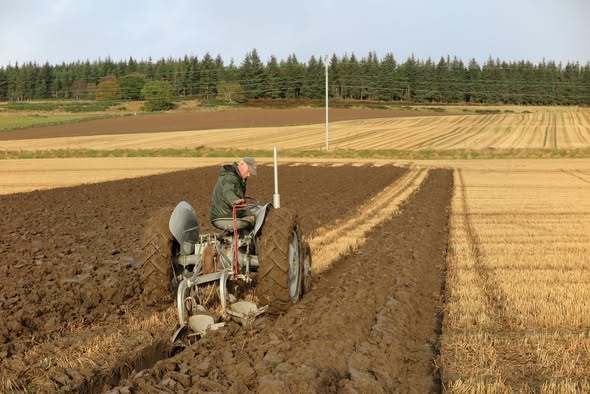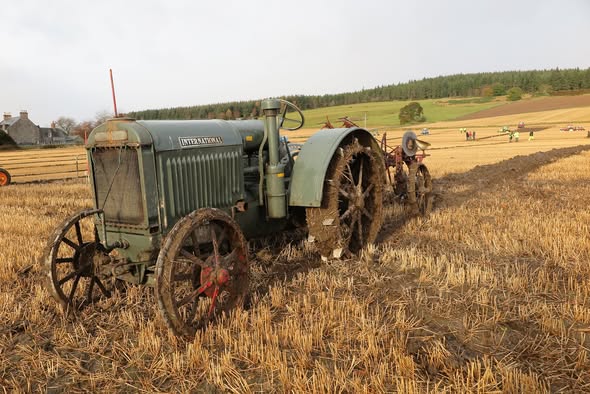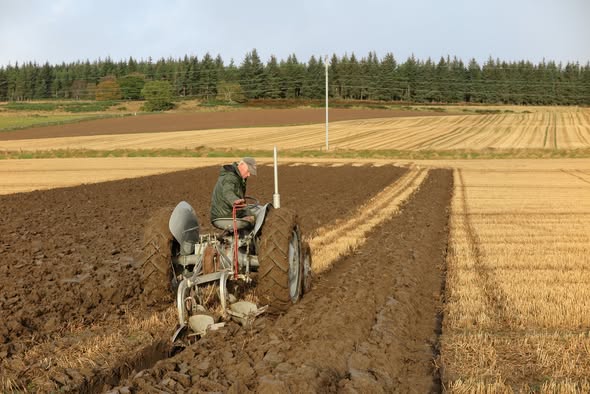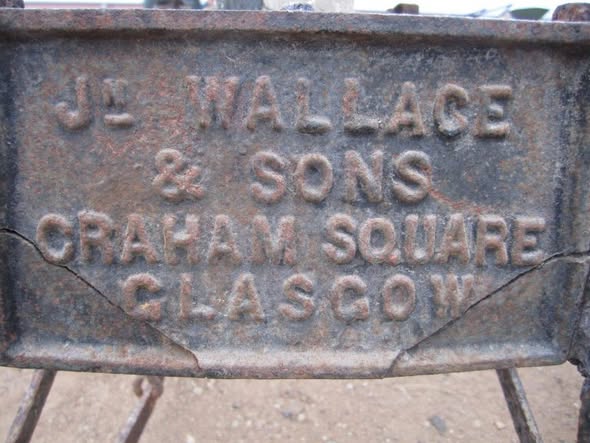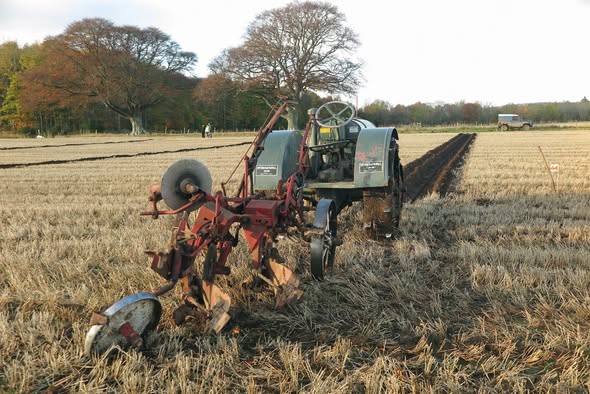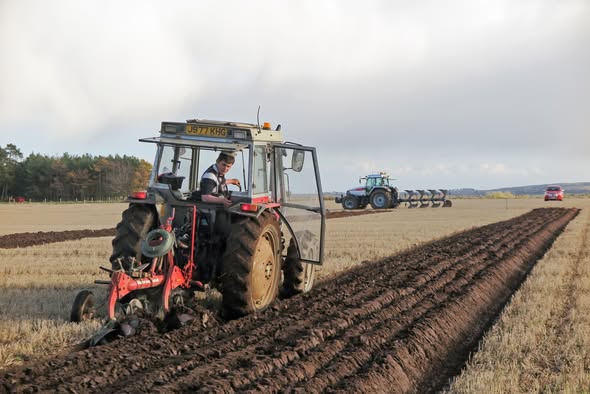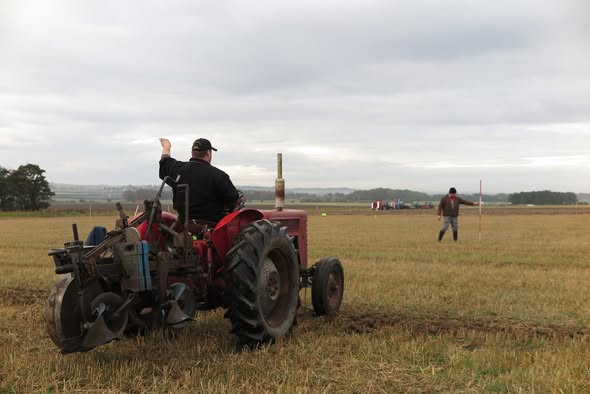
A tractor ploughing demonstration in East Lothian in 1920

At the end of the First World War and in the immediately following years there were a number of trials of tractors and implements at work. These included national ones by the Highland and Agricultural Society of Scotland as well as the Royal Agricultural Society of England. There were others by regional societies as well as county and more local ones. Some local ploughing matches held a demonstration on one of the rigs. This provided an instructive element to the match.

Other trials were held by agricultural implement makers and agents. The agricultural colleges also played their role as did leading farmers. Former agricultural students who had become leading farmers also had a role. One such former student was G. Bertram Shields of Dolphingstone, Tranent, East Lothian.

The Scotsman provided an extensive account of a trial of the “Glasgow tractor” at work with various ploughs on 6 November 1920. It was well-attended by local farmers and agriculturists, as well as agricultural students. It is worth quoting at length:
“Tractor ploughing

Demonstration in East Lothian

The demand for shorter hours of labour, coupled with large increases of wages, has affected the farming community probably more acutely than any other section of the nation. Faced with these problems, framers are beginning to consider carefully what assistance the engineer can bring to them to increase the production of their farms, and particularly to decrease the cost of working their land. There is not the least doubt that ahead of us lies an era when farming will be an operation as greatly assisted by machinery as other industries. Especially is this the case in the matter of tractor ploughing. The interest shown at the various public demonstrations has indicated that literally thousands of farmers are seriously considering the use of tractors for this purpose. Hitherto American firms have practically had the monopoly of the tractor business, but within recent years British firms have placed on the market tractors which have stood the test of experience.

One of these machines is a Scottish invention. It is named the Glasgow tractor, and is manufactured by Wallace (Glasgow) Ltd; at their factory at Cardonald. A two days’ demonstration was concluded on Friday at Dolphingstone, Tranent, on the farm of Mr G. Bertram Shields. In the afternoon there was a large attendance of farmers and agricultural students, about 160 of the latter being in charge of Professor Wallace and Mr William Bruce, of Edinburgh University Agricultural Department. They had the unique opportunity of seeing three “Glasgow” tractors at work on flat and hilly land, attached to two, three, and four furrow Oliver ploughs. The trials were conducted under favourable weather conditions, and the demonstration was voted a great success. Each of the machines was driven by one man, and each was easy to handle and good at turning at headlands.
The Glasgow tractor is fitted with a four-cylinder engine, running on paraffin. The strength is rated at 27.2 horse power. It is a compact machine of medium weight, and works at a useful speed in a strikingly silent manner. The feature of the machine is its three-wheel drive. Pulling with two front wheels and one rear wheel, the driving torque causes the wheels to press into the ground as the strain increases, equally and evenly, insuring them against the common fault of slipping and skidding, or a possibility of overturning. The merits of the machine as a “hill climber” were fully demonstrated.

A thirty-acre barley stubble field was laid out for ploughing, so that two tractors could operate at one time. The field is of grey soi on sandstone, with not more than about 7 inches of soil on the base of the hill. The steepest gradient was 1 in 5. Attached to a two-furrow plough, the tractor negotiated the hill in a remarkable manner, and had no difficulty in working the plough seven inches deep. It went up and down the hill with the greatest ease, and gave no trouble whatever.

At the other end of the field an original model of the “Glasgow” tractor was seen at work drawing a four-furrow plough downhill. This machine was built in 1918, and with it Mr Shields has cut his grain crops, ploughed two fields for potatoes, and about 15 acres of stubble without a hitch. Yesterday the four furrows were cut to a depth of about seven inches, and the job was regarded as highly satisfactory.
In a level lea field of 38 acres, which is being prepared for oats, a fine exhibition was given by the tractor drawing a three-furrow plough with mould boards suitable for Scottish ploughing conditions. The furrows were level on the top, and it was impossible to tell where the one set of three furrows began and the next set finished. The quality of the work was acknowledged by farmer experts to be championship work.

At the end rig this tractor was stopped, and Mr Wm. Guthrie, Motherwell, the designer of the tractor, explained to the students the technical points in its construction. Replying to questions, he said that two gallons of oil were consumed per acre; and that six acres could be ploughed in eight hours. The spuds were the smallest that were on any tractor, and did not cut up the soil.

Professor Wallace, at the close of the demonstration, moved a vote of thanks to Mr Shields, who, he said, was an old student of the Agricultural Department, for the privilege of allowing them to see that magnificent mechanical display.

Mr Shields, in acknowledging, said that was an ocular demonstration to the agriculturists of the country that power on the farm had come to stay. There was no doubt they could do the operations of general farming a very great deal cheaper with mechanical means than with horse labour.”

Share

Some Aberdeenshire implement and machine makers in 1927

The north-east of Scotland had some prominent implement and machine makers that were known well-beyond the boundaries of that district; some were known world wide as well as their manufacturers.

We can meet the makers and their manufacturers through a range of evidence, including show reports, business records and local newspapers. Newspapers in the north-east played an important role in promoting the activities of the makers. These included adverts of their manufactures as well as reports from the key agricultural shows.

The Royal Northern Show (both the winter and summer shows) were featured at length in the local newspapers. They published extensive accounts of the implement department, including accounts of the most important stands and what implements and machines were notable on them. These included the latest ones, new developments and ones that were highly regarded.

An extensive account of the Royal Northern Show was published in the Aberdeen press and journal of 21 July 1927. It recoded what was on the stands of some of the key local makers that were well-known in the district:

“Royal Northern Show

Round the stands

Fine display of farming implements

Visitors from the country and town alike will find much to interest them in the display of implements, etc, at the show of the Royal Northern Agricultural Society at St Machar Drive, Aberdeen, to-day. Every kind of implement, machine, and utensil necessary for the. Successful working of a modern farm are on view. All enterprising firms are showing their most up-to-date appliances, and additional interest is lent to the fine display by the fact that many of them are seen in actual operation.

Messrs Barclay, Ross, and Hutchison (stand no. 21)

Messrs Barclay, Ross, and Hutchison, Ltd, are showing a large selection of implements and machinery, which includes a 3ft 6ins portable thresher driven by an Austin tractor. Ruston-Hornsby oil engines and Lister petrol-paraffin supply the power for several smaller portable threshers. This firm also exhibits its own make of wave disc manure distributor with an improved type of shutting bar and a new Standard binder manufactured by Messrs Ruston Hornsby. This is an all-steel machine, and is claimed to be the lightest on the market.

Messrs W. Smith and Son, Ltd (Stand no 17)

On Stand no. 17, Messrs W. Smith and Son, Ltd, seedsmen and implement agents, Aberdeen, show a large and comprehensive collection of farming implements, etc, manufactured by some of the best British and American agricultural engineers. They show the popular McCormick Binder which can be supplied to cut 5, 6, 7, and 8 feet, for use with horses or tractor, and may be had with sheaf carriers to deal with from one to six sheaves.

Prominent on the stand is Bamfords’ famous Royal mower and reaper with their new patent curved spiral and bevel gearing for which the makers were awarded seven medals last year at the principal English and Irish shows. This gear ensures noiseless and even running, imparts to the cutting bar a very smooth motion, whilst the draught if considerably reduced.

For the benefit of the farmer’s wife there is a large and varied collection of dairy appliances-churns, butter-workers, the well-known “Diabolo” and “Alfa Laval” separators, and the popular “Framer’s Friend” combined cheese chessel and press. Bar frame hives and appliances, fountain lime-washing and spraying machines, are among the other agricultural appliances that find a place in Messrs Smith’s display.

Messrs Wm Reid and Leys (Stand no. 18)

A fine display of agricultural implements is that of Messrs W. Reid and Leys, on stand 18. The Don patent pole grubber, Aberdeen ploughs, Osborne binders and hay mowers, both Vickings and Jacks, are among the exhibits. In addition there is a good display of Alpha Laval cream separators, the Don cart turnip cutter and the firm’s own turnip sower. The turnip sower is an entirely new machine and is bound to attract considerable attention.

Harper Motor Co., Ltd (Stand no. 23)

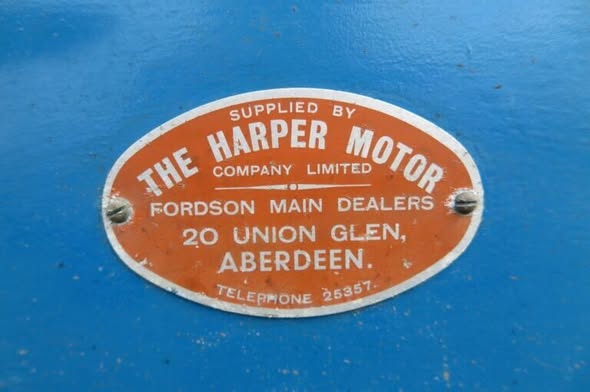
As authorised Ford dealers for this territory, the Harper Motor Co., Ltd, have a very interesting display. The famous Fordson Tractor is prominent, and while little change may be apparent to the untrained eye, there are several noted improvements. One tractor is fitted with a Junior mower which should be of great interest at this time of the year. Another Fordson is equipped with rubber tyred wheels and is capable of pulling up to 10 tons.

The Ford Young car is exhibited and a noted feature is its exceedingly smart appearance. It is priced at £125.

The familiar Ford ton-truck completes the vehicles, but there is also shown an Oliver 2-furrow plough, specially built for the Fordson Tractor, as well as an interesting display of spare parts.

James Roberston, Aberdeen (Stand no. 15)

Almost every requirement of the framer is to be found at the stand occupied by Mr James Robertson, 14 Hadden Street, Aberdeen. The universally famed Lister engines for various farm uses provide a notable feature of his exhibits. There are also Deering binders, mowers, and horse-rakes, which have the admirable qualities of lightness and durability to commend them. Dairymen will find their interest captured by a special display of diabolo cream separators. They have a 10 years’ guarantee and have the merit of being easily run and easily cleaned. A display of bee hives and appliances will be given throughout the day. Other important parts of farm equipment that are being exhibited at this stand are the Albion mower, the Jack potato digger, barn fanners, 50 gallon oil tanks, manure pumps and boilers, and hay collectors.

Messrs C. F. Wilson and Co., Ltd (Stand no. 29)

Economically-driven engines for threshing mills are exhibited by Messrs C. F. Wilson and Co. Ltd, at stand 29. “Wilson” oil engines, which have for so many years faithfully aided the farmer in completing his harvest, are here exhibited in their latest models. A crude oil engine of 15 brake horsepower is also seen running. The simplicity of the working parts and the smooth running of this engine are at once noticeable. A particular feature of this crude oil engine is its fuel pump and engine spraying device, the simple design of which, in combination with the governor, does away with all irritating adjustments.

There are also exhibited the “Wilson” 15 and 8 b.h.p. paraffin oil engines. These are so well known to farmers for their reliability and success in driving threshing mills that we merely mention them here.

Messrs C. F. Wilson and Co. Ltd, are also makers of cold starting crude oil engines, which can be inspected at their works at Constitution Street.

Messrs George Bruce and Co. (Stand no 16)

Messrs Bruce and Co., are showing on Stand 16 a number of new Massey-Harris no. 6 binders, mowers, and rakes from the same factory and a large assortment of potato sorters and potato cutters. An extremely useful hay loader with an attachment for levering the hay on to the flat lorry is also shown. Cake mills, weighing machines, and various sizes of milk churns of the most up-to-date types and also shown on this stand.

Balgownie Dairy (Stand no. 7)

Every utensil for the efficient and hygienic purveying of milk is to be exhibited at the stand occupied by the Balgownie Dairy. The firm conducts the largest business in dairy utensils in Scotland outside Edinburgh, and dairymen would be well repaid by a visit to the stand. They will find there the most up to date separators, cleaners, seamless milk bottles and boxes, churns, butter workers, cooler pans, cooler stands, bottle-filling machines, washing-house tanks and boilers, milking pails and bottle washing outfits. Mr G. Maitland will be in charge of the stand.

Messrs J. Shepherd and Sons (Stand no. 25)

At Stand no. 25, J. Shepherd and Sons exhibit a collection of vehicles for agricultural purposes, the principal exhibits being their famous farm carts. These carts are all built of oak framing with larch linings, shelvings and bottom. The horse-drawn lorry is still to the front, both for farm work and town work. The specimen shown is an instance that the farm has the material as well as the skill to turn out a first class and highly finished article. They also show a variety of wheels in wood, showing the richness of the timber used and the quality used in manufacture. A variety of farm and garden barrows is also shown.”

Share

An episode in the history of the Wright Brothers, Boyne Mills, Portsoy – in 1954

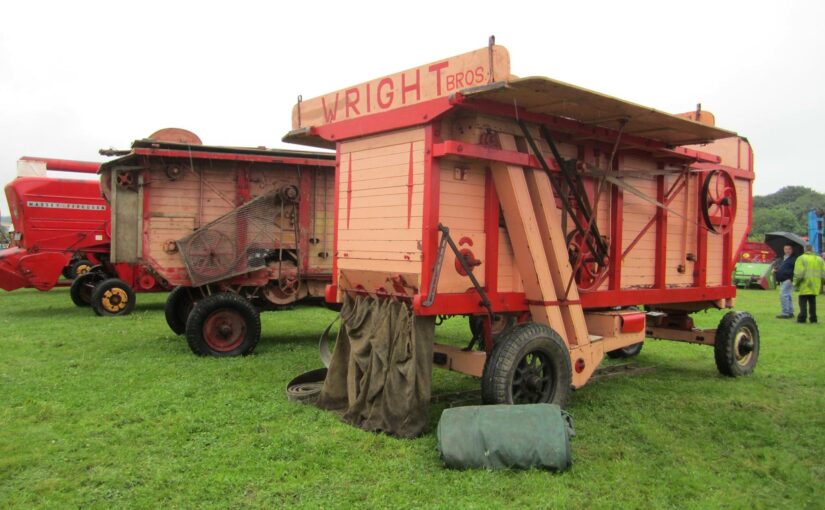
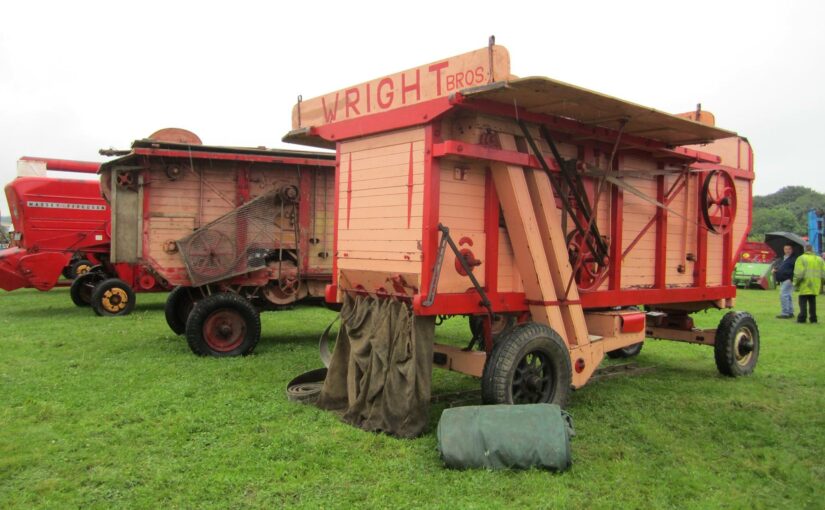
By 1905 Wright Brothers of the Boyne Mills, Portsoy, made reapers, drillers and threshing mills. It was their threshing mills, and as a millwright that the company was especially renowned. By the late 1940s the business was undergoing significant changes. In early 1948 steps were being taken to incorporate it to become a company limited by guarantee; the company received its certificate of incorporation to become Wright Brothers (Boyne Mills) Ltd. The company continued in business until 1955. On 7 February that year the company passed an extraordinary resolution to voluntarily wind up the company. Its final winding up meeting was held on 17 October 1956.

In 1954 Wright Brothers (Boyne Mills) Ltd was continuing to manufacture a range of machines. These included its “Boyne” Junior Hammer Mill for “grinding, sieving, mixing and bagging off in one operation” and its Boyne Hammer Mill. In March it announced that it was undertaking serving and repairs of tractors, cars and commercial mills. In the summer, it undertook pre-harvest maintenance and repair of tractors and binders. It also sold binder twine, stack nets, coir yarn, churns, milking machines, pails, hay forks and scythes.

During the summer of 1954 the business was successful in gaining a contract of small threshing mills from the Republic of Ireland. This was a significant contract and notice of it was published in The Scotsman on 24 June 1954:

“Country industries

New machinery attracts interest

Mr W.A. Wright, Boyne Mills, Banff, designed the £160 small threshing mill intended for the small farmer and driven by a 6hp electric motor. Scottish Country Industries Development Trust are helping his firm to obtain larger premises to enable them to fulfil a five years contract with the Irish Republic. The small threshing mill, the designer claims, will save the farmer about £36 a year and his wife the necessity of feeding the large staff needed to work the larger machine.

The firm in Banff has been making threshing mills for 100 years, and the father and grandfather of the exhibitor made the first traction engines in the North of Scotland. The new Irish Government has expressed great interest in the new developments and has suggested sending Irishmen to be trained to that they could make and repair the machines themselves.”

The voluntary liquidation of the business in may 1955 suggests that the contract was not carried out. There was an extensive sale of millwrights’ plant, machinery and electrical equipment at the Boyne Mills on Saturday 28 May.

Share

Buying a tractor in 1959

By 1959 there were a number of key tractor agents throughout Scotland, especially in the eastern arable areas. Here is a list of the main agents – what ones do you recollect? what ones are missing from the list?

Agra Motor & Agricultural Engineers, Quayside, Banff

Alexanders of Edinburgh Ltd, Gardner’s Crescent, Edinburgh

Barclay, Ross & Hutchison Ltd, 67 The green, Aberdeen

A. J. Bowen & Co. Ltd, Harvester House, Markinch, Fife

Harry K. Brown (Motors) Ltd (Fordson distributors for Fife, Kinross, & Clackmannan, Ransome agents), Raith Motor Works, Nicol Street, Kirkcaldy – branches at Cupar, and Dunfermline

Caledonian Tractor & Equipment Co. Ltd, Rigby Street, Glasgow (factory, Tannochside, Uddingston)

Commercial Garage, Turriff

Cumming & Dempster, Dee Street, Banchory

Dalblair Motors Ltd (main Fordson dealers), 44 Dalblair Road, Ayr

John Davidson & Son (Engineers) Ltd, 51-53 High Street, Turriff

James Duncan (Fordson & Ferguson), Methlick, Aberdeenshire

James Duncan, Victoria Garage, Maud, Aberdeenshire

Elgin Central Engineers Ltd, Fordon Main Dealers, High Street and Hill Street, Elgin

Farm Mechanisation Co. Ltd, South Road, Cupar, Fife

George & Jobling, 14-160 Bothwell Street, Glasgow

Mark Goodson Ltd, 34-36 High Street, Jedburgh

James Gordon (Engineers) Ltd, Newmarket Street, Castle Douglas

John Harper & Sons (Blairgowrie) Ltd, 27-29 Perth Street, Blairgowrie

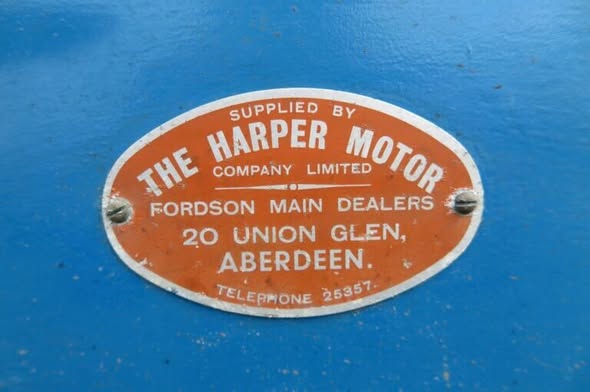
Harper Motor Co. Ltd, Fordson Main dealers, sales dept, 20 Union Glen, Aberdeen

D. McIntosh & Sons (diesel tractor repairs), Errol, Perthshire

Mackay’s Garage & Agricultural Co. Ltd, Central Garage, Dingwall (branches Thurso and Dornoch)

Mcleod & McLean Ltd, (Ferguson dealers), Commercial Road, Lerwick

MacNeill Tractor & Equipment Co. Ltd, 20 Graham Square, Glasgow (sales and service dept, 57 Meiklewood Road, Glasgow), and Edward Road, Stirling)

Massey-Harris-Ferguson (manufacturing) Ltd, Kilmarnock. Head office, Barnton Dock Road, Manchester

John M. Millar, Ltd, Callendar Road, Falkirk

Morayshire Tractors Ltd, Nairn Road, Forres

A. T. Mungall Ltd (Fordson main dealers), Forfar

W. & R. Murray (all leading makes), Main Street, Alford, Aberdeenshire

P. S. Nicholson, 215-219 High Street, Elgin

P. S. Nicholson (Forres) Ltd, St Catherine’s Road, Forres

Jack Olding & Co. (Scotland) Ltd, Coronation Works, Coupar ANgus, Perthshire. Also Perth, Bucksburn, Huntly, Mintlaw.

Reekie Engineering Co. Ltd, Ferguson Tractor Distributors, Arbroath

Allan W. Reid (Ayr) Ltd (International Harvester), 58 Main Road, Whitletts, Ayr and at Bridgemill, Glenluce

G. Ross & Co. (David Brown distributors), Friockheim, by Arbroath

Neil Ross (Elgin) Ltd, Greyfriars Street, Elgin

Geo. Sellar & Son Ltd, 30 Great Northern Road, Aberdeen. Branches at Huntly and Alloa; works, Alloa

Shearer Brothers Ltd (Fordson distributors), Maybank Works, Turriff, Aberdeenshire

J. B. W. Smith Ltd (Massey-Ferguson main agents), Cupar, Fife

Stirling Tractors Ltd, Ferguson Tractor distributors, St Ninians, Trucks & Pallets (Scotland), Wilson Place, East Kilbride.

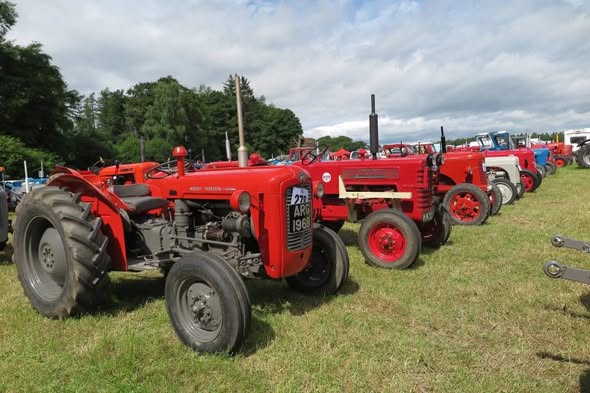
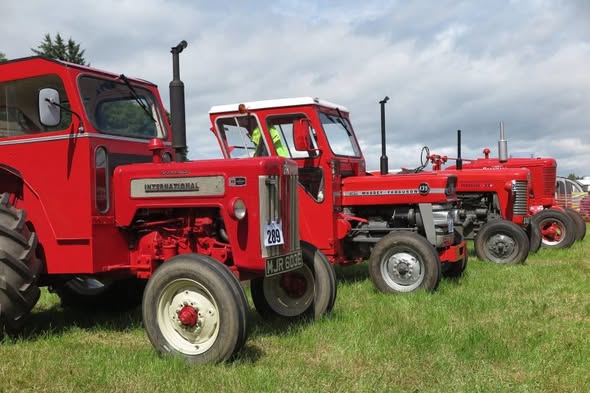
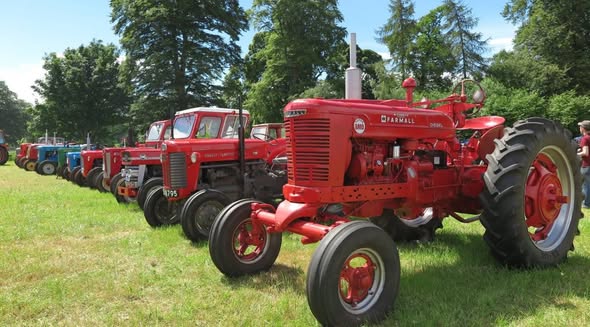
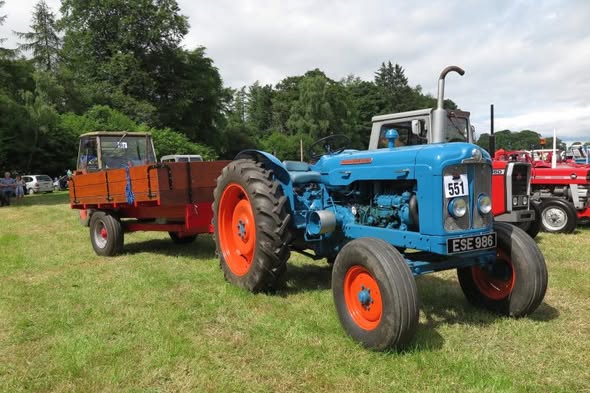
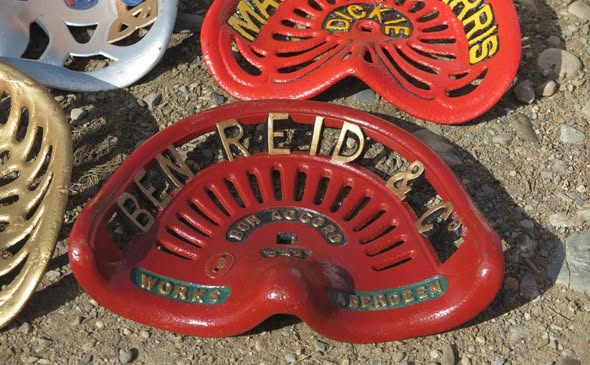
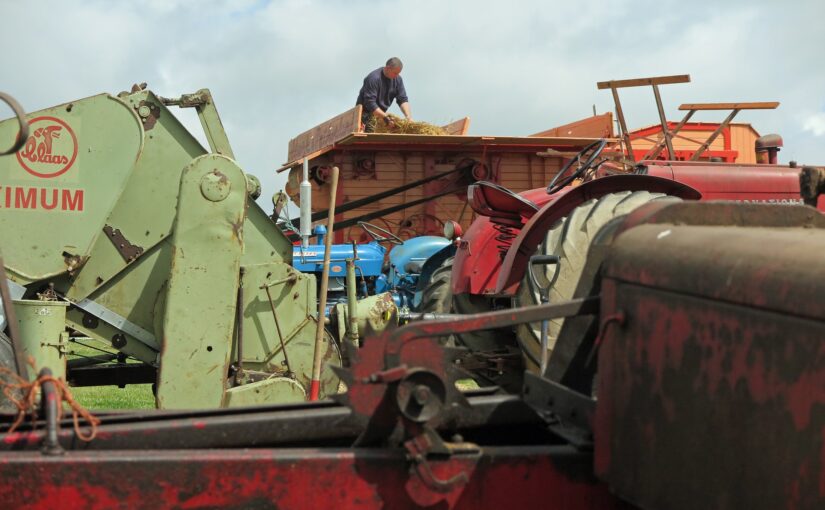
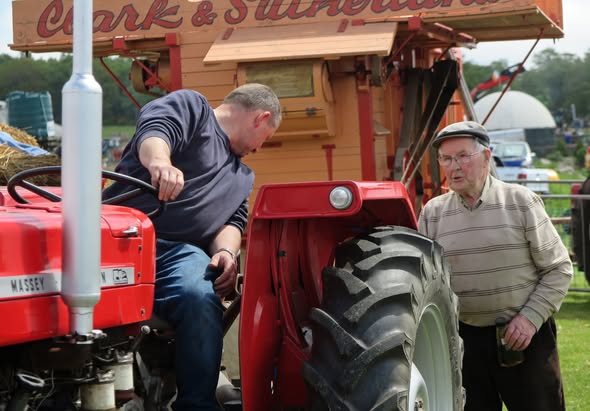
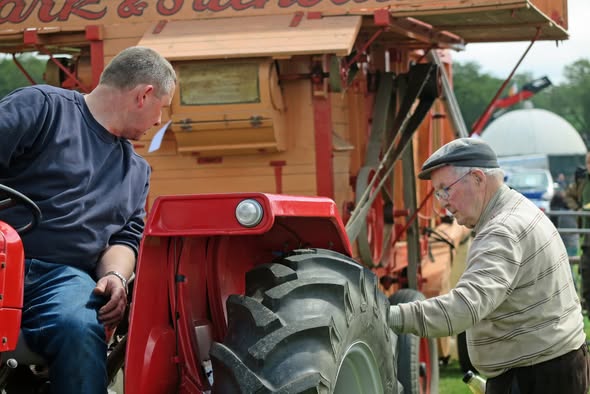
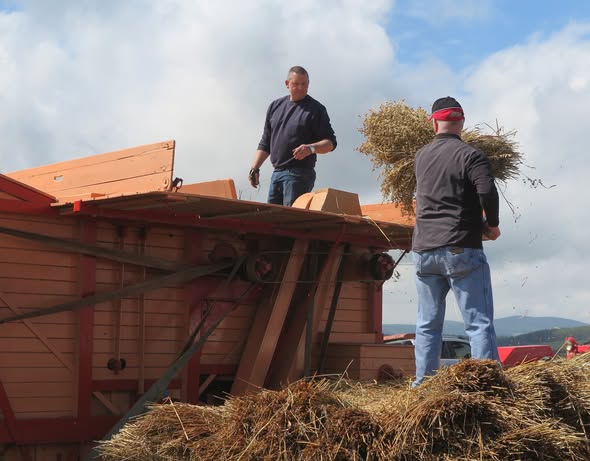
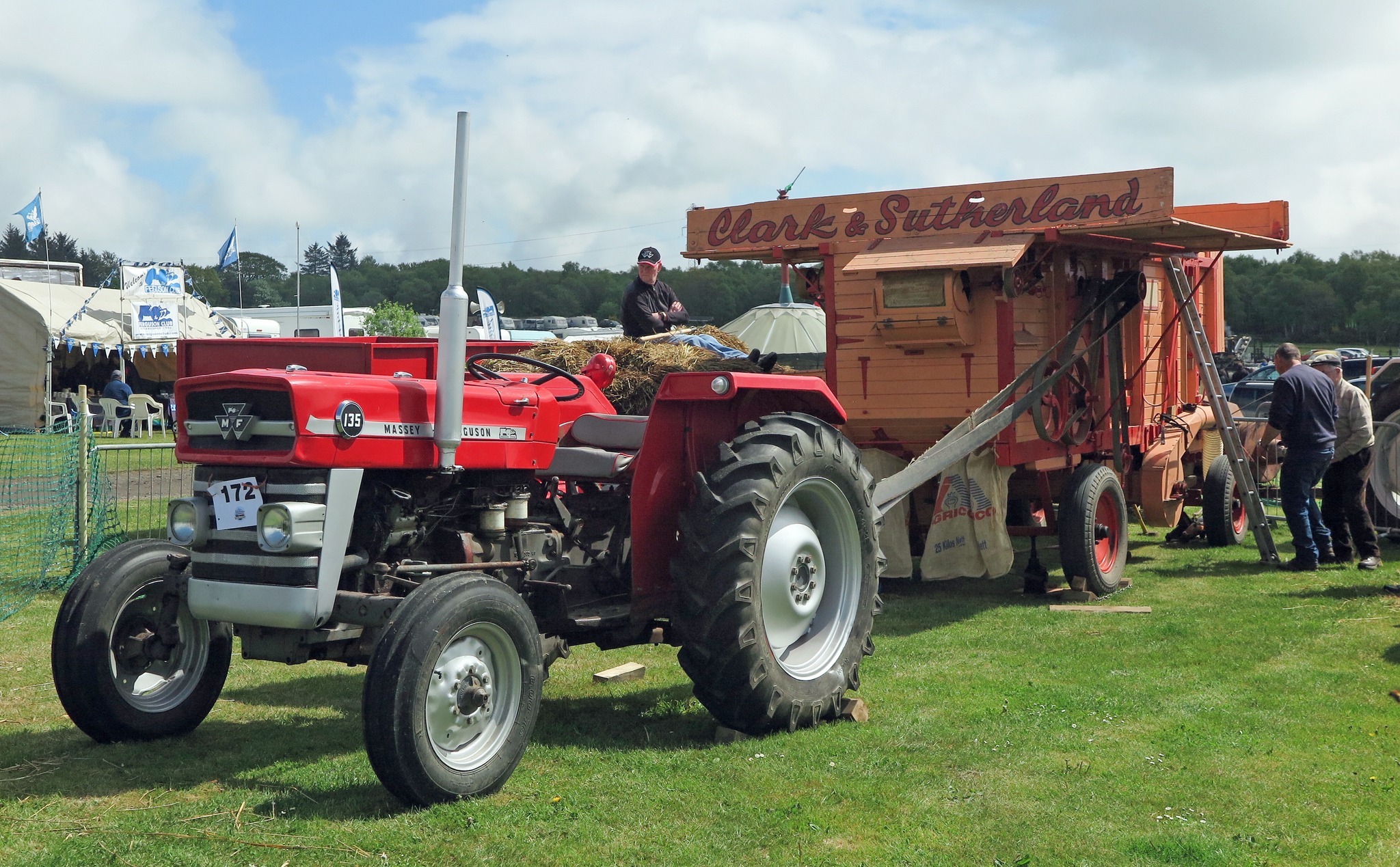
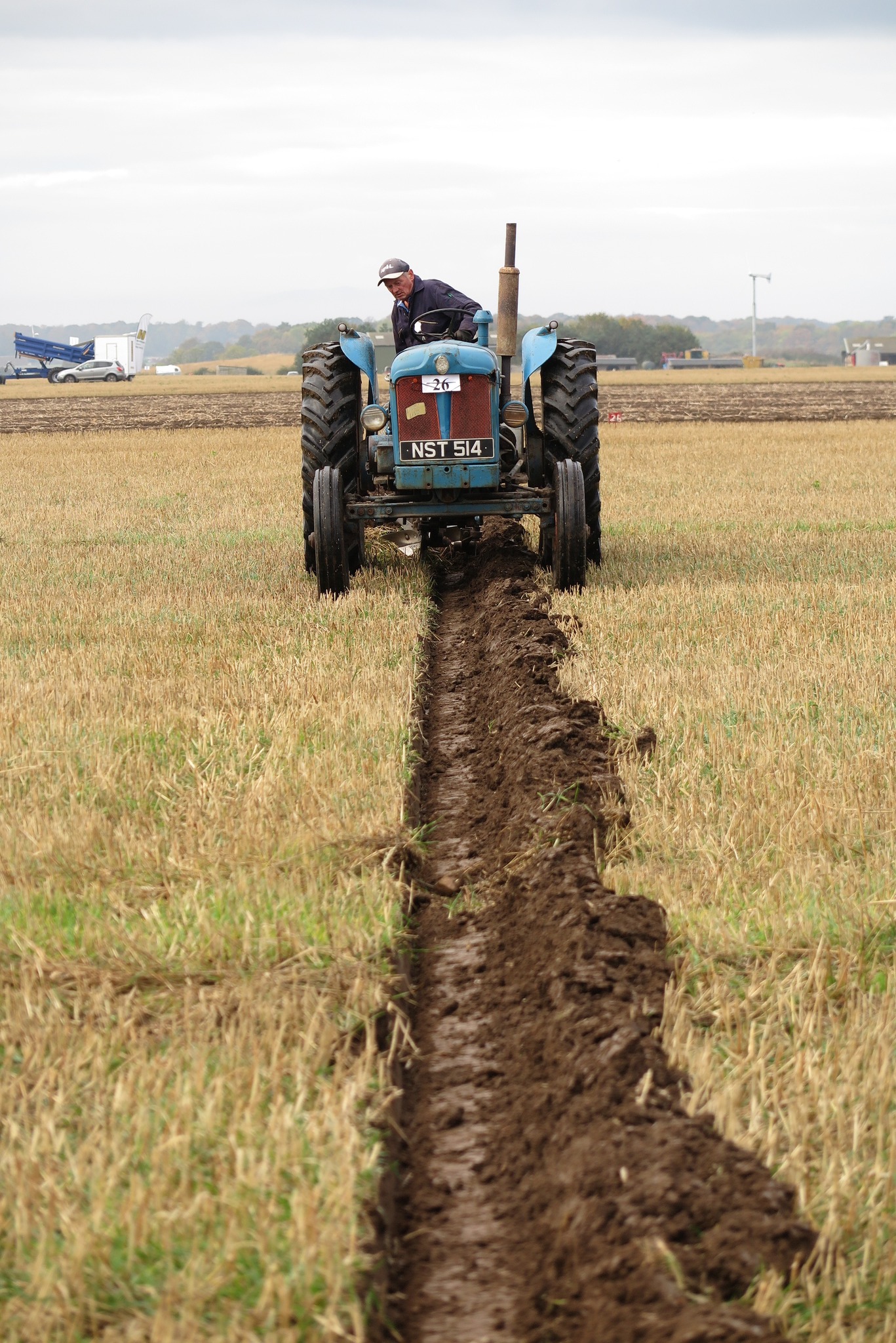
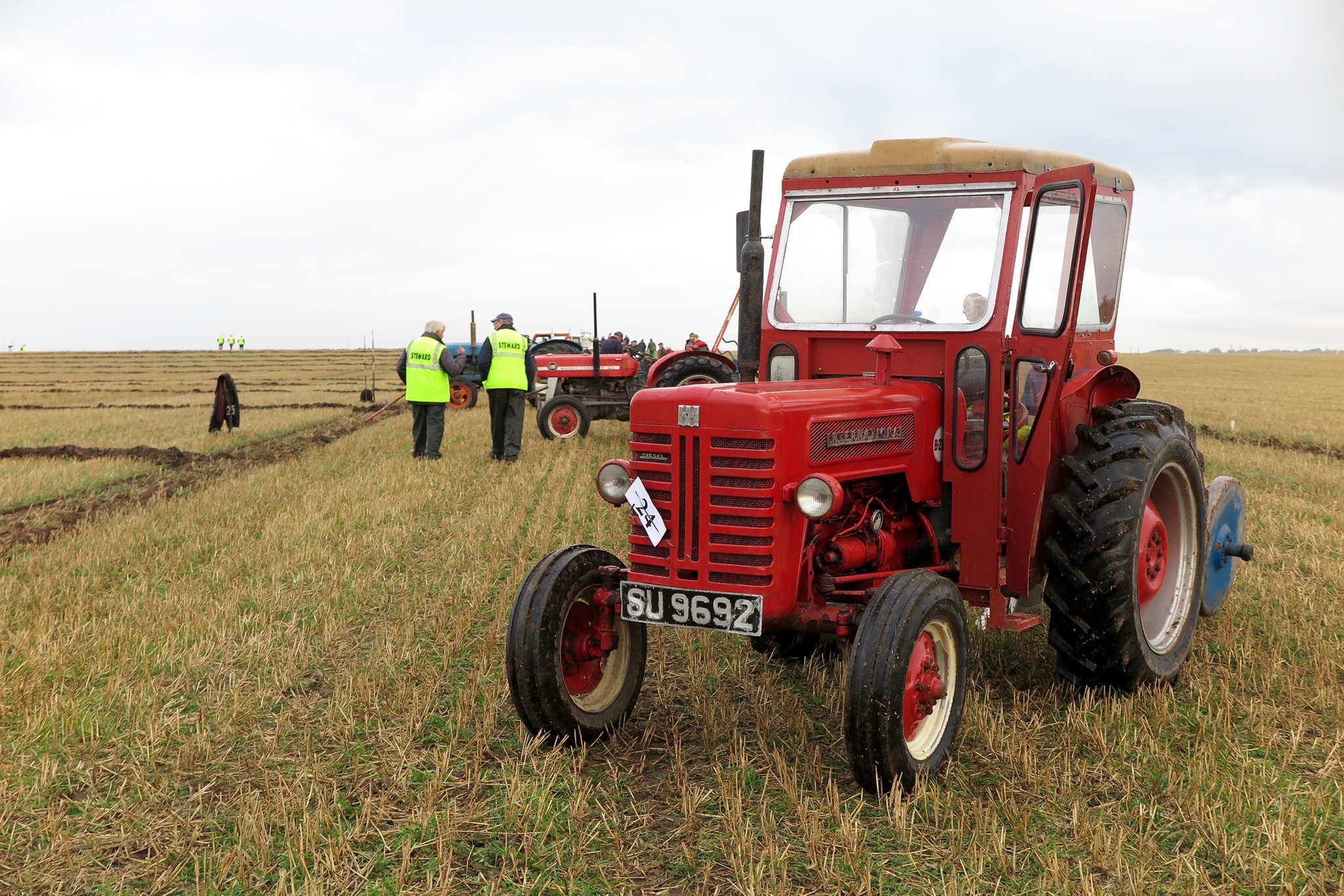
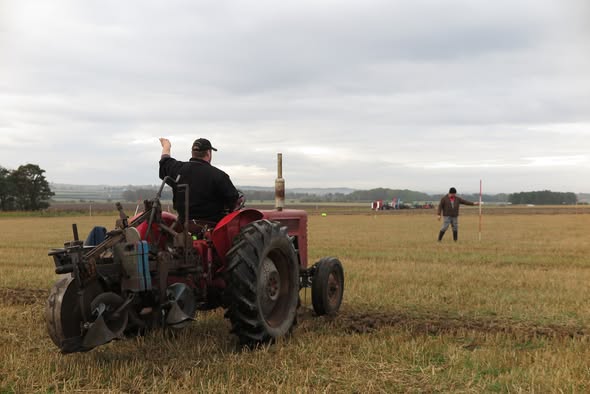
The photographs were taken at the Bon Accord Steam Rally, June 2017.

Share

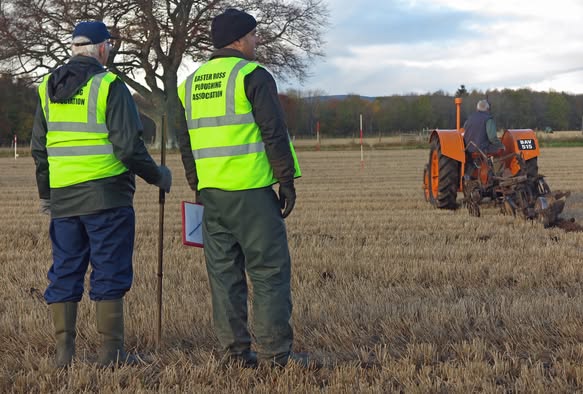
A reflection on the popularity of ploughing matches in the north-east in 1924

The First World War (1914-18) brought significant challenges and disruptions to Scottish agriculture. A wide range of agricultural events, including shows and ploughing matches were no longer held. The year 1919 was an important year for resuming them, including the Highland Show. Some ploughing matches took one or two years to restart and then get into their stride. As events restarted again, there was some reflection as to whether they would become as popular as in their pre-way heyday. This included ploughing matches.

A short article published in the Buchan observer and East Aberdeenshire advertiser on 29 April 1924 commented on the restarting of ploughing matches in that area of the north-east. It is worth quoting at length for the comments on the development of these matches as a difficult period in their history:

“Plooin’ matches as popular as ever

Ploughing matches appear to have lost none of their old-time popularity, for contests were never more numerous throughout the country than they have been this season. It was thought that during the wartime upheaval of farming work the fine art of the plough would rapidly pass into the limbo of forgotten things. Tractors and double and multi-furrow ploughs were fast displacing the old-fashioned two-horse team and swing plough; but a reaction has set in. The double furrow horse plough now mostly fills a slap in a fence, and the old plough with its single furrow speeds over the fields.

The slump in horse-flesh was a determining factor, and will be for a generation at least. Foe the general work of the farm horses are practically indispensable. The tractor is at best but a useful auxiliary. Under suitable weather conditions a tractor can overtake an extraordinary amount of useful tillage, but it is practically useless for the numerous minor kind of operations that constitute the routine work of the farm.

The tractor plough has done excellent work, and in more than one contest where it has been pitted against horse-drawn ploughs, it has come out on top. Neverthless, the plough work of the tractor in general leaves much to be desired. Apart from the novelty of the thing, the same amount of human interest can never be concentrated so keenly on an exhibition of tractor ploughing as on the work of a well-handled horse team.

Thousands of spectators have visited some of the leading ploughing matches in the north this season, thus showing that interest in one of the fine arts of the farm is very widespread, for among the coat-clad crowd were many visitors from town and city-men who having left farm work for other employment, still retain a deep interest in ploughing contests. Among the competitors, too. Were several ex-ploughmen, doughty champions of a former day still keen on exhibiting their prowess, and in pitting their strength and skill against those of the younger sons of the plough.”

Share

Early users of the “Glasgow tractor”

Displenishing sales provide an insight into the implements and machines that were used on a farm when the tenant was leaving it. While they reflected the type of activities that were being undertaken, they also show whether the farm was using new and innovative technologies or were relying on older ones.

A look through displenishing sales notice can reveal a lot about early users of particular technologies. These include the “Glasgow Tractor”, manufactured at first by Wallace (Glasgow) Ltd at Cardonald in the early 1920s.

In August 1921 one was advertised for sale at the “extensive displenishing sale” at Mains of Dun, Angus. It had “only been in use one season”. It was described to be “in very good order”. (it fetched £210).

In May 1922, one was advertised for sale at Whitehouse, St Boswells. It was “in good working order”.

In October 1922 one belonging to Mr G. S. Smith, Whitehouse, was offered for sale at Kelso Auction Mart.

In October 1925 one was advertised for sale at West Lochlane, Crieff., Perthshire

In October 1926 one was advertised for sale at the “highly important displenishing sale” on the farms of Whitehills and Pitkindie, Inchture.

In November 1927 two were advertised aat Dolphingstone, Tranent, East Lothian (fetching £50 and £15 respectively). This had been one of the farms which had held an early demonstration of the tractor at work.

In May 1928 one was advertised for private sale by A, Simpson & Son, Forfar. It was described as “in thorough working order”. Another was sold at a displenishing sale in November that year at a sale at Dalachy and Balram near Aberdour. Its engine had been reconditioned in the same year.

In 1929 one was sold at the November term at the sale at Greenhead, Pencaitland. It was advertised as an “important displenishing sale”.

These were all farms that were using modern machinery and also an extensive range of it. For example, at Whitehills and Pitkindie, Inchture, the implements for sale included the following:

Cattle float, 4 coup carts, 2 corn carts, turnip cutting cart, wood cart body, rally car and harness, Glasgow tractor, tractor plough, Bisset binder, Massey-Harris binder, reaper and mower, Bamlet mower, 3 Sellar ploughs, 3 S. M. ploughs, 2 D. M. ploughs, 3 American ploughs, 3 Oliver ploughs, 2 drill grubbers, 3 horse grubber, cultivator, 4 sets iron harrows, set circular harrows, set chain harrows, set spring-tooth harrows, 2 horse rakes, hay collector, metal roller with pole, grass seed sowing machine, turnip sowing machine, manure distributor, double driller and manure distributor, grain drilling machine, potato digger, potato riddles, barrow and baskets, weighing machine, sack barrow, set fanners, bushel and roller, barn pans and shovels, cake breaker, 2 wheelbarrows, 3 ladders, 2 sheep turnip cutters, 50 sheep troughs, iron bin, 4 sets cart and plough harness, set van harness, 9 stall collars, and the whole byre, barn, stable and dairy utensils, including forks, graips, spades, shovels, hoes, picks, mattocks, harles, brooms, rakes, hawks, butter worker, pails, sieves &c.

Share

Visits to the works of Ben Reid & Co, Aberdeen, in 1890 and 1892

Visits to implement and machinery makers’ premises were sometimes recorded in the newspaper press. They record a whole host of information on a business including who the key personnel were, their reputation (and that of the business), implement making activities, and what the works looked like. Some provide information that is not available in other accounts.

In the early 1890s there were two accounts of visits to the Bon Accord Works of Ben Reid & Co., Aberdeen. This was a well-established business. In 1868 it described itself as “seedsmen, nurserymen, and implement makers”. In that year it had nurseries in Albyn Place and Burnieboozle and implement works at the Justice Mills, Aberdeen. The Bon Accord Works as a name of a premises appear to have been first recorded around 1869.

There are two accounts of the Bon Accord Works – and the Ben Reid & Co – from 1890 and 1892 which provide a great deal of information on them and the business behind them. They are worth quoting at length:

“Ben Reid & Co. (North British Agriculturist, 1 October 1890)

We had the pleasure if recently inspecting the famous Bon Accord Implement works of Messrs Ben. Reid & Co., Aberdeen. This well-known firm, whose enterprise and excellence of workmanship have made the Bon Accord implements known and highly prized not only in this country, but wherever there are crops to be sown and harvests to be reaped, has for many years consisted solely of two gentlemen-Mr William Anderson and Mr Robert Garvie. The former gentleman is invariably found at the head of the firm’s stand at every agricultural gathering of any consequence in the three kingdoms; while the latter is found with equal regularity at the head of that garrison of industry, where the implements are produced by which the consequests of the firm are year by year extended. Mr William Anderson is the beau ideal of the implement exhibitor, as he is fully equipped not only with the suaviter in modo, but also with the fortiter in re. His naturally genial disposition is mated with a robust confidence in the dignity of his calling, and the very important use which the implement maker renders to the agricultural community. He pushes the sale of his goods on the invulnerable principle of giving good value for a good price; and the cheap-jack who wants to beat down the price, and buy first-class implements at the current rate for scamped work, invariably gets short shrift at his hands. He has always stood boldly out for the exhibitors of implements receiving more generous recognition from the leading agricultural societies than they have hitherto had, and his efforts in this way have been rewarded with considerable success. It is not surprising, therefore, that even his keenest competitors in the same line of business should have united, as one man, to honour him by appointing him president of the Society of Scottish Engineers, a position which he has held for the last three years. His partner, Mr Garvie, is not so well known to the outside public, on account of his sticking so closely to the factory work; but by all who have the pleasure of his acquaintance he is justly esteemed as a high-souled knight of labour, whose ‘scutcheon is graved with numerous honours won on the field of engineering science.

The premises occupied by this firm are splendidly equipped, though by no means so extensive as one would have expected considering the amount of manufactured goods which are here turned out every year, and the quantity of timber that has to be stored in order to be thoroughly well dried and seasoned. This apparent deficiency of accommodation, however, is due to the fact that machinery specially designed and specially constructed is here used to a quite unusual extent for the manufacture of the reapers, seed drills &c. Just as in the latest product of dairy science, the Instantaneous Butter-Maker, the new milk is fed in at the one end and the butter and butter-milk come out at the other, or, as in the case of the fabled pig-dressing machines in Chicago, where the pigs are put in at the one end, and the hams, sausages, and bristles done up into brushes come out at the other, so here the wood and steel are fed into the machines and come out, not finished reapers or mowers certainly, but parts which are executed with the nicest mathematical precision, and only require putting together to complete the Bon Accord product. Most of these manufacturing machines, whose use saves time and labour to such an extent, and also ensures that each and every part shall be the exact counterpart of another, have been conceived and produced in the brain of either Mr Anderson or Mr Garvie. The greatest care is taken to ensure that none but wood and steel or iron of the very best quality shall be fed into these manufacturing machines, which, automatically as it were, turn out all the separate parts of the machines produced at the Bon Accord Works. The Bon Accord reapers and mowers, seed drills, and broadcast sowing machines produced by this farm are too well and favourably known to require description outside of the Dark Continent. So, too, is their sharpener for reaping-machine blades, which is now justly regarded as an indispensable requisite on every farm. Every scythesman knows how tiresome it is to cut with a blunted blade, but when there was only the old plan of using the file to fall back upon, the ploughman were only too apt, to forget that the cutting with a blunted reaper blade was as heavy on the horses as upon the scythesman. By the way, in these days when everything must be brought up to date, it might be a good plan for some enterprising firm like that under notice to bring the Nineteenth Century Art up to date by depicting Old Father Time with a self-binder and a chronometer, instead of such out of date appliances as a hook and an hour-glass.

In addition to the purely agricultural implements by which the firm has become so well known, a large business is also done at the Bon Accord works in the production of garden railings and gates. This branch of the business is also conducted in a most exhaustive way, and all kinds of railings and gates are produced, from the humble railing and wicket that encloses the garden of the cottage villa, up to the costly railing and gorgeous gates that form a fitting off-set for the mansion of the peer. So greatly has this part of the business at the Bon Accord works, that a skilled artists is constantly employed in producing and elaborating designs for such railings and gates.

The implement works of Messrs Ben Reid & Co. are the only works of the kind in the Granite city. This is not surprising considering the standing which this firm have acquired in the implement trade. At the same time, the north-east of Scotland is far from being a preserve of theirs any more than the rest of the country is. Indeed, it is probable that their constituents are as numerous in any other part of Scotland as they are in Aberdeenshire, and their foreign trade is also a vast as well as a growing one. Altogether, it may be safely said that, alike as regards the quantity and quality of the products turned out by this firm, and the unique position which the partners hold in the estimation of the agricultural public, the Bon Accord works are an institution of which the city of Bon Accord may be justly proud.”

(from Implement and Machinery, 19 October 1892)

“The current number of the Implement and Machinery Review contains a very interesting article on the Bon Accord Works, Aberdeen, from which we make the following extract: Deriving its name (Aberdeen) from the Dee, on the north bank of which it lies, this town of 113,000 inhabitants was regarded as “a place of some commerce” by the Normans in 1153, and her people’s watchword, “Bon Accord”, in Bruce’s time, is still her motto. Ever courageous, her citizens have sought to soar higher socially and industrially, and a drive through Aberdeen and her environs to-day shows unmistakably that she is “in the running” with the fleetest of the nation’s most progressive people. The spirit of emulation, which is characteristic of “men of mettle” was soon exemplified in Benjamin Reid of that city, who, starting in life as a gardener, soon became a florist, afterwards a seed merchant, also a horticultural implement vendor, and lived to be none other than the stepping-stone for the important implement making business now conducted at the Bon Accord Works, which his nephew ultimately founded. Ben Reid was a man of great integrity, and his nephew George, like him, lived to be beloved, but he was far more enterprising than his respected relative. They were in partnership for about six years, but George’s ambition was to widen the scope of their operations, and when the reins of administration fell solely into his hands he began seed drill making in Union Street, and thereto removed the wire working branch from his Guild Street premises that they might be kept exclusively as a seed depot, distinct from what he hoped would in time become constructive works of some significance. But the seed vending and seed drill making and wire weaving businesses ultimately grew to such an extent that they outran his ability to conveniently control them personally; and so good a trade was bemirrored in the increasing call he experienced for different classes of implements and machinery that even more efficient supervisional help than his was rendered necessary. Determined to extend the reputation he had acquired, he kept his eye upon two good business men who had impressed him with their ability to consummate his wishes. They were William Anderson, then representing Messrs Murray & Co., of Banff, and Robert G. Garvie, manager of the Northern Agricultural Implement Co., of Inverness. That he was ‘cute in their selection is certain, for whilst the former had originally conducted his own smithy and implement business at Macduff, and had acquired much experience of men and home and export business in his outside management of an agricultural engineer’s affairs, the latter had been brought up in his father’s mill, where a practical acquaintance with the joiner’s craft had made him conversant with constructive methods, and he had supplemented this knowledge by valuable experience inseparable from the responsible position he afterwards held in Inverness. To gauge their views in hope of assimilating them with his ideas, Mr George Reid interviewed them in London at one of the best meeting places possible for such a purpose. This was at the Smithfield Show at Islington. The offer he made them was tendered as “an excellent one”. They agreed to join him, and became partners in 1876, but he has “passed away”. Yet, as the sole surviving proprietors of the Bon Accord Works (still conducted as Ben Reid & Co’s), Messrs Anderson & Garvie not only look back with pleasure upon the genuineness of George Reid’s promises, but love to dwell upon his good qualities of mind and heart. Reverting to the Smithfield interview whilst addressing us, “I well remember”, said Mr Anderson, “Mr Reid’s saying, with a. degree of forcefulness not to be forgotten, “I’ve a good business for you”. That statement’s correctness has been fully borne out, for we’ve been prospering ever since”. This avowal appears to be as true as George Reid’s statement was correct, for we fins that within the last ten years no less than three gold, fifteen silver, and five bronze medals, cut of a total of ninety prizes, have been awarded them by notable Agricultural Societies in recognition of their goods’ superiority; and their implements and machinery have found buyers, not only in the British Isles, but in Cape Colony, Natal, the Argentine Republic, Bolivia, Chili, Canada, Ceylon, Egypt, India, France, Germany, Spain, Russia, and Norway, a single order for a hundred threshing machines having been given by one of these markets not long ago.”

Share

Celebrating “on sets” or “on puts” for new threshing mills in north east Scotland

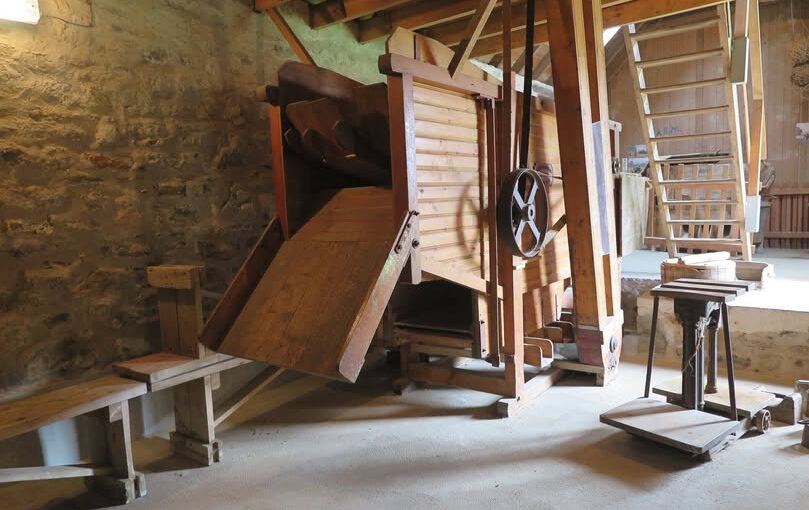
A tradition associated with north-east Scotland is the “on set” or the “on put” of new threshing mills and barn equipment. When a new threshing mill and barn equipment were installed and ready to be started a farmer invited neighbours and friends (and other agriculturists) to celebrate the start of the mill. Sometimes this involved an intense trial or test of it; it could also be just set in motion and run. Afterwards the party – which was sometimes large in number – were invited to the farmhouse for a meal or a celebratory drink. There was singing, music-making, storytelling, playing cards as well as discussions. In some cases dances were arranged for the young members of the farming community. Toasts were given, for example to the farming family, the mill and its makers and those installing it. There were also ones for the prosperity of the farm and future harvests.

The tradition appears to have started in the area by the 1860s. It became more commonplace by the 1890s when oil engines were becoming available to power barn machinery. There are frequent references to in the local newspapers. These usually stated that an event was held, the name of the farmer where it took place, the names of the hosts, who was invited (along with names), the names of the makers of the mill and any key specifications, the trial and its outcome. It also noted the hospitality provided, including some of the toasts.

These accounts show the importance of having a new mill installed on a farm and the investment that was made in having new technology. In some instances a new mill replaced an older one that had been in place for over half a century. In others, this was one that had burned down (there were a surprising number of new mills that were destroyed by fire, even after a few months).

The following newspaper articles give a flavour of this tradition and its importance to the farms and farming communities in the north-east.

“Improved thrashing machine (Arbroath guide, 18 December 1880)

On Thursday evening, Mr Hutcheon, farmer, Newbigging, entertained a number of farmers and others to supper on the occasion of the start of his new thrashing mill. The machine was put in motion in presence of the company, and thrashed two stacks of corn. The work was done with great speed, and in a thoroughly successful manner. The mill was made by Messrs J. and G. Fitchet, millwrights and engineers, Gighty Burn, and is termed a rubber drum. It is fitted with a. travelling frame and cloth, which carries the straw to, and finally deposits it in, any part of the barn.”

“Renovation of Berryhill Steading (from Dundee advertiser, 24 November 1891)

It will be remembered that a disastrous fire occurred at Berryhill, tenanted by Mr Alexander Anderson, last April, by which the greater part of the steading was destroyed. The farm buildings have now been renovated, and, thanks to the landlord, Sir Patrick Keith Murray of Ochertyre, the work has been executed on the most approved principles. The byres and stables are models of adaptability and comfort for the animals housed there. The new threshing machinery forms an important part of the new arrangements; the mill, which is of substantial build, is on an improved light-draught principle, and the dressing part of the machine is a new design with three sets of riddles, and works splendidly, delivering the grain from an oscillating spout elevated above the floor. The mill was started on Friday, and its working was admired by all who saw it. One point specially noted was the small amount of water required for motive power. In connection with the completion of the steading and the starting of the mill, Mr and Mrs Anderson entertained the tradesmen and other friends, to the number of 50, to supper in the new granary on Friday. After supper, Mr James Steele, Dundee, proposed “Health and Prosperity to Mr and Mrs Anderson”, remarking that their popularity in the district was as well-deserved as their kindness was proverbial. Mr Thomas Smith, Mains of Fowlis, proposed “Prosperity to the makers of the mill, Messrs David Steele & Son”. Mr Anderson proposed “Sir Patrick Keith Murray, the proprietor”, and it was owing to his generosity that he had been enabled to get such a first-class steading and threshing-mill. Other toasts followed, after which a dance was enjoyed.”

“New threshing plant (Arbroath herald, 11 March 1910)

New threshing plant at Montquhir was formally started on Friday afternoon, and the plant was found satisfactory. The engine, 14hp, was made by Messrs A. Shanks & Son, Ltd, and the threshing machine, which is fitted with a 3ft 9 in drum, and is capable of bagging the grain ready for the market, was made by Messrs G. & F. Fitchett. After witnessing the plant thoroughly tested, about 70 ladies and gentlemen were entertained to a hearty tea by Mr John Gibb, the tenant. The Rev J. Gordon Lyon presided. After tea the usual toasts were proposed. The young folks afterwards engaged in dancing.”

“Durris (Stonehaven journal, 15 September 1910)

New threshing mill

On Saturday afternoon Mr Malcolm Westerton, inaugurated a fine new high speed finishing mill by threshing a quantity of oats, in the presence of many of the influential farmers in the west-end of Durris and a number of friends from a distance. The machine is an excellent worker, threshing rapidly and making a clean, tidy job. It reflects great credit on Mr Shepherd, Spyhill, who built and planned it, At the close of the demonstration Mrs D. Coutts entertained the company to tea, when a very pleasant evening was spent.”

“Rathen (Buchan observer and east Aberdeenshire advertiser, 6 January 1920)

On the invitation of Mr Elphinston, Muckle Rathen, a few friends and neighbours witnessed the trial of a new threshing plant having all the latest improvements. The mill is by Mr Crichton, engineer, Strichen, and is driven by a Shanks engine supplied by the same firm. It gave the greatest satisfaction. Afterwards the company were entertained by Mr and Mrs Elphinstone, and a very pleasant evening was spent, the health of Mr and Mrs Elphinstone and family was proposed by Mr Lorimer. Mr I. Gammie proposed the health of Mr Crichton, and success to the new mill. Gramophone selections were given by Miss Madge Elphinstone; a song by Mr Lorimer; and a piano selection by Mr Birnie, Stonehouse; and Mr Samuel Fraser, Lakeside.”

Share

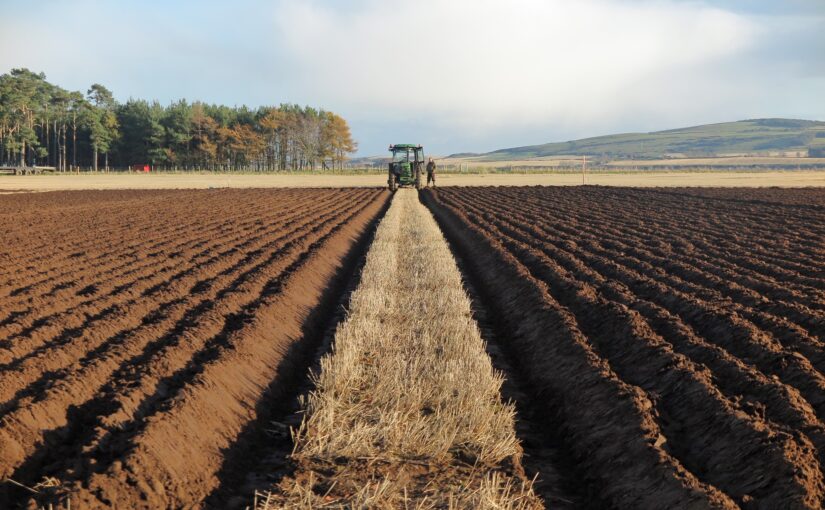
The progress of tractor ploughing in the north – a commentary of a tractor competition in Banffshire in 1921

There were numerous demonstrations of tractor ploughing throughout Scotland in the early 1920s. Some of them were especially important for showing exactly what the early tractors could (or could not) achieve. These included some of the earliest exhibitions in a county. In the central district of Banffshire, one such one was held in February 1921. Because of its importance, an extensive account of it was published in the Aberdeen press and journal of 24 February 1921. It provides a detailed account of the arrangements, the tractors and ploughs, as well as the quality of work that they undertook. Prizes were also awarded to the best work.

The account is worth quoting at length”

“Banffshire farmers’ tractors

Competition at Keith

Finest ploughing show in the north

Tractor ploughing is making great headway in the northern counties, and in this progressive branch of the agricultural industry the farmers of Central Banffshire have demonstrated their up-to-date methods and enterprise. The tractor competition held under the auspices of the Central Banffshire Farmers’ Club at Tarmore, Keith, yesterday was the biggest event of the kind that has been witnessed north of Perth, and attracted a large gathering of farmers from a wide district, who manifested much interest in the modern method of turning over the soil. There have been several horse-ploughing matches in the county which were supplemented by two or three tractors, but on this occasion the competition was confined solely to tractors pulling two or three-furrow plough. In this respect it was the first and finest competition that has been held in the northern counties, and much credit is due to the Farmers’ Club in promoting such an educative exhibition. An excellent day’s work was accomplished, and one farmer gave expression to the general admiration by the remark- “It fairly puts the death-knell on the horses”. In the district the tractor is well established. There are thirty or forty in Central Banffshire.

The competition took place on a 12-acre field placed at the disposal of the Farmers’ Club for the occasion by Mr James Weir, the enterprising farmer of Tarmore, and the weather was ideal for the event. It was a strong, clay soil, rather dry for the work, and the hollows severely tested the qualities of the tractors, and tried the skill of the most expert ploughman. The tractors were 13 in number-six Fordsons, four International juniors, one Glasgow, one Titan and one Case, the latter giving a demonstration under the agency of Auchinachie and Simpson, Keith, and making a very successful exhibition of power against the hill. It pulled a Ruston-Hornsby plough. The majority of the ploughs were the renowned make of Sellars, Huntly, and Auchinachie and Simpson, Keith.

The winning tractors

The prize-winners were:-

Three furrow ploughs-1 Mr McCallum, Auchenhove, Keith, with Titan tractor and Sellar plough; 2. Mr McKay, Mains of Tannachy, Portgordon, Glasgow tractor and Oliver plough.

Two furrow ploughs-1 and cup, Mr Wilson, Muckleton, Lessendrum, Huntly, with International tractor and Sellar plough; 2. Robert Allan, Bush, Keith, Fordson tractor and Sellar plough; 3. K. H. Gambles, Arnhall. Huntly, International tractor and Sellar plough; 4. Robt Cameron, Bogbain, Keith, International and Sellar plough; 5. S. Simpson, Berryleys, Keith, International tractor and Auchinachie and Simpson plough; 6. Alex Dey, Midthird, Botriphnie, Fordson tractor and Sellar plough; 7. Thomas Gordon Duff, Drummuir Home Farm, Fordson tractor and Auchinachie and Simpson plough; 8. John Cameron, Braehead, Keith, Fordson tractor and Sellar plough; 9. Jas. Robertson, Keithmore, Dufftown, Fordson tractor and Sellar plough; 10. A. McLean, Heads of Auchinderran, Fordson and Sellar plough.

Straihghtest furrows- Robert Allan, Bush.

Neatest ends-K. H. Gambles, Arnhall, Huntly.

Best manipulated tractor-Robert Cameron, Bogbain.

Not a bad-ploughed rig

Each of the tractors had to plough about an acre, and first class and expeditious work was done with any kind of plough. Indeed, there was not a bad ploughed rig in the field, and a veteran judge declared that he had been at six or seven horse ploughing matches this year, and the first prize tractor ploughing compared very favourably with any of the first prize work at the horse competitions.

Mr Wilson of Muckleton’s first prize and cup two-furrow plough tractor was a 10 to 12 hp International run with paraffin and starting on petrol. It was a very neat and easily managed one-man machine, with plenty of power for a two or three-furrow plough, working with a small consumption of oil. The engine was all cased in, a protection from the frost, with mud-guard and platform for the driver. The machine is capitally adapted for the soil of Banffshire, and requires about a gallon of paraffin an hour. The second was a Fordson tractor belonging to Mr Allan, Bush. Indeed, the type of tractor which was predominant in the competition was the Fordson, which is evidently a popular machine with the farmers on account of its handiness and cheapness. The Internationals, again, took the third, fourth, and fifth places, followed by the Fordsons. The first three-furrow Sellar plough was drawn by a Titan, and the second was an Oliver pulled by a Glasgow tractor.

The judge of the ploughing was Mr William Newlands, Lockand, Borharm, who gave complete satisfaction by his decisions, while Mr William Simpson, Stipeside, was equally successful in his selection of the neatest ends, straightest furrows, and best manipulated tractors.

After the prizes had been awarded the members of the committee and other friends were hospitably entertained at Tarmore by Mr and Mrs Weir, who were heartily thanked for their kindness.”

Share

Reflections on changes with the threshing mill – in 1962

Aberdeen and Aberdeenshire newspapers include a number of accounts of work at the threshing mill at various times of the twentieth century. Some of these are reflective accounts of what it was like to work at the travelling threshing mill.

One such account was published in the Aberdeen evening express, of 12 December 1962. It is worth quoting at length for its reflections and observations:

“Old style thresh on new style mill

Alex Keith

We had “the mull” the other day. It used to be called “stem mull” in the age when nationalisation had never been thought of and coal sold at its economic value. New imported diesel has taken the place of home-raised coal and the tractor has supplanted the steam engine.

Soon, no doubt, there will be no travelling mill. The combine, driven by penal taxation and other so-called forms of social and economic progress, is ousting the older style of threshing grain. The farmer will be losing money by the change, but he’ll keep his reputation for being “go-ahead”.

We got on fine with the mill. The day was lovely, one of the pleasantest of the year-though not in Aberdeen five miles away! We were only getting four ricks out of the way. The big thresh will come after the New Year, when the grain will have matured and mellowed.

So the proceedings only occupied the afternoon yokin’, and fitted the time and daylight perfectly, allowing for “a piece” half-way through. The results were satisfactory. They confirmed the impression gathered at the time of harvest that 1962 is going to turn out the best in twenty years; both in grain and straw.

Let it be admitted that this mill procedure is old-fashioned. So-if we’re going to be metaphysical-are people and crops and the securing of them! The mill is comparatively new-fangled. No one seems to take those points into consideration.

Display

Still, this form of threshing has been going on long enough to collect its little halo of pleasant memories. If the chuf-chuf of the engine and the occasional pyrotechnical display of sparks from its lum have displaced by the steady girn of the tractor, the drone of the mill, rising and falling as the sheaves are digested by the threshing mechanism, is as friendly and soothing as ever.

And there’s a social side to the mill. From a dozen to fifteen people are required, the larger number when the corn has to be loaded up immediately for dispatch and when the straw is bunched and built into stacks. If the straw is baled the smaller number is adequate.

Usually two people lowse-that is cut out the bands of the sheaves. For this purpose a gauntlet with a sharp knife attached is strapped on the palm of the hand. With a little practice the sheaf is picked up, loosened, spread out and fed head foremost into the mill in a single steady and rhythmical motion.

Adept lowsers will keep a couple of forkers going. Then at the business end of the mill there is a battery of chutes, festooned with hooks to which the grain sacks are attached. Usually there are five.

Busy

To deal adequately with this corny discharge keeps four men pretty busy, and three very busy. The full sack has to be detached, lifted, weighed and adjusted to 168lb-a cwt and a half-the mouth tied, removed from the scales, hoisted on a man’s shoulders and conveyed to the bogie or lorry or whatever other temporary repository is being used.

The farm kitchen on mill day is a busy place with the womenfolk cooking and baking and peeling potatoes and masking tea. When the thresh is over the personnel come in and have their meal, with much talk and fun and laughter. The clash o’ the countryside is teen throu-han!”

Share